
Kathmandu After Dark Could Get Easier: 28 Night Buses and Six New Routes Proposed Across the Valley
Kathmandu Valley’s night bus network could become much bigger, with a study committee recommending an expansion from seven to 28 buses and six new routes connecting hospitals, business areas and major entry points. The proposal follows a three-month trial used by 66,952 passengers, although the service currently loses an average of Rs 1,690 per bus each day
· 4 min read
KATHMANDU, NEPAL, SEPTEMBER 7, 2026
Night Travel Could Get a Major Upgrade
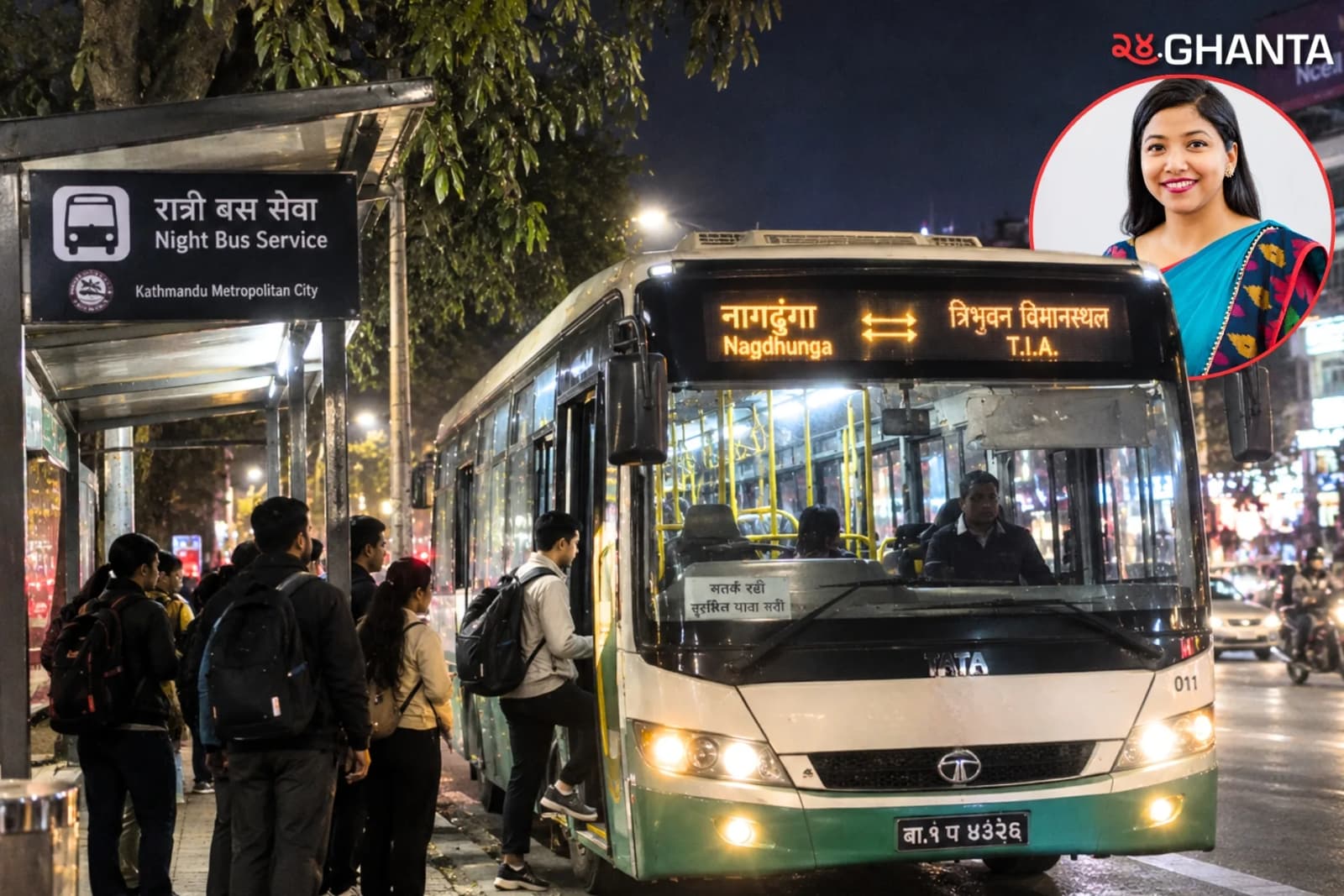
Kathmandu Metropolitan City is preparing for a major expansion of night-time public transport across Kathmandu Valley after a study committee recommended increasing the current fleet from seven buses to 28 and adding six new routes. The proposal, presented after reviewing the first three months of the night bus service launched by Kathmandu Metropolitan City and Sajha Yatayat on April 14, aims to give workers, late-night commuters and other passengers safer and more affordable transport while connecting eight municipalities across the Valley.
Nearly 67,000 Passengers in Just Three Months
The three-month trial showed there is significant demand for public transport after dark.

A total of 66,952 passengers used the night buses during the review period. Each bus carried an average of about 142 passengers per day.
The busiest period was between 8 PM and 9 PM, when 41.56% of the total passengers travelled. Many were employees returning late from offices, workers and daily wage earners.
From Seven Buses to 28
At present, seven buses operate on two main corridors connecting Nagdhunga with Tribhuvan International Airport and Lagankhel with Budhanilkantha.
The committee has recommended increasing the fleet to 28 buses and expanding the network through six additional routes.
Routes identified in the proposal include Godawari–Budhanilkantha, Jagati–Thamel and Kirtipur–Nepal Airlines Corporation, along with services operating in both directions around the Ring Road.
The expanded network is designed to connect important hospitals, commercial areas and major entry points around Kathmandu Valley.
Eight Municipalities Could Work Together
The plan is bigger than Kathmandu Metropolitan City alone.
The proposed network would involve Kathmandu, Lalitpur, Budhanilkantha, Chandragiri, Suryabinayak, Madhyapur Thimi, Godawari and Kirtipur.
Acting Kathmandu Mayor Sunita Dangol has said the goal is to involve local governments across the Valley and develop a sustainable inter-municipal night transport network rather than keeping the service limited to Kathmandu.
But There Is One Major Problem: The Buses Are Losing Money
Passenger demand may be strong, but the current numbers show a financial challenge.
According to the study, one night bus earns an average of Rs 3,134 per day, while operating it costs about Rs 4,814.
That leaves an average daily loss of around Rs 1,690 per bus, equal to roughly 35% of its operating cost.
The committee therefore says expansion will also require a plan to keep the service financially sustainable.
Could Night Bus Fares Increase by Rs 12?
One proposal is to introduce a special night-time premium fare, adding Rs 12 to the existing fare.
Current fares are Rs 20 for shorter journeys, Rs 25 for medium-distance trips and Rs 30 for longer journeys.
The additional charge has only been proposed as one possible solution. It has not yet been confirmed as a new fare.
Another option would have the eight participating municipalities share the financial losses through a funding model based partly on their size, population density and distance covered by the service.
Safety Could Become a Major Part of the Expansion
The committee has also emphasized passenger safety, particularly for women, senior citizens and tourists travelling at night.
It recommends CCTV cameras, GPS tracking and dedicated bus stops as part of the expanded network.
Sajha Yatayat says its existing night service already includes CCTV monitoring and real-time bus tracking, while the buses generally operate between 8 PM and 11 PM.
Why Kathmandu Wants More Night Buses
For many people who finish work late, Kathmandu's public transport options become much more limited after regular bus services stop.
A larger night network could give workers and other passengers a cheaper alternative to taxis and private ride services while making it easier to reach hospitals, commercial centers and different parts of the Valley.
Authorities also believe better late-night public transport could support Kathmandu Valley's growing night-time economy and reduce dependence on private vehicles.
For Now, It Is Still a Proposal
Passengers should not expect 28 buses to appear immediately.
The study committee has recommended the expansion, and the report has been submitted to Kathmandu Metropolitan City. The proposed routes, larger fleet, Rs 12 premium and funding arrangement are therefore plans under consideration rather than finalized changes.
But after 66,952 passenger trips in only three months, the trial has provided authorities with a clear indication that thousands of people need affordable public transport even after Kathmandu's regular daytime commute is over.
Published Sep 7 in Society