
Nepal Develops ‘Myna’ Multi-Disaster Early Warning System To Send Local Language Alerts During Emergencies
Nepal has successfully tested ‘Myna’, a locally developed multi-disaster early warning system that can send automated alerts in local languages during floods, landslides, fires and other emergencies.
· 4 min read
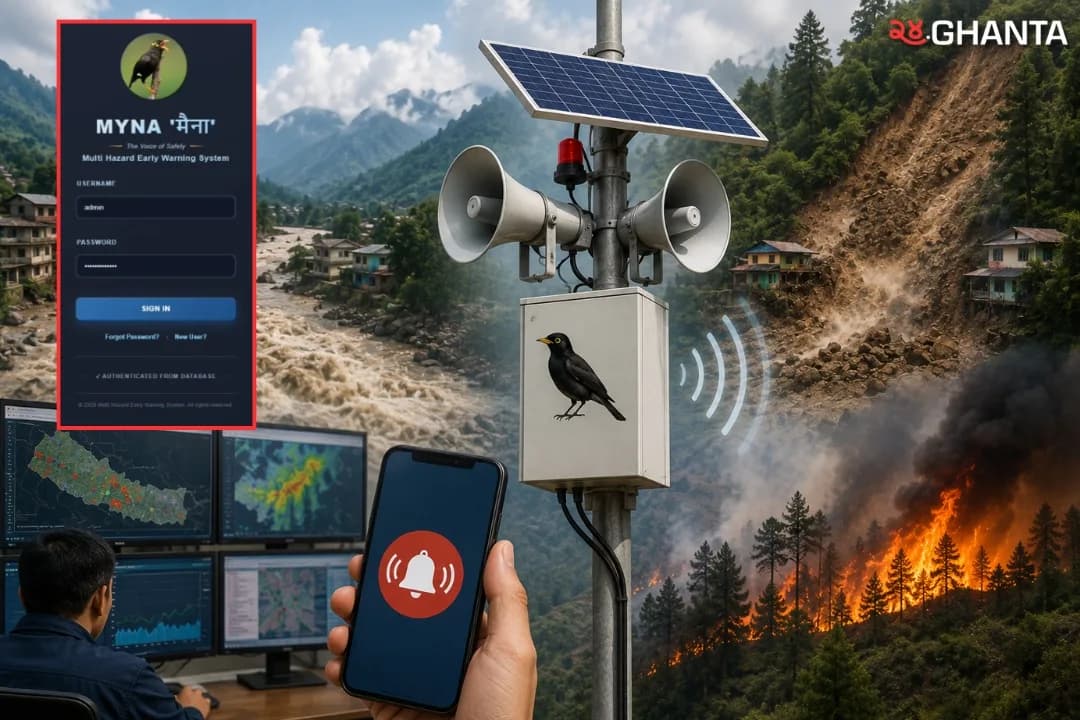
KATHMANDU — Nepal has successfully tested a locally developed multi-disaster early warning system designed to provide timely alerts during floods, landslides, forest fires and other disasters, marking a step toward improving disaster preparedness through homegrown technology.
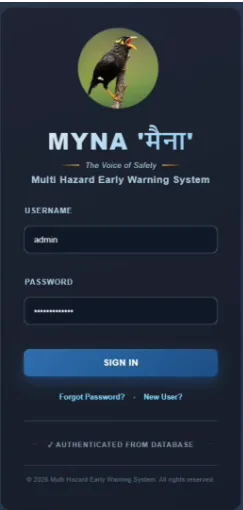
Developed by Innovative Engineering Services Pvt. Ltd., the system named ‘Myna’ aims to deliver automated warning messages in multiple languages, including local languages, so communities can receive critical information before disasters strike.

The successful test comes as Nepal continues efforts to strengthen its multi-hazard early warning system amid increasing risks from climate-related disasters.
What Is The ‘Myna’ Early Warning System?
Unlike traditional warning systems that focus on a single hazard, Myna is designed as a multi-disaster platform capable of issuing alerts for different types of emergencies.
The system can provide warnings related to:
Floods
Landslides
Inundation
Dam failures
Industrial disasters
Other sudden emergencies
During testing, the system demonstrated its ability to automatically broadcast sample warning messages, showing how authorities could communicate emergency information quickly during disasters.
Why The System Is Named ‘Myna’
According to engineer Anup Khanal, the company’s designer, executive chairman and technical head, the system was named “Myna” because of its ability to imitate human voice and its role in connecting information with communities.
Like a bird that can mimic human sounds, Myna is designed to deliver warnings through voice-based communication, making disaster alerts easier for people to understand, especially in communities where written messages may not be effective.
Multiple Channels For Emergency Alerts
The system can transmit alerts through multiple communication channels, including:
SMS
Internet networks
Satellite communication
Wireless remote control systems
The company said Myna can also broadcast pre-recorded or live voice messages in different local languages, allowing communities to receive warnings in languages they understand.
How Does The System Work?
Myna combines technology, data monitoring and automated communication to improve the speed and reach of disaster alerts.
When risk indicators cross defined levels, the system can generate warning messages and distribute them through communication channels.
The approach follows the global shift toward people-centred early warning systems, where information is not only collected but also reaches vulnerable communities in a form they can understand and act upon.
Nepal’s national disaster strategies have also emphasized developing early warning systems that are timely, effective and accessible to hazard-prone communities.
Why Local Language Alerts Matter
One of the major challenges during disasters is not only detecting risks but ensuring people receive and understand warnings in time.
Nepal is a country with hundreds of languages and diverse communities living in disaster-prone areas. A warning message delivered only in a standard language may not always reach everyone effectively.
Systems like Myna aim to address this gap by allowing alerts to be communicated in local languages, helping communities make faster decisions during emergencies.
Experts have repeatedly highlighted that early warning systems are most effective when they connect technology with local communities and clear communication.
Nepal’s Growing Focus On Multi-Hazard Warning Systems
Nepal faces multiple natural hazards every year, including floods, landslides, earthquakes, fires and extreme weather events.
Historically, many warning systems focused mainly on floods, particularly through river monitoring and rainfall-based alerts. Over time, Nepal has moved toward broader multi-hazard systems that combine forecasting, monitoring and community response.
The government has been working to expand early warning coverage through improved weather monitoring, flood forecasting, data systems and community-based alert networks.
The National Disaster Risk Reduction and Management Authority (NDRRMA) has identified early warning systems as a key tool for reducing disaster losses, while Nepal’s disaster planning documents aim to expand real-time warning coverage across the country.
A Technology-Based Solution For A Disaster-Prone Country
Nepal’s geography makes disaster preparedness particularly challenging.
Mountainous terrain, unstable slopes, fast-flowing rivers and changing weather patterns create risks that can develop quickly. In many remote areas, reaching communities after a disaster occurs can take hours or even days.
Early warning systems aim to reduce that risk by giving people more time to:
Move to safer locations
Protect livestock and property
Prepare emergency supplies
Support evacuation efforts
Existing systems have already shown the value of advance warnings. Nepal’s flood early warning networks have evolved from community-based watch systems into automated monitoring systems using rainfall and river-level data.
Challenges Ahead For Wider Use
While the development of Myna represents a technological milestone, experts say the effectiveness of any early warning system depends on more than technology alone.
Successful disaster warnings require:
Reliable data collection
Strong communication networks
Regular maintenance of equipment
Public awareness
Clear evacuation plans
Coordination between government agencies and communities
A warning only saves lives when people receive it, trust it and know what action to take.
A Step Toward Safer Communities
The testing of Myna represents Nepal’s growing effort to develop solutions suited to its own geography and communities.
By combining automated alerts, disaster monitoring and local language communication, the system could help bridge the gap between disaster detection and community action.
As climate-related risks continue to increase, technologies like Myna could become an important part of Nepal’s effort to reduce loss of life and improve resilience before disasters strike.
Tags
Published Aug 6 in Technology