
Nepal Welcomes 71,775 International Visitors In July 2026 As Tourism Recovery Reaches 95.8% Of Pre-Pandemic Level
Nepal welcomed 71,775 international visitors in July 2026, with tourist arrivals increasing 2.3 percent compared to the same month last year. South Asia contributed the highest share of visitors, while Nepal’s tourism recovery reached 95.8 percent of the pre-pandemic level.
· 4 min read
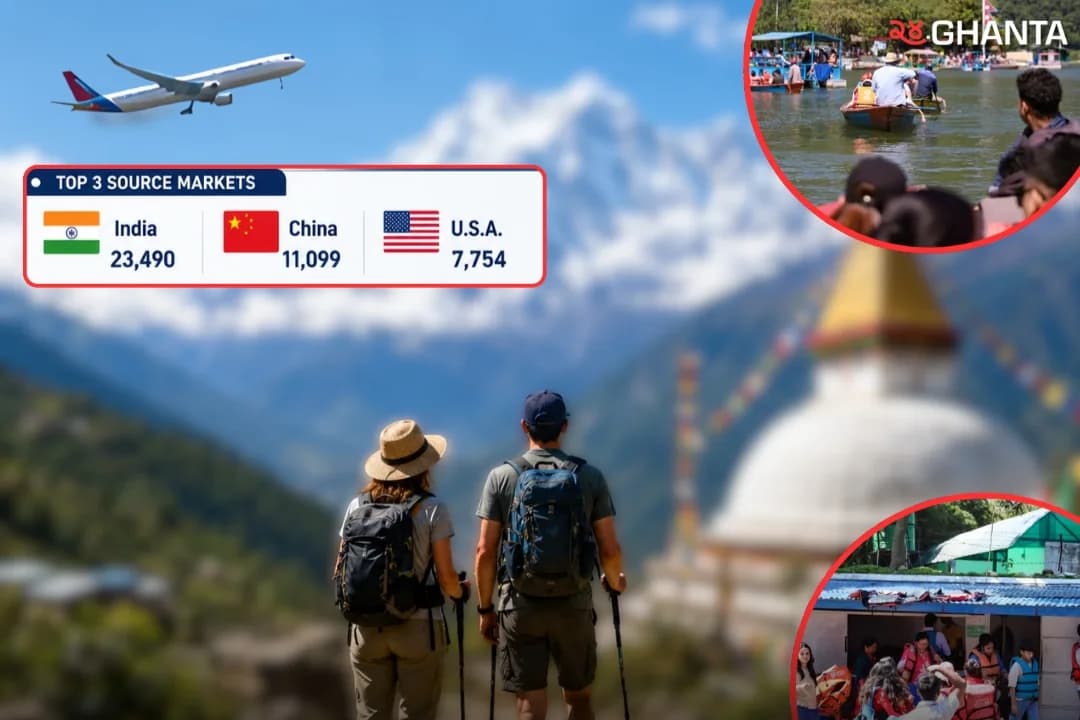
Nepal’s tourism sector continued its gradual recovery as the country welcomed 71,775 international visitors in July 2026, according to the latest data released by the Nepal Tourism Board based on preliminary figures from the Department of Immigration. The number represents a 2.3 percent increase compared to July 2025, when Nepal recorded 70,193 international arrivals.
Although July is generally considered an off-season month due to the monsoon period, the latest figures show continued interest from international travelers visiting Nepal for cultural experiences, adventure activities, and Himalayan destinations.

The July 2026 arrivals also reached 95.8 percent of the pre-pandemic level, compared with July 2019, when Nepal recorded 74,883 international visitors. This indicates that Nepal’s tourism sector has almost returned to its pre-pandemic visitor level.
India Remains Nepal’s Largest Tourism Market
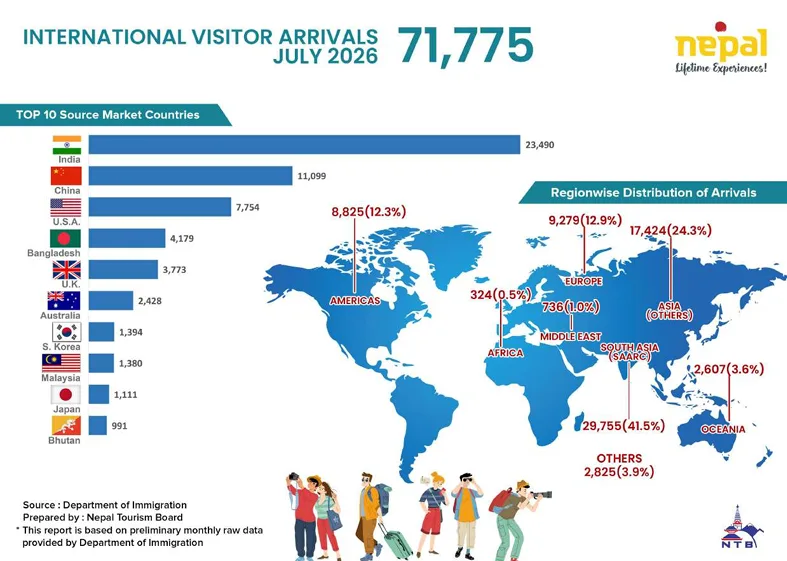
Among the international visitors arriving in July 2026, India remained the largest source market, contributing 23,490 visitors, which accounted for 32.73 percent of total arrivals. Despite being the top market, arrivals from India decreased compared to July 2025, when 27,152 Indian visitors entered Nepal.
China ranked second with 11,099 visitors, making up 15.46 percent of total arrivals. Chinese visitor numbers showed strong growth compared to the previous year, increasing by 61.1 percent from July 2025.
The United States was the third largest market, with 7,754 visitors in July 2026. Arrivals from the US increased by 17 percent compared to the same month last year.
Other major source markets included:
Bangladesh: 4,179 visitors
United Kingdom: 3,773 visitors
Australia: 2,428 visitors
South Korea: 1,394 visitors
Malaysia: 1,380 visitors
Japan: 1,111 visitors
Bhutan: 991 visitors
South Asia Leads Regional Arrivals
Looking at arrivals by region, South Asia accounted for the highest number of visitors, with 29,755 arrivals, representing 41.5 percent of total international visitors in July 2026.
Asia excluding South Asia followed with 17,424 visitors, holding a 24.3 percent share. Europe contributed 9,279 visitors, while the Americas recorded 8,825 arrivals.
Regional arrival figures were:
South Asia: 29,755 visitors
Asia Other: 17,424 visitors
Europe: 9,279 visitors
Americas: 8,825 visitors
Oceania: 2,607 visitors
Middle East: 736 visitors
Africa: 324 visitors
Strong Growth From China And Oceania
While overall arrivals grew modestly, some markets recorded notable increases.
China showed one of the strongest recoveries, with arrivals rising 61.1 percent compared to July 2025. The increase highlights the growing return of Chinese travelers to Nepal after years of reduced international movement.
Visitors from Oceania also increased significantly, with arrivals reaching 2,607, up 44.3 percent from July 2025. The region includes major markets such as Australia and New Zealand.
The Americas also recorded growth, with visitor numbers increasing by 13.4 percent compared to the previous year.
Some Markets Still Below Previous Year Levels
Despite overall growth, some regions recorded declines compared to July 2025.
South Asia arrivals dropped by 11.9 percent compared to last year, mainly due to lower arrivals from India. Europe remained almost unchanged with a 0.1 percent decline, while the Middle East saw an 11.1 percent decrease.
Nepal also recorded fewer visitors from some individual markets, including France, Germany, Italy, and Japan, compared to July 2025.
Tourism Recovery Continues Despite Challenges
Nepal’s tourism industry has faced several challenges in recent years, including the impact of the COVID-19 pandemic, global travel disruptions, and changing economic conditions.
The latest July figures show that international travel demand for Nepal continues to recover. With nearly 72,000 visitors arriving during the monsoon season, the country is moving closer to returning to its previous tourism performance levels.
The continued growth from markets such as China, the United States, and Oceania indicates that Nepal’s Himalayan attractions, cultural heritage, and adventure tourism remain strong international draws.
However, the recovery remains uneven across different markets. While some countries have exceeded previous year figures, others are still below their earlier levels.
Looking Ahead
With major trekking and travel seasons approaching, Nepal’s tourism sector will be closely watching visitor trends in the coming months.
The July 2026 figures suggest that Nepal has regained a strong position in international tourism, reaching 95.8 percent of its pre-pandemic visitor level and continuing its journey toward full recovery.
The challenge ahead will be maintaining this growth by improving connectivity, tourism infrastructure, visitor experience, and promoting Nepal as a year-round destination.
Published Aug 4 in Business