
Nepal’s Suicide Crisis: Why Prevention Must Start Before a Crisis
On World Suicide Prevention Day, Nepal’s numbers highlight a serious public health challenge and the need to make mental health support easier to reach before a crisis becomes fatal.
· 5 min read
Kathmandu, 10 September 2026
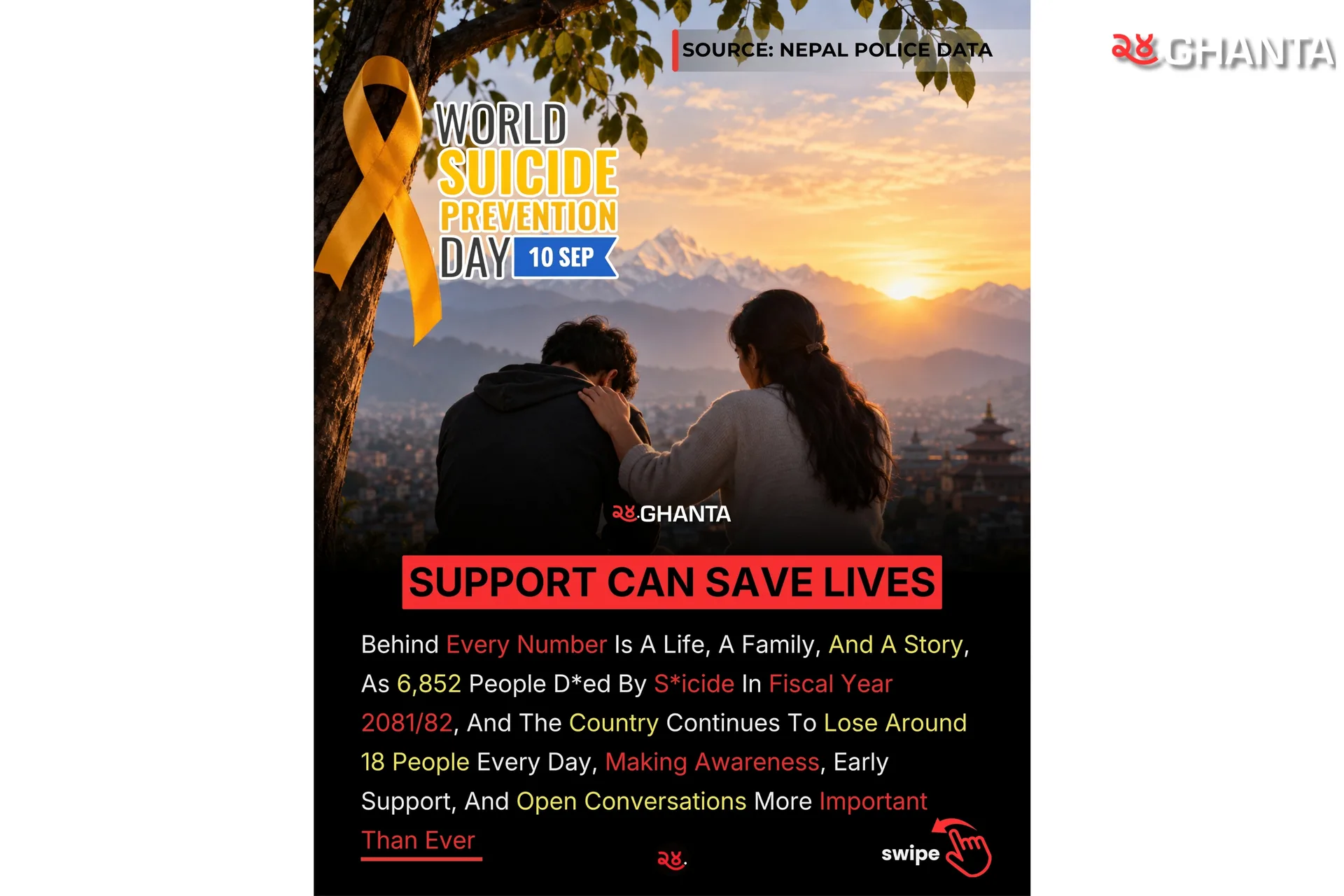
Nepal Police recorded 7,117 suicide-related cases in FY 2077/78, 6,792 in FY 2078/79, 6,974 in FY 2079/80, 7,194 in FY 2080/81 and 6,852 in FY 2081/82. Although the figures have fluctuated, they remain consistently high, with thousands of lives lost every year. Nepal Police’s latest Police Mirror also lists 6,852 suicide cases in FY 2081/82, making suicide one of the country’s most frequently registered crimes.
The scale of the problem is particularly concerning among young people. Suicide is a major cause of death among adolescents and young adults, while mental health problems among children and adolescents in Nepal frequently remain unrecognized or untreated. UNICEF and WHO have pointed to stigma, limited awareness, and unequal access to mental health services as major barriers, particularly outside major urban centers.

Why Are People Reaching This Point?
There is no single cause of suicide. The World Health Organization says suicidal behavior can result from a combination of psychological, social, biological, cultural, and environmental factors.
In Nepal, discussions among mental health experts and health authorities have identified factors including financial hardship, deteriorating economic conditions, family conflict or breakdown, alcohol and drug use, declining physical or mental health, lack of emotional support, inadequate access to psychiatric care and problems within the education system.
Young people can face additional pressures, including academic stress, bullying, family problems, poverty, violence, early marriage and limited opportunities. UNICEF has also highlighted the effects of cyberbullying and online harassment on young people's mental well-being.
Importantly, suicidal behavior should not be reduced to one event or one reason. A financial problem, relationship breakdown, or academic setback may become overwhelming when combined with depression, isolation, substance use, previous trauma, or a lack of support. WHO notes that some suicidal crises can occur impulsively when a person feels unable to cope with severe life stress.
What Can Nepal Do to Prevent Suicide?
1. Make mental health care easier to access.
Mental health services need to move beyond major cities. Nepal can strengthen counseling and mental health services through local health facilities, schools, community health workers, and tele-mental health programs. UNICEF has already documented efforts to train health workers and connect patients in remote areas with specialist services.
2. Treat asking for help as a strength, not a weakness.
Stigma can prevent people from telling their families or seeking professional help. Communities, schools, and workplaces need to normalize conversations about mental health and make it clear that depression, anxiety, and suicidal thoughts require support rather than shame. WHO identifies stigma and taboo as major barriers to suicide prevention.
3. Pay closer attention to young people.
Schools and colleges can provide accessible counseling, emotional-skills education, anti-bullying programs, and clear referral systems for students in distress. Parents and teachers should also be encouraged to recognize changes in behavior and take emotional distress seriously.
4. Strengthen crisis response and follow-up.
People who have attempted suicide or expressed suicidal thoughts need continued support, not just emergency intervention. WHO recommends early identification, assessment, treatment, and follow-up for people affected by suicidal behavior.
Nepal has also operationalized the National Suicide Prevention Helpline 1166 as part of efforts to expand access to crisis support.
5. Reduce access to highly lethal means.
WHO recommends restricting access to common means of suicide, including highly hazardous pesticides and certain medications. This is particularly relevant to Nepal, where pesticide poisoning has been documented among suicide cases.
6. Report suicide responsibly.
Media coverage matters. Detailed descriptions of suicide, sensational headlines, graphic imagery, or repeatedly identifying the method can increase the risk of imitation. WHO Nepal has worked with Nepal's National Health Education, Information and Communication Center to promote responsible suicide reporting. Media should instead emphasize prevention, recovery, warning signs and available sources of help.
Prevention Starts With a Conversation
Nepal's annual figures show that suicide cannot be treated only as an individual tragedy. It is also a public health, social and community issue requiring coordinated action from families, schools, health workers, governments, workplaces, media organizations and communities.
Behind every statistic is a person whose distress may have been invisible to others.
On World Suicide Prevention Day, the message is simple: listen without judgment, take warning signs seriously, encourage professional help and stay connected with people who may be struggling.
Suicide is preventable, and timely support can save lives.
Where to Get Help in Nepal
If you or someone you know is experiencing severe emotional distress, thoughts of self-harm or suicide, reaching out for immediate support can be an important first step.
National Suicide Prevention Helpline- 1166: Nepal’s dedicated national suicide prevention helpline, providing crisis support. The service operates with trained counselors and was established as Nepal’s national suicide prevention hotline.
TPO Nepal- 1660 010 2005: TPO Nepal provides free mental health and psychosocial support, including support for people experiencing suicidal thoughts or emotional crises. TPO Nepal has also been involved in operating and strengthening Nepal’s national suicide-prevention services.
Khabar Garaun- 1145: The National Women Commission’s free, 24-hour national helpline primarily supports women and girls affected by gender-based violence. It provides access to psychosocial counseling, protection, and other support services, including suicide prevention and rescue.
Child Helpline- 1098: Children and young people facing abuse, violence, neglect, exploitation, or serious emotional distress can seek help through Nepal’s child helpline.
If there is an immediate risk of harm, do not leave the person alone. Contact emergency services or take them to the nearest hospital or emergency department.
Tags
Published Sep 10 in Health