
Porn Addiction in Teenagers: What Global Research Reveals, and Why Nepal's Story Is Different
Teen pornography exposure is rising in Nepal despite the country’s 2018 ban. Studies suggest more than half of Nepali adolescents and young people have viewed porn, while a smaller group show signs of problematic use. Experts and research point to early exposure, weak sexuality education, limited parent-child conversations, and growing online risks such as sextortion and image abuse.
· 20 min read
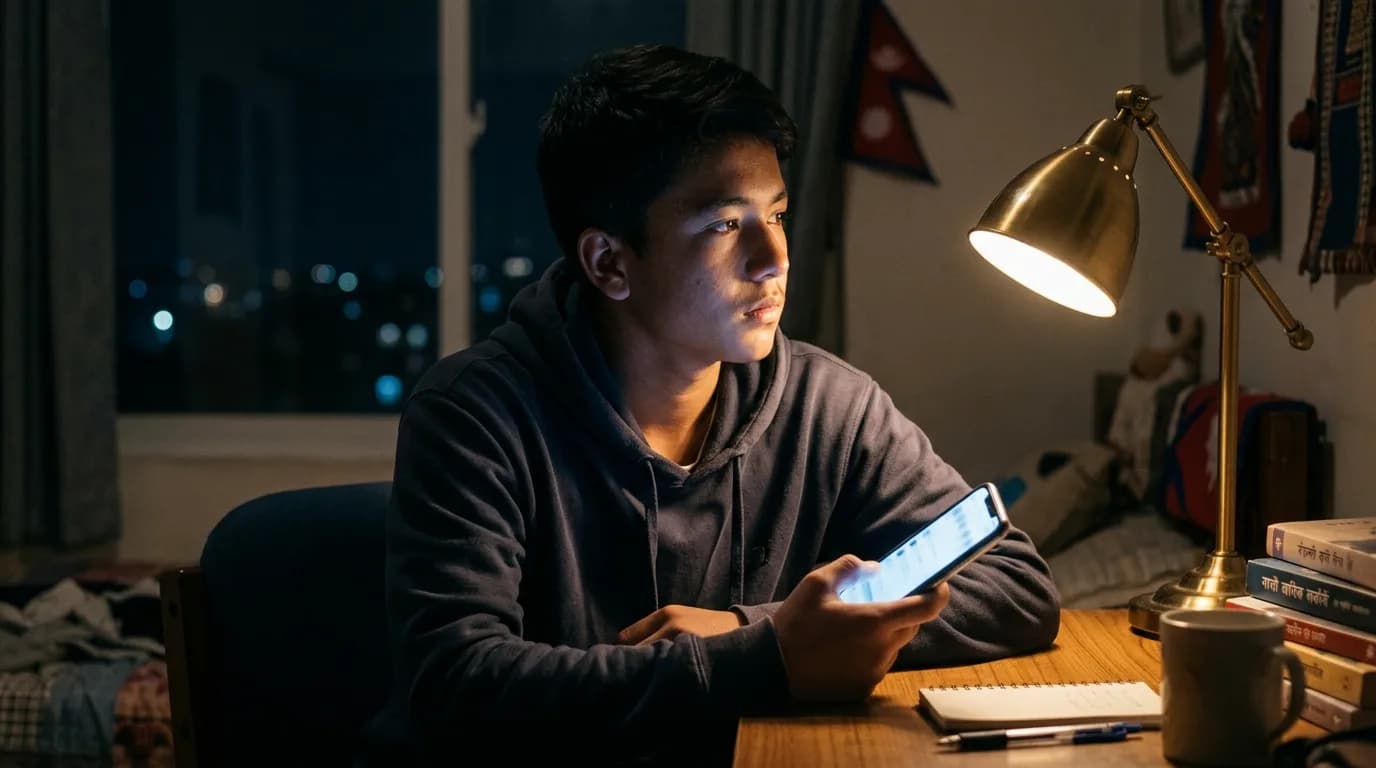
In September 2018, after nationwide protests over the rape and murder of 13-year-old Nirmala Panta, Nepal's government ordered internet providers to block pornography. Within three weeks, officials said more than 25,000 websites had been blocked.
Eight years later, surveys still find that large numbers of young Nepalis watch porn, in some studies more than half. Cyber abuse cases involving children have roughly quadrupled in three years. And in many schools, the one chapter that could help is quietly skipped.

This guide brings together the strongest international research and the Nepal-specific data that parents, teachers and policymakers actually need.
Quick answer: About 7 in 10 teenagers in the US and UK have seen pornography, usually first around age 12 or 13, and often by accident. In Nepal, studies put the figure for adolescents and young people at 52–62%, despite the 2018 ban. Most young people who see porn do not become "addicted," but a meaningful minority, mostly boys and young men, develop hard-to-control use. The strongest evidence of harm involves early exposure and violent content. What helps most is early, calm, shame-free conversation, proper sexuality education, and support for underlying mental health problems. Blocking alone has not solved the problem, in Nepal or elsewhere.
Part 1: What the global research says
1. Is "porn addiction" real?
"Porn addiction" is what most people search for, but it isn't an official diagnosis. Researchers use more precise terms.
Exposure means seeing sexually explicit material at all, on purpose or by accident. Most statistics measure exposure, which on its own says nothing about harm.
Problematic pornography use is a pattern of struggling to control viewing, feeling distressed about it, and experiencing negative consequences.
Compulsive Sexual Behaviour Disorder (CSBD) is a diagnosis in the World Health Organization's ICD-11, and problematic porn use is its most common form. The WHO classifies it as an impulse control disorder rather than an addiction. Importantly, distress that comes only from moral disapproval does not count toward the diagnosis.
What this means for parents: a teenager who has watched porn is not automatically "addicted." Curiosity about sex is a normal part of adolescence. The concern is when viewing becomes compulsive or distressing, or starts crowding out school, sleep, friendships and real relationships. That said, many adults who seek help for compulsive sexual behaviour say their problems began in their teens, so adolescence is the key window for prevention.
2. How many teens watch porn, and when do they start?
The largest recent surveys agree: seeing porn is now the norm for teenagers in countries that have been studied.
England: 70% of 16–21-year-olds had seen porn in 2025, up from 64% in 2023, even after the Online Safety Act became law.
United States: about three-quarters of teens aged 13–17 had seen porn. Among 14–18-year-olds in a national study, 84.4% of boys and 57% of girls had been exposed.
Europe: in six countries, 59% of 14–17-year-olds had seen porn online, and 24% saw it at least weekly.
The average age of first exposure is 12 to 13. In England, among young people who had seen porn, 10% had seen it by age 9, 27% by 11, and half by 13. Some children report first exposure at six or younger, increasingly through social media feeds.
Much of it is accidental. In the US, 58% of teens had stumbled across porn, compared with 44% who had searched for it. Among exposed 11–13-year-olds, 62% said their viewing was mostly or entirely unintentional. And 30% of US teens had seen porn during the school day.
Content is often violent. In England, 58% of young people had seen porn depicting strangulation before turning 18.
3. How many develop problematic use?
Far fewer than have seen it:
In a 2025 Swedish study, 19% of boys and 4% of girls screened positive for problematic use.
Clinical reviews estimate that for roughly 10–18% of adolescents, porn use reflects compulsive sexual behaviour.
Stricter diagnostic tools find lower rates: 2.6% of adults in a representative Japanese sample.
Screening tools flag risk; they don't diagnose. Most studies are also snapshots in time, so we know less than we'd like about how problems develop.
4. Warning signs of problematic porn use
Look for a pattern, not a single incident:
Loss of control: repeatedly trying to stop or cut back without success
Preoccupation: thinking about porn much of the time, or using it to escape
Neglecting life: slipping grades, dropped activities, lost sleep
Continuing despite problems: carrying on even after it causes trouble at home, school or in relationships
Escalation: needing more extreme content or more time
Emotional distress: shame, anxiety, low mood or irritability linked to viewing
Using porn to cope: turning to it mainly when stressed, lonely or upset
Secrecy and withdrawal: hiding devices, deleting histories, pulling away from family
Finding out your teen has watched porn does not by itself mean they have a disorder. If several signs persist, a doctor, school counsellor or therapist who works with adolescents can help.
5. Effects: what's proven and what isn't
Mental health
A 2025 meta-analysis of adolescents aged 10–19 found a moderate link between online porn use and psychological symptoms, similar for boys and girls. The direction is unclear: struggling teens may use porn to cope, porn may worsen distress, or both.
Attitudes toward sex and consent
In England, 44% of young people surveyed in 2025 agreed that girls who initially refuse sex can be persuaded, and girls were more likely than boys to agree. Early exposure has also been linked to lower self-esteem and harmful views about relationships.
Violent content and aggression
This is the most debated area.
In a long-term US study of 10–15-year-olds, exposure to violent X-rated material was linked to a six-fold increase in sexually aggressive behaviour; non-violent material was not.
A 2025 review of 44 longitudinal studies found porn may influence later aggression indirectly, by shaping teens' "sexual scripts."
But a major meta-analysis found the long-term evidence weak, and researchers can't yet tell whether violent content causes aggression or whether aggressive teens seek it out.
Bottom line: violent content shows the most consistent link to harm, effects seem concentrated among teens already at risk, and cause and effect hasn't been proven.
6. The shame factor: why some teens feel "addicted" when they aren't
Research led by psychologist Joshua Grubbs found that religiousness and moral disapproval strongly predicted whether people felt addicted to porn, even though they were unrelated to how much porn people actually watched. This is called moral incongruence. Some researchers think the effect is smaller than claimed, and frequency of use still matters.
The practical lesson: in households where sex is never discussed, and where porn is both taboo and illegal, a teen who watches occasionally may feel intense guilt, label themselves an addict, and hide it. Another teen may genuinely be struggling with compulsive use. Good support tells the difference, because they need different help.
Part 2: The Nepal story
7. What Nepali data shows
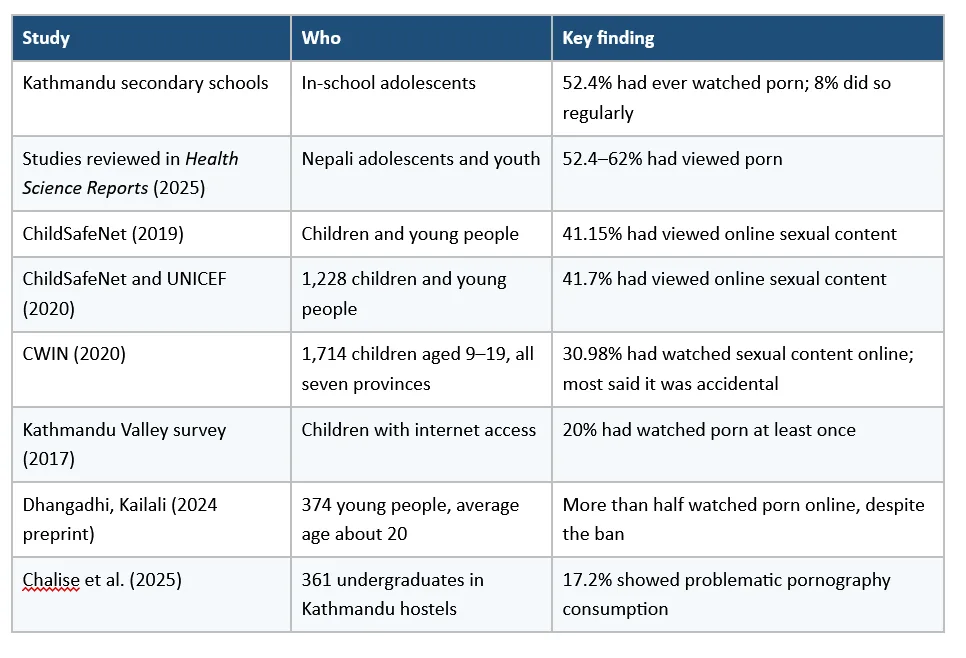
Nepal has no nationally representative survey of teenagers and porn yet. But a growing body of Nepali research paints a consistent picture.
Who is most at risk in Nepal?
The 2025 Kathmandu study is the first to measure problematic use among Nepali students. It found:
Men had about 6 times the odds of problematic use compared with women.
Students under 20 had about 3.7 times the odds of those over 22.
Alcohol use and poor knowledge about risky sexual behaviour were also linked to problematic use.
In Pokhara, a study of 302 higher-secondary students linked porn exposure to gender, family income, pocket money and time spent on computers. Having a TV in their own bedroom was linked to watching more often.
Does porn drive risky sexual behaviour in Nepal?
It's associated, but it's not the whole story.
In the Kathmandu secondary school study, adolescents who had seen porn were about 5.7 times as likely to have had premarital sex.
But in a study of Kathmandu undergraduates, the link between problematic porn use and risky sexual behaviour disappeared once age, gender, relationship status, parental education and peer pressure were taken into account.
This matches the global picture: porn is one factor among many, and peer pressure, knowledge gaps and family context matter a great deal.
Did you know? During Nepal's COVID-19 lockdowns, 24% of children and young people surveyed by ChildSafeNet and UNICEF were online more than 10 hours a day, up from 7% before lockdown.
8. The 2018 porn ban: what happened next
Why the government acted
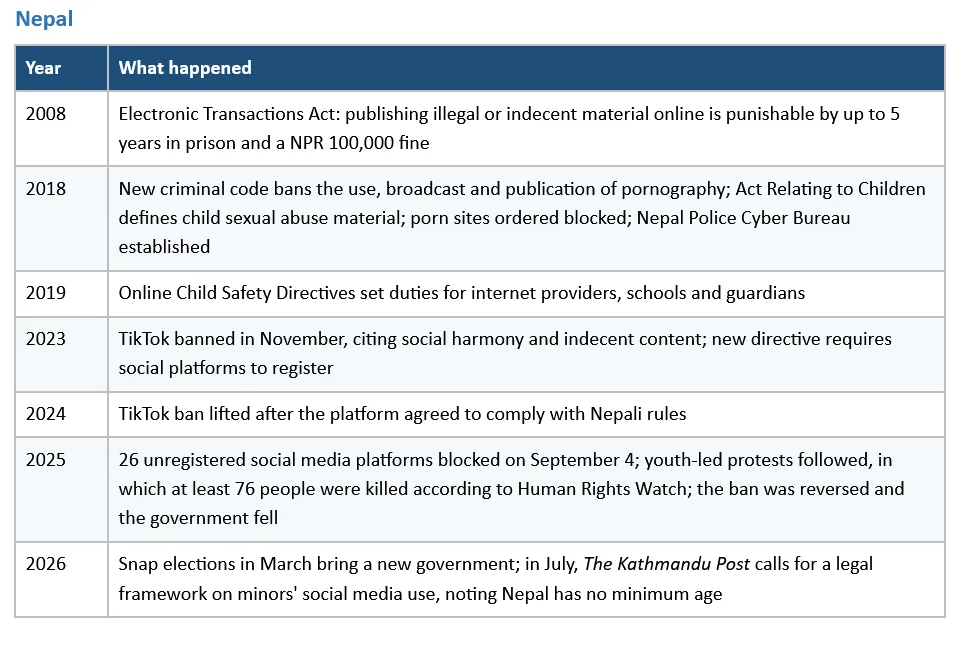
Officials said easy access to porn was damaging social values and encouraging sexual violence. The country's new criminal code, introduced in 2018, prohibits the use, broadcast and publication of pornographic material, with penalties of up to one year in prison. Internet providers faced fines and could lose their licences for failing to comply.
What critics said at the time
Internet providers warned it was technically impossible to block every porn site.
A media rights group warned that without a clear definition of "obscene," the order could be used to block other websites.
A National Human Rights Commission member argued the real problem was the lack of justice for survivors who report sexual violence.
What the evidence shows since
Surveys conducted after the ban still found high rates: about 41% of children and young people in ChildSafeNet's 2019 and 2020 surveys had viewed online sexual content, and more than half of young people in a 2024 Dhangadhi study watched porn online.
A 2026 analysis in The Rising Nepal noted that enforcement of Nepal's platform bans, from porn in 2018 to TikTok in 2023, has repeatedly fallen short.
Nepal's experience echoes England's, where exposure rose after a major online safety law was passed.
The takeaway isn't that regulation is pointless. It's that blocking without education leaves children unprepared for what they will almost certainly encounter anyway.
9. Nepal's perfect storm: five reasons the risks are different here
1. The silent classroom
Nepal's curriculum does include sexuality education, on paper. Content runs through grade 8, including a grade 6 unit on sexual and reproductive health and grade 8 lessons on puberty. But in grades 9 and 10, just as teens enter the years of puberty and relationships, Health and Physical Education becomes optional.
Even where it's taught, it's often skipped. A 2024 study of students, teachers and principals found embarrassment, cultural taboos and weak teacher training all got in the way. In a 2026 training-of-trainers programme, 24 teachers took part, in a country with about 26,000 community schools.
2. The silent home
In a ChildSafeNet survey of 900 parents in Kathmandu and Lalitpur:
85% had never discussed sexuality or online abuse with their children
only 8% had a good understanding of online threats to children
70% didn't know what could expose children to online sexual exploitation
An earlier ECPAT Luxembourg study found 32.5% of parents had done nothing when their children told them about a bad experience online.
The taboo can run deep. In one case reported by The Kathmandu Post in 2026, a seventh-grader in Bajhang who asked her parents about a reproduction lesson was slapped by her father, who then went to the school to complain.
When school and home are both silent, the internet becomes the sex educator.
3. Shared phones, hidden accounts
"My child doesn't have a phone" is not a safety plan in Nepal. In the ChildSafeNet study, 45% of children owned devices and 34% had their own social media accounts. 29% used family accounts, most often their mother's. Most parents were unaware of their children's online activity or multiple accounts.
4. Sextortion, leaked images and deepfakes
For Nepali teens, porn isn't only something they watch. It's something that can be made of them.
Nepal Police registered 20,526 cybercrime complaints between mid-July 2025 and mid-July 2026. Facebook/Messenger (7,123) and TikTok (6,776) topped the list.
Only 161 of those became formal cases.
More than 1,011 revenge pornography cases were reported to the Cyber Bureau in 2022/23.
Cyber abuse cases involving children rose from 176 in 2022/23 to at least 706 in 2024/25, nearly two a day. Police cite online sexual abuse, grooming, manipulated photos, revenge porn and explicit messages, with AI tools making manipulation easier.
5. Weak legal protections for children online
Nepal scored 0 out of 100 on the online grooming indicator of the 2019 Out of the Shadows Index, which measures how countries tackle child sexual exploitation. A 2024 UNICEF and ChildSafeNet paper found Nepal's laws still don't define grooming, sextortion or live-streamed abuse, and internet providers had no legal duty to report child sexual abuse material. As of July 2026, Nepal also has no statutory minimum age for social media.
Did you know? Nepal Telecommunications Authority data put internet penetration above 90% in 2025. Children are online at scale; protections haven't caught up.
10. Boys are victims too
Nepali public debate often treats girls as the only ones at risk. The data says otherwise.
The Cyber Bureau says most current sextortion victims are men, including some young people.
In the CWIN national study, boys faced more pressure than girls to create and share nude images and videos.
Of the 706 child cyber abuse cases in 2024/25, 321 involved boys.
In ChildSafeNet's 2023 study of 4,352 people aged 16–24, 27% of males had experienced online intimate partner violence, compared with 21% of females.
Boys are also more likely to develop problematic porn use. That makes them a double-risk group who are often the least likely to ask for help.
11. Five myths Nepali parents believe
Myth 1: "Porn is banned, so my child can't see it."
Internet providers said from day one that they couldn't block everything. Surveys since 2018 have kept finding high exposure, and more than half of young people in a 2024 Dhangadhi study watched porn online.
Myth 2: "My child doesn't have a phone."
Many Nepali children go online through family members' devices and accounts, often without supervision.
Myth 3: "Talking about sex will give them ideas."
UNESCO's review of the global evidence found that sexuality education does not increase sexual activity or risk-taking. Programmes teaching abstinence alone were found ineffective at delaying sex.
Myth 4: "Only girls are at risk online."
Most sextortion victims reported to Nepal's Cyber Bureau are male, and boys are more likely to develop problematic porn use.
Myth 5: "If my child has watched porn, they're addicted."
In the Kathmandu study, about 83% of students didn't show problematic use. Most young people who see porn don't develop a disorder, but a child who feels deeply ashamed may believe they have.
Part 3: What to do
12. How to talk to your teen about porn
Start before they're teenagers. Given exposure ages, begin age-appropriate conversations around 8 to 10, and keep them going.
Stay calm and shame-free. Your first reaction decides whether your child ever tells you anything again.
Explain that porn isn't real. It's a performance that misrepresents bodies, pleasure, consent and relationships.
Talk about consent and respect, especially since so much online content shows aggression.
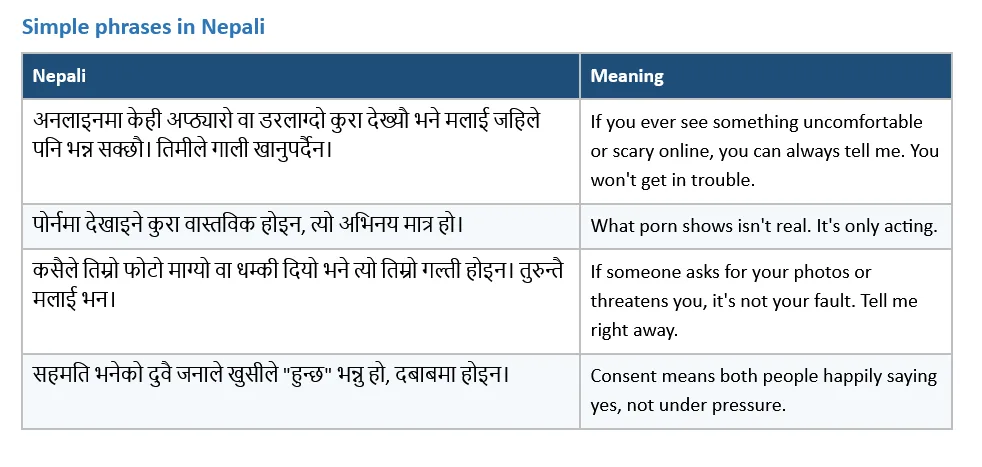
Talk about images and blackmail. Explain that anyone asking for private photos is a red flag, and that being threatened is never the victim's fault.
Keep it short and ongoing. Several small chats work better than one big talk.
Use tech safeguards as one layer. Parental controls help younger children, but VPNs, friends' phones and social feeds can get around them.
If your teen is being blackmailed with images
Stay calm and reassure them. Experts generally advise not paying and not sending anything more, saving screenshots and usernames as evidence, blocking the account, and reporting quickly (see Section 16).
13. What works: education, porn literacy and treatment
Sexuality education
UNESCO's global evidence review found comprehensive sexuality education improves young people's knowledge and attitudes without increasing sexual activity.
Porn literacy
Porn literacy teaches young people to think critically about explicit media. Early results are promising:
Ireland: a single 90-minute school session with 147 students reduced how realistic teens believed porn to be, and improved consent readiness and body image.
United States: a five-session class for 17–18-year-olds improved knowledge, attitudes and behaviour.
Scoping review (2015–2025): sexual media literacy programmes can improve sexual health outcomes.
Not every trial works, so design and delivery matter.
Treatment
Cognitive behavioural therapy and acceptance-based therapies are the most researched approaches, mostly in adults. For teens, good care addresses underlying depression, anxiety or trauma, avoids shame, and distinguishes real compulsion from guilt. Short screening tools can help clinicians identify problematic use.
14. Laws and policy: Nepal's timeline and the global picture
The global picture
United Kingdom: age verification for online porn has been required since July 2025 under the Online Safety Act.
United States: the Supreme Court upheld Texas's age verification law in June 2025, and 27 states now require adult sites to verify age.
Australia has banned social media for under-16s, and France will ban it for under-15s from January 2027.
Supporters argue these laws protect children. Critics, including digital rights groups, warn about privacy risks and note that VPNs undermine enforcement. Nepal's own experience suggests that whatever rules the country chooses, education and enforcement capacity need to come with them.
15. What Nepal's schools and policymakers can do
These recommendations draw on UNICEF Nepal and ChildSafeNet's 2024 situation paper, education experts quoted in national media, and the international research:
For schools
Actually teach the sexuality education already in the curriculum, and add porn literacy and online safety
Train Health teachers so they feel confident with sensitive topics
Set up counselling and confidential complaint systems for online abuse
Run sessions for parents on online risks and parental controls
Include boys explicitly in lessons about sextortion and image sharing
For policymakers
Consider making Health education compulsory in grades 9 and 10
Update cyber laws to define grooming, sextortion and AI-generated abuse
Require internet providers to report child sexual abuse material
Fund a nationally representative survey of adolescents' online lives
Strengthen police capacity outside Kathmandu, since most cyber complaints are concentrated in the capital
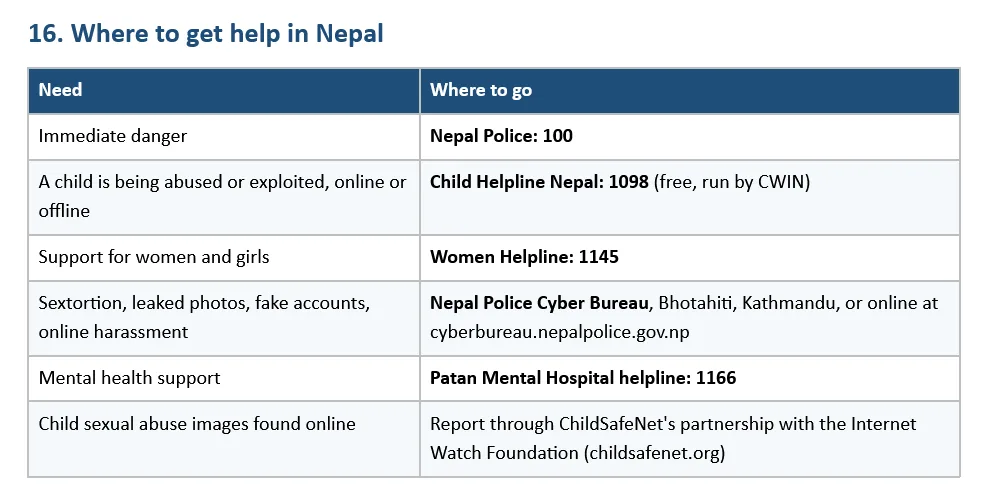
Helpline numbers can change, so check with official sources if a number doesn't work. For ongoing concerns about compulsive use, anxiety or low mood, speak with a doctor, school counsellor or licensed psychologist.
17. Frequently asked questions
How many teenagers watch porn?
About 70–75% of teens in the US and UK have seen porn. In Nepal, studies estimate 52–62% of adolescents and young people have viewed it.
What age do children first see porn?
Usually 12 to 13. In England, 27% of young people who had seen porn saw it by age 11.
Is porn addiction a real diagnosis?
Not officially. The WHO's ICD-11 includes Compulsive Sexual Behaviour Disorder, of which problematic porn use is the most common form, and classifies it as an impulse control disorder.
Is watching porn illegal in Nepal?
Nepal's 2018 criminal code prohibits the use, broadcast and publication of pornographic material, with penalties of up to a year in prison. Sharing indecent material online can also be prosecuted under the Electronic Transactions Act. This is general information, not legal advice.
Did Nepal's porn ban work?
Not on its own. Surveys since 2018 have kept finding high rates of viewing, including more than half of young people in a 2024 Dhangadhi study, and internet providers said from the start that blocking every site wasn't possible.
Is sex education taught in Nepali schools?
It's in the curriculum through grade 8, but Health education is optional in grades 9 and 10, and teachers often skip sensitive lessons.
Where do I report sextortion in Nepal?
Contact the Nepal Police Cyber Bureau in Bhotahiti or online at cyberbureau.nepalpolice.gov.np. If a child is involved, you can also call Child Helpline Nepal on 1098.
How do I know if my teen is addicted to porn?
Look for a persistent pattern: failed attempts to stop, preoccupation, slipping schoolwork, secrecy, withdrawal and distress.
Does porn make teens violent?
Violent porn shows the most consistent link to sexual aggression, especially among at-risk teens, but cause and effect hasn't been proven.
Should I punish my child for watching porn?
Punishment and shame tend to drive secrecy. A calm conversation is more likely to keep your child safe and willing to come to you.
The bottom line
Nepal tried to solve this problem with a firewall. The data suggests young Nepalis walked around it, much as teenagers have around the world. Porn is now part of growing up online. Most young people who see it won't become addicted, but boys and young men face real risks of compulsive use, and all teens face new dangers from sextortion and image abuse.
What Nepali children need most is what their classrooms and homes too often withhold: honest information, early conversations without shame, and adults who know where to turn when something goes wrong.
Sources and further reading
Nepal
1.Associated Press via The Washington Times (2018). Nepal blocks 25,000 websites in porn ban
2.Al Jazeera (2018). Nepal bans porn sites to curb sexual violence
3.Chalise et al. (2025). Problematic pornography consumption among undergraduate students of Kathmandu Metropolitan City, Health Science Reports
4.Premarital sexual behaviours among secondary school adolescents in Kathmandu, Journal of Health Promotion
5.Risky sexual behaviour among undergraduate hostellers of Kathmandu Metropolitan City (medRxiv)
6.Premarital sexual behavior among youths in Nepal (Dhangadhi, Kailali) (medRxiv preprint, 2024)
7.Pahari et al. Adolescent sexual behaviour in Pokhara Submetropolitan Municipality
8.UNICEF Nepal and ChildSafeNet (2024). Nepal's Digital Generation: Challenges and Solutions for Child Online Protection
9.CWIN (2020). A Study on Online Child Sexual Exploitation in Nepal
10.The Himalayan Times (2021). Children becoming victims of sexual exploitation due to internet misuse
11.ChildSafeNet. Enhancing Parental Roles in Protecting Children from Online Sexual Exploitation and Abuse in Nepal
12.The Kathmandu Post (2025). Nepali parents lag behind in online safety conversation
13.The Kathmandu Post (2025). Cyber abuse cases targeting children jump from 176 to 706 in three years
14.The Himalaya Times (2026). Over 20,000 cybercrime complaints registered
15.The Rising Nepal (2025). Beware of cyber crooks sharing obscene contents to extort money
16.The Rising Nepal (2026). Ban on digital platforms detrimental
17.The Kathmandu Post (2026). The trouble with sexuality education in Nepal is too much of it goes untaught
18.Lafontan, Jones & Lama (2024). Comprehensive sexuality education experiences and barriers in Nepal, Reproductive Health
19.The Kathmandu Post editorial (2026). Should Nepal restrict minors' access to social media?
20.The Kathmandu Post (2025). Social media restrictions and children
21.TechCrunch (2025). Nepal blocks Facebook, Instagram, YouTube, X over rule breach
22.Human Rights Watch (2026). Nepal: Balen government should bring human rights reforms
23.Fox News (2023). Nepal bans TikTok for "disrupting social harmony"
24.GlobalSecurity.org. Nepal politics 2025
25.Child Helpline International. Child Helpline Nepal 1098
26.Ncell. Emergency services information
Global
27.Children's Commissioner for England (2025). Children see violent pornography by accident via social media
28.Children's Commissioner for England (2023). Evidence on pornography's influence on harmful sexual behaviour among children
29.Tes (2025). Analysis of the Children's Commissioner report
30.Tsitsika et al. Adolescents' online pornography exposure in six European countries
31.Internet Safety 101. Pornography statistics (summarises Common Sense Media 2022)
32.Piwowar et al. (2025). Problematic pornography use in Swedish adolescents, Journal of Sexual Medicine
33.Psychiatric Times. Normal versus abnormal sexual behavior in adolescents
34.Kraus et al. Compulsive sexual behaviour disorder in the ICD-11
35.Journal of Behavioral Addictions (2026). CSBD review
36.Adolescents' online pornography use and psychopathological symptoms: meta-analysis (2025)
37.Rapid systematic review of longitudinal studies on adolescent pornography use (2025)
38.Exposure to sexual content and problematic sexual behaviors in youth
39.Ferguson & Hartley (2020). Pornography and sexual aggression: can meta-analysis find a link?
40.Grubbs et al. Self-reported addiction to pornography in a nationally representative sample
41.Lewczuk et al. (2019). Evaluating the Pornography Problems due to Moral Incongruence model
42.UNESCO (2018). International technical guidance on sexuality education
43.Evaluation of a youth-centred online pornography literacy intervention (2025)
44.Rothman et al. A pornography literacy class for youth
45.Scoping review of sexual media literacy interventions (2015–2025)
46.Treatments for compulsive sexual behavior disorder: systematic review
47.Congressional Research Service. Supreme Court upholds state age-verification requirement
48.Electronic Frontier Foundation. The Supreme Court's decision on age verification
49.Age verification laws by state (2026)
Published 31 mins ago in Researched Article