
Oli Says Nepal’s Gen Z Uprising Was More Frightening Than the Maoist Conflict—Why His Comparison Is Dividing Opinion
CPN-UML chair KP Sharma Oli has described the violence and destruction during Nepal’s September 8–9, 2025 Gen Z uprising as more frightening than the tactics used during the Maoist conflict, while accusing the post-protest political transition of violating the Constitution. His remarks have reopened debate over responsibility for the deadly crackdown, the destruction that followed, the dissolution of Parliament and whether the two very different periods of violence should be compared at all.
· 6 min read
A Controversial Comparison
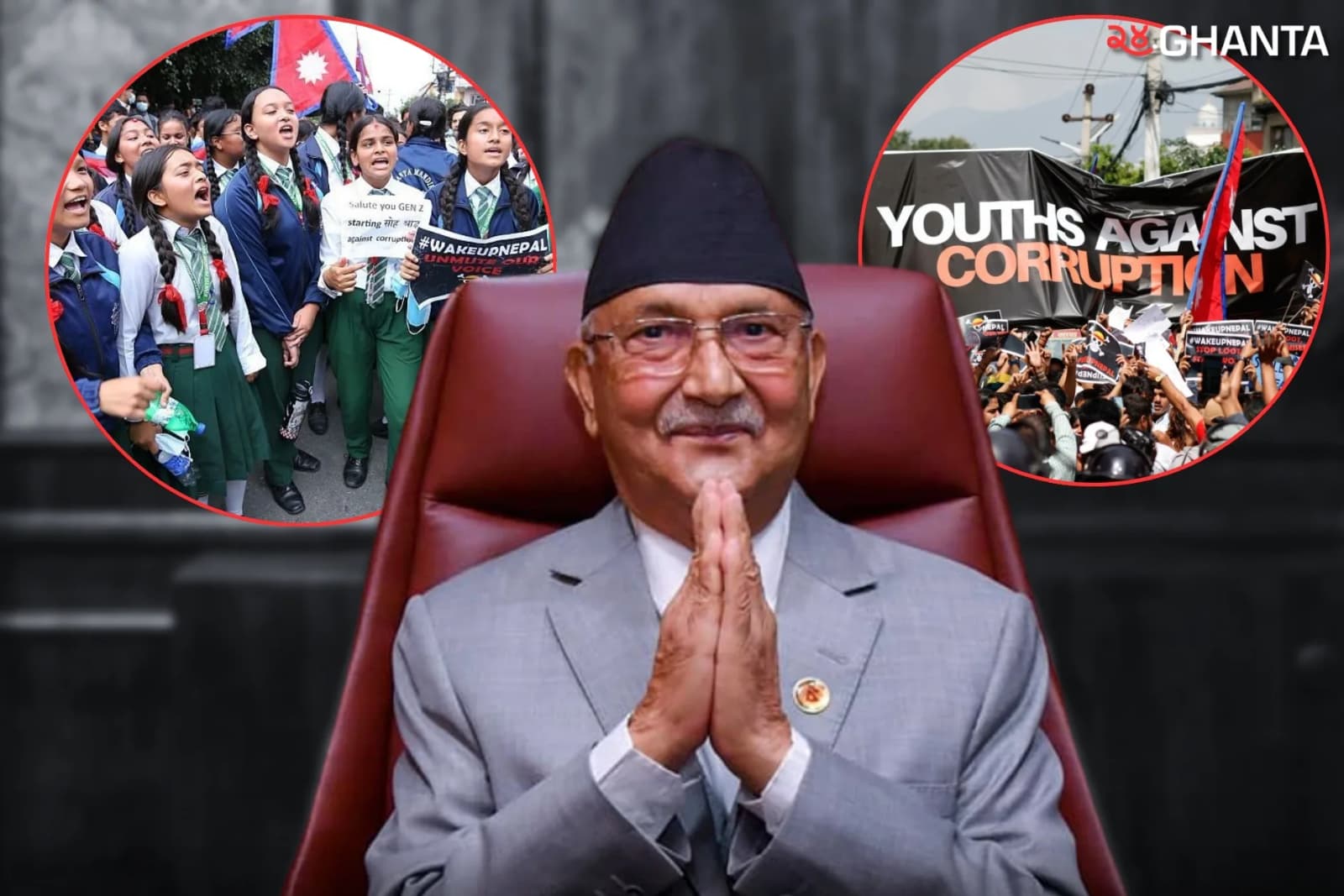
CPN-UML chair and former prime minister KP Sharma Oli said at a political programme in Kathmandu on Thursday, July 23, 2026, that the violence surrounding Nepal’s Gen Z uprising of September 8 and 9, 2025, was more destructive and socially frightening than the Maoist insurgency. He argued that the protests were followed by an unconstitutional political transition, the removal of an elected government and the dissolution of Parliament, which he says placed Nepal’s democratic system in danger.
What Oli Said
Oli said Nepal had witnessed killings, arson and destruction on a scale he considered almost unimaginable during the two-day uprising.
He compared those events with the decade-long Maoist conflict, claiming that although the Maoists had used armed violence to capture state power, they had not created the same kind of widespread fear in society.

His comparison represents his political assessment rather than an independently established conclusion. The Maoist conflict and the Gen Z uprising occurred in very different historical circumstances, lasted for vastly different periods and involved different actors, objectives and forms of violence.
Why He Raised the Issue
Oli used the comparison to support his broader claim that Nepal’s constitutional and parliamentary order was disrupted after the protests.
He accused those involved in the political transition of using violent and unlawful pressure against a constitutionally formed government. He also criticised the role played by former chief justice Sushila Karki, who later became interim prime minister, and questioned the constitutional basis for dissolving the elected House of Representatives.
What Happened During the Uprising
The Gen Z-led protests began on September 8, 2025, amid public anger over corruption, poor governance, political privilege and restrictions imposed on major social-media platforms.
What began as a youth-centred protest escalated into deadly clashes. The following day, arson and vandalism struck government buildings, political leaders’ properties, police facilities, businesses and other public and private structures. Parliament, government offices and important records were among the properties damaged or destroyed.
The National Human Rights Commission’s preliminary reporting recorded at least 45 deaths and 938 civilian injuries at an earlier stage, while later reporting placed the overall death toll considerably higher as injured people died and additional cases were confirmed.
Violence Had More Than One Side
Any account of the uprising must distinguish between violence committed during the later unrest and the state’s use of force against demonstrators.
Investigations and human-rights reporting have examined allegations that security forces used lethal force during the first day of protests. A BBC investigation reported that 19 people were killed when police opened fire on protesters in Kathmandu on September 8, including teenage students.
At the same time, later investigations found indications that violent groups may have infiltrated or exploited the demonstrations. Human-rights findings reported by Nepali media described planning for attacks on public institutions and said some actors encouraged the use of violence while peaceful young protesters were present.
This means the movement cannot be accurately described only as peaceful or only as violent. It included genuine youth-led demands, a deadly state response, organised destruction and actions by groups whose relationship with the original protesters remains disputed.
How Nepal’s Government Changed
The uprising forced Oli to leave office and opened the way for a new interim political arrangement.
Former chief justice Sushila Karki was appointed interim prime minister on September 12, 2025. Parliament was subsequently dissolved, and fresh elections were announced for March 5, 2026.
Several established political parties challenged the dissolution and described it as unconstitutional. Supporters of the transition, however, viewed it as an emergency response to a national crisis after the existing government had lost political legitimacy.
Oli Says Democracy Is Missing
During Thursday’s address, Oli said Nepal should focus on protecting the existing Constitution before discussing amendments to it.
He accused the current authorities of weakening political parties, governing without adequate consultation and using state power for political retaliation. According to Oli, democratic forces must now work together to restore constitutional and parliamentary rule.
His statement that democracy has been “abducted” reflects UML’s effort to frame the post-uprising government as constitutionally illegitimate rather than as a valid product of the protest movement.
Why the Maoist Comparison Is Sensitive
Nepal’s Maoist insurgency lasted from 1996 to 2006 and involved sustained armed conflict between the state and Maoist rebels. It caused large-scale loss of life, disappearances, displacement and long-term social trauma.
The Gen Z uprising, by contrast, was a short but exceptionally intense political explosion. It involved mass demonstrations, lethal policing, arson, institutional collapse and a rapid change of government.
Comparing the two solely by the visible destruction of a few days may overlook the duration and nationwide human cost of the civil conflict. However, Oli appears to be comparing the atmosphere of fear, the scale of concentrated destruction and the speed with which political power changed—not claiming that the uprising caused more total deaths than the decade-long war.
Questions of Responsibility Remain
Oli’s speech places most responsibility on violent protesters and the political forces that replaced his government.
Critics of his administration offer a sharply different account. They argue that the government’s response to the initial demonstrations, including the use of lethal force, helped turn public anger into a nationwide uprising.
Human-rights investigations, criminal cases and official inquiries have therefore focused on both sides: those suspected of ordering or carrying out excessive state violence and those responsible for killings, arson, looting and attacks during the unrest.
A Battle Over Nepal’s Recent History
Oli’s remarks are not only about what happened on September 8 and 9. They are part of a larger political struggle over how those events will be remembered.
One narrative presents the uprising as a youth-led revolt against corruption and an unresponsive political establishment. Another describes it as a legitimate protest that was later hijacked by organised violent groups. Oli’s version goes further, portraying the events as an unconstitutional seizure of power carried out through fear and destruction.
Why the Debate Matters
How Nepal defines the Gen Z uprising will influence future investigations, public trust and the legitimacy of the country’s current political order.
Reducing the entire movement to violence could erase the concerns of young people who protested against corruption and poor governance. Ignoring the killings, arson and institutional destruction, however, would also leave a dangerously incomplete account.
Oli’s comparison has therefore reopened a difficult national question: was the uprising primarily a democratic revolt, a breakdown of state authority, an organised power grab—or a combination of all three?
Published Jul 23 in Politics