
“The Era of Managing Traffic by Waving Hands Must End”: IGP Karki Calls for AI-Powered Traffic Management
Nepal Police Inspector General Dan Bahadur Karki has called for an end to the practice of traffic police standing in the middle of busy roads and controlling vehicles with hand signals, urging wider use of AI-powered CCTV and modern technology.
· 3 min read
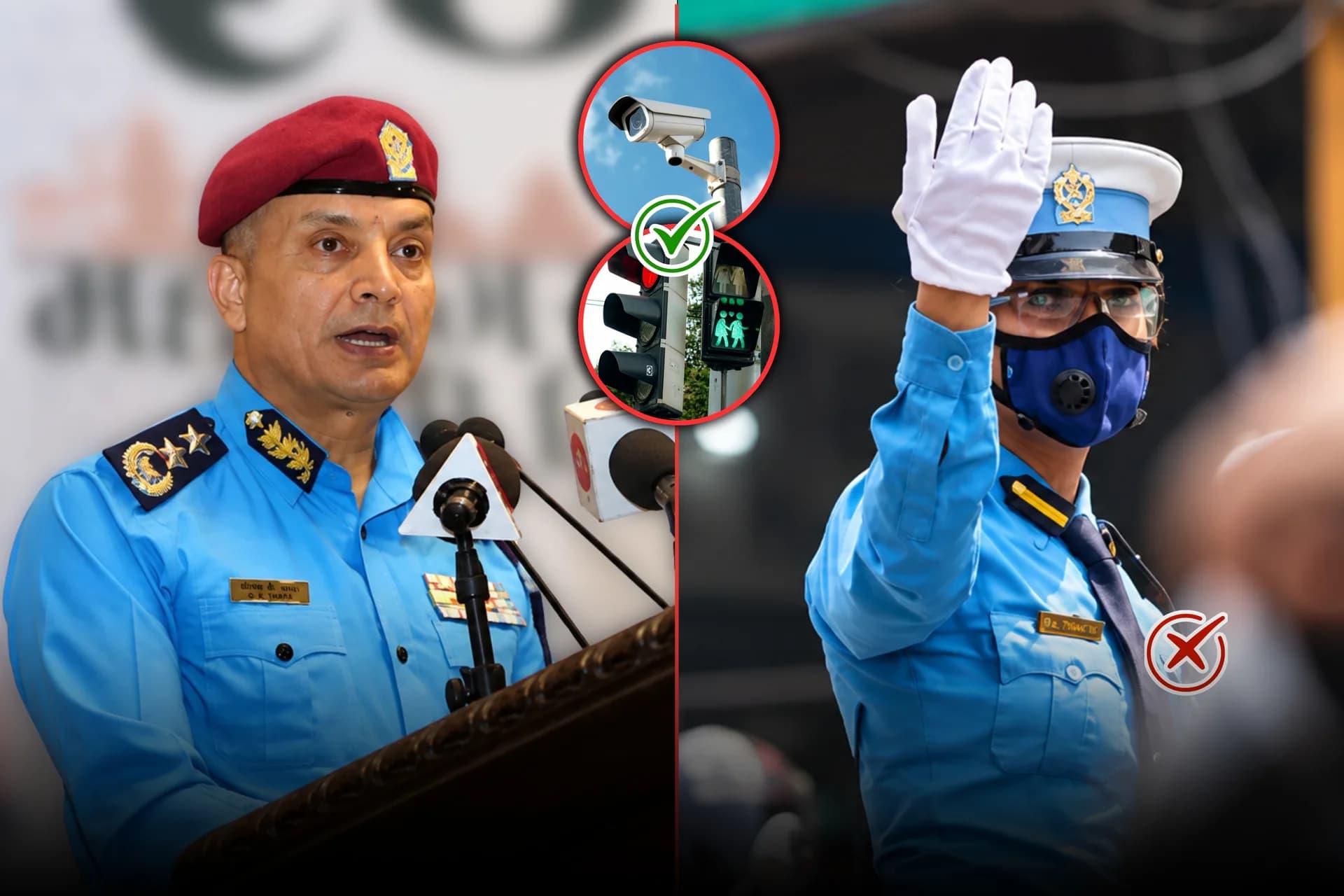
KATHMANDU: Nepal Police Inspector General Dan Bahadur Karki has called for a major shift in the way traffic is managed in Kathmandu, saying the time has come to move away from traffic police standing in the middle of roads and controlling vehicles by waving their hands.
Speaking at the 34th anniversary program of the Kathmandu Metropolitan Police Force on Sunday, Karki said traffic management should become more scientific, organised and technology-driven.

He stressed that traffic police should not have to put their lives at risk by standing between moving vehicles simply to manage traffic.
AI Technology Should Replace Risky Manual Traffic Control
Karki called for greater use of modern technology, including AI-enabled CCTV cameras, to improve traffic flow and reduce the need for manual intervention.
He said:
“The era in which traffic police have to stand in the middle of the road at risk and manage traffic by waving their hands must end. The use of technology should be increased.”
According to Karki, AI-powered surveillance could help authorities monitor traffic more effectively and respond to congestion without constantly placing officers in dangerous positions.
Bus Stops, Parking and Traffic Systems Need Better Planning
The police chief said installing AI-enabled CCTV alone would not be enough.
He called for a broader approach covering:
Bus stops
Bus parks
Parking stations
Traffic monitoring
Emergency response systems
Technology-based traffic control
A coordinated system, he said, would help make Kathmandu's increasingly busy roads safer and more efficient.
IGP Calls for Support From All 753 Local Governments
Karki also highlighted the need for stronger cooperation between Nepal Police and local governments.
He said coordination was already taking place through the Ministry of Home Affairs, Ministry of Land Management and Ministry of Federal Affairs and General Administration.
He urged all 753 local governments to support police infrastructure and security services according to local needs.
The support could include:
Providing land for police facilities
Supporting construction and maintenance of police buildings
Providing vehicles
Supporting disaster rescue equipment
Helping install and expand CCTV networks
Cooperating in public awareness campaigns
Karki said stronger cooperation between local and police authorities could make both police services and metropolitan security services more effective.
Praise for Kathmandu Metropolitan City's Work
Karki also praised Kathmandu Metropolitan City for its efforts to ensure people can walk on cleaner roads and use footpaths without unnecessary obstruction.
He said Kathmandu no longer has the same level of visible piles of scattered waste as in the past, while acknowledging that waste management remains challenging from the point where waste is produced to its final disposal.
He called for more effective long-term solutions to the city's waste management problems.
More Cooperation on Footpaths and Parking
Looking ahead, Karki said Nepal Police expects to work more closely with Kathmandu Metropolitan City on:
Footpath management
Parking management
Emergency response systems
Public safety
Traffic management
The proposed technology-driven approach comes as Kathmandu continues to face congestion, limited parking space and growing pressure on its road network.
For traffic officers, the change could also mean fewer situations where they have to stand directly among moving vehicles to keep traffic flowing.
Published 1 hour ago in Society