
Why Did The Home Minister Travel To Nijgadh To Meet Meter Interest Victims?
Home Minister Sudan Gurung held direct talks with meter interest victims in Nijgadh, Bara, while they were travelling on foot from Janakpurdham to Kathmandu. The protesters presented their concerns and urged the government to take firm action against exploitative lending and unresolved loan-related disputes.
· 3 min read
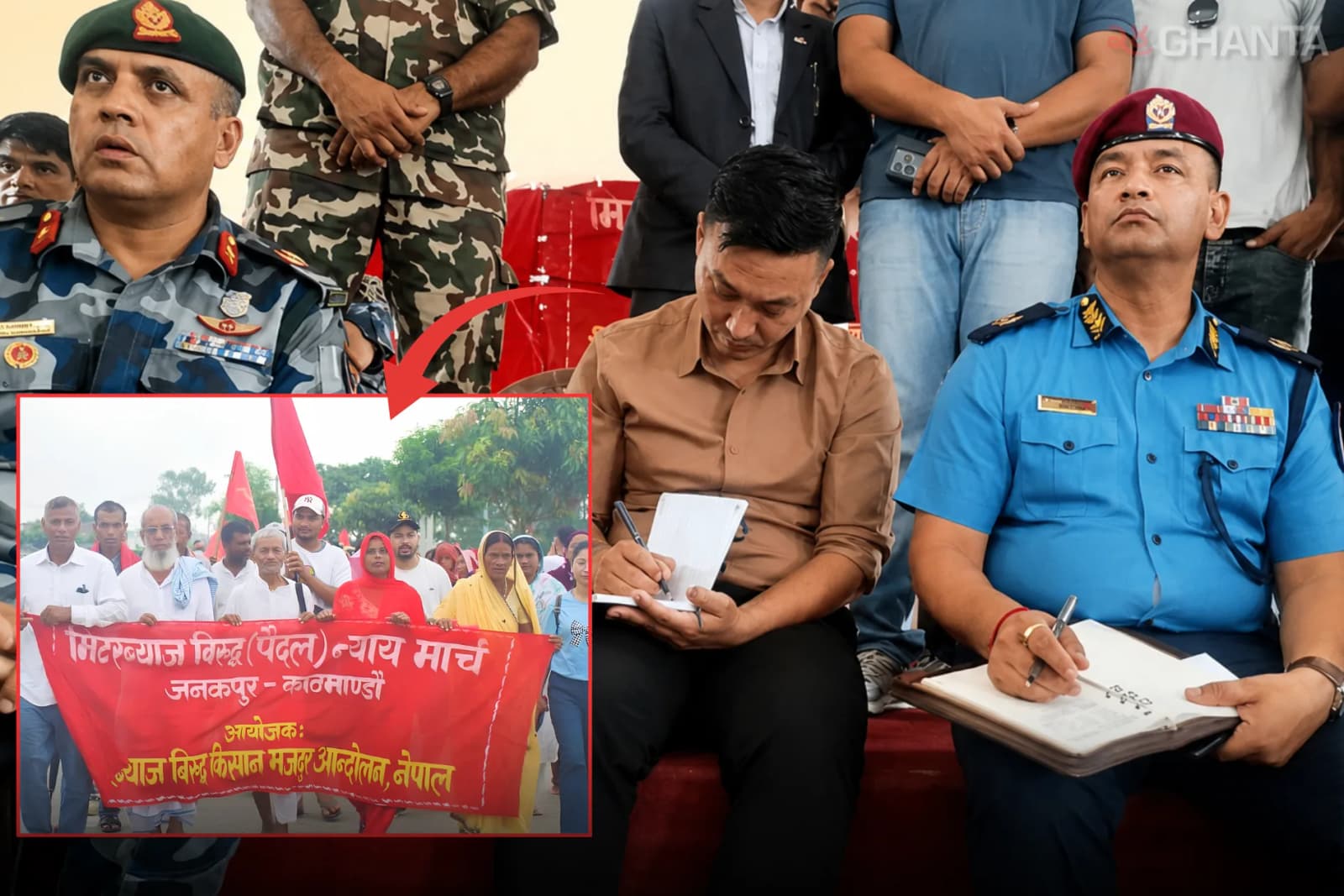
Direct Talks Held During Justice March
Home Minister Sudan Gurung met a group of meter interest victims in Nijgadh, Bara, as they continued their protest march towards Kathmandu. The meeting took place at the Nijgadh Chamber of Commerce and Industry assembly hall after the marchers spent the night there. The group is walking from Janakpurdham to the capital to demand government intervention in cases involving unfair lending, excessive interest and the alleged seizure of borrowers’ property.
Marchers Waited For The Minister
The participants remained in Nijgadh after learning early in the morning that the Home Minister would arrive to meet them. Rather than immediately continuing their journey, they decided to pause the march and use the opportunity to explain their problems directly to a senior government official.

Victims Present Their Demands
During the discussion, the protesters described the financial and legal difficulties faced by borrowers who say they were trapped by informal lenders. Victims’ representative Manoj Paswan said the Home Minister listened to their complaints and discussed possible measures that could be taken to address the issue.
Why The Group Is Walking To Kathmandu
The march has been organised to draw national attention to the continuing problems linked to meter interest lending. Victims say some lenders impose extremely high interest, prepare documents containing inflated repayment amounts or pressure borrowers to surrender land and other property.
For many participants, travelling to Kathmandu on foot is also a way of showing the seriousness of their struggle. They believe earlier promises and government-led processes have not provided complete relief to affected families.
A Long-Running Lending Problem
Meter interest disputes have remained a major social and legal concern in Nepal for several years. The issue largely affects people who borrow money outside the formal banking system because they lack access to banks, regular income records or acceptable collateral.
Such borrowers may initially receive a small amount of money but later face repayment claims far higher than the original loan. Victims have also reported intimidation, questionable financial documents and prolonged court cases involving homes, farmland and family property.
Government Response Remains Crucial
The meeting in Nijgadh has opened another channel of communication between the protesters and the government. However, the marchers are seeking more than verbal assurances. They want transparent investigations, protection for affected borrowers and a clear process for resolving disputed loan documents and property claims.
What Happens Next
The protesters are expected to continue moving towards Kathmandu unless a reliable settlement is reached. Their next steps will likely depend on whether the government offers a specific timeline, legal support and practical measures to settle the cases raised by the victims.
For the marchers, the Nijgadh meeting is an important development, but they say the real test will be whether the discussion leads to visible action.
Published Jul 14 in Politics