
WorldLink Discontinues ‘Limited Mobility’ WiFi Feature After NTA Directive
WorldLink has discontinued its seamless WiFi hotspot login feature following a directive from the Nepal Telecommunications Authority, requiring customers to use OTP authentication at each hotspot.
· 3 min read
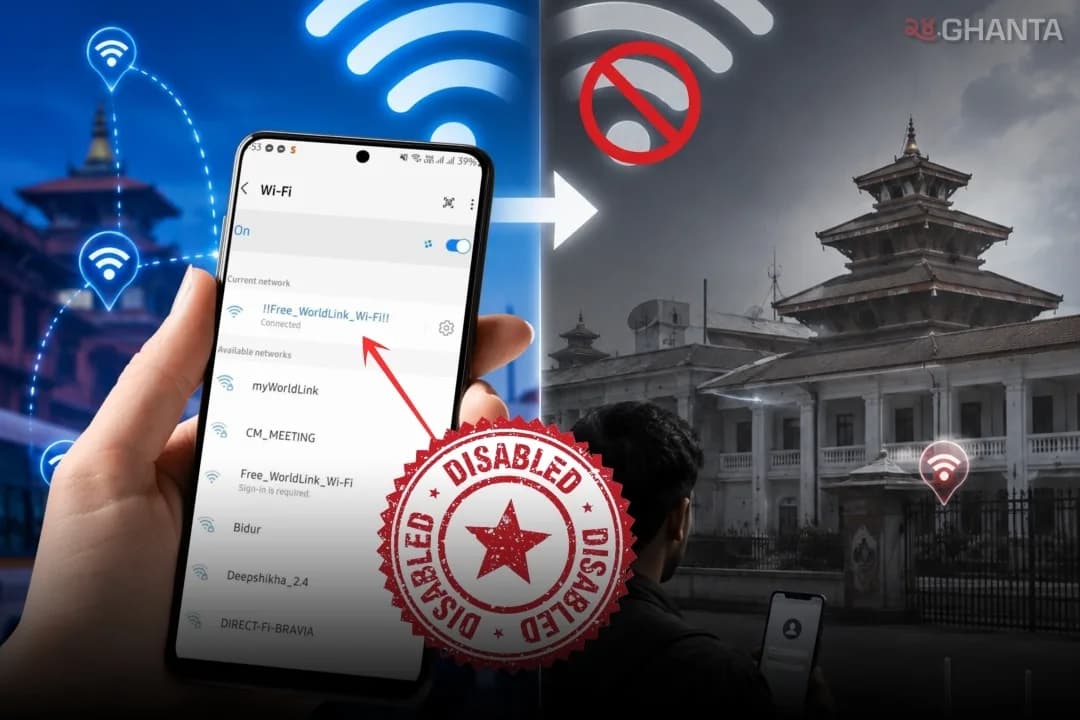
Kathmandu, August 18, 2026 — WorldLink Communications has discontinued its ‘Limited Mobility’ WiFi hotspot feature following a directive from the Nepal Telecommunications Authority (NTA).
The change means WorldLink customers can no longer use the company's public WiFi hotspots through a one-time authentication process. They must now obtain a one-time password (OTP) and log in each time they connect to a supported hotspot.
What Has Changed for WorldLink Users?
Previously, WorldLink subscribers could authenticate once and then move between participating WiFi hotspots without repeatedly entering their credentials.

This created a relatively seamless connection experience across WorldLink's hotspot network.
Following the NTA directive, that facility has been removed.
Customers Must Now:
Receive an OTP when connecting to a hotspot.
Authenticate their connection at each hotspot.
Repeat the login process when connecting to another supported hotspot.
Use the connection only for the period permitted under the hotspot system.
WorldLink's WiFi hotspots themselves remain operational. It is the seamless ‘Limited Mobility’ feature that has been discontinued.
Why Did NTA Order WorldLink to Stop It?
The regulatory action followed complaints from Nepal Telecom and Ncell.
The two telecom operators had raised concerns about WorldLink's seamless hotspot system, arguing that its mobility-like functionality could effectively amount to a form of limited mobility telecommunications service beyond the scope of WorldLink's permitted service.
The NTA subsequently sent a directive to WorldLink ordering the company to discontinue the feature.
WorldLink then confirmed that the feature had been disabled following the regulator's instruction.
What Was WorldLink's Previous System?
Under the previous arrangement, customers could log in once to the WorldLink WiFi network and continue using supported hotspots without having to authenticate again at every location.
For users, this meant a more convenient experience when moving between different public locations where WorldLink hotspots were available.
The system effectively allowed subscribers to maintain access across multiple WiFi locations without repeated authentication.
WorldLink and Telecom Operators Had Different Views
The dispute centres on how such a service should be classified under Nepal's telecommunications regulatory framework.
Nepal Telecom and Ncell reportedly argued that the mobility-like nature of the service created a regulatory issue because customers could maintain connectivity across different locations without authenticating at each hotspot.
WorldLink, on the other hand, had maintained that the service was simply an additional facility for its internet subscribers and did not constitute a mobile telecommunications service.
What Could This Mean for Nepal's WiFi Market?
The decision comes as internet service providers increasingly expand connectivity beyond customers' homes and offices through public WiFi networks.
The case raises broader questions about the regulatory boundary between:
Fixed broadband services
Public WiFi
ISP-operated hotspot networks
Mobility-like connectivity services
As ISPs develop new ways to keep customers connected outside their homes, regulators may face more questions about how such services should be classified and regulated.
Published Aug 19 in Technology