
15-Year-Old Fake Refugee Case Returns As CIB Arrests Foreign Ministry Joint Secretary Pushpa Raj Bhattarai
A long-running fake refugee investigation has resurfaced after CIB arrested Foreign Ministry Joint Secretary Pushpa Raj Bhattarai over allegations that travel documents issued during his time at the passport division were misused.
· 4 min read
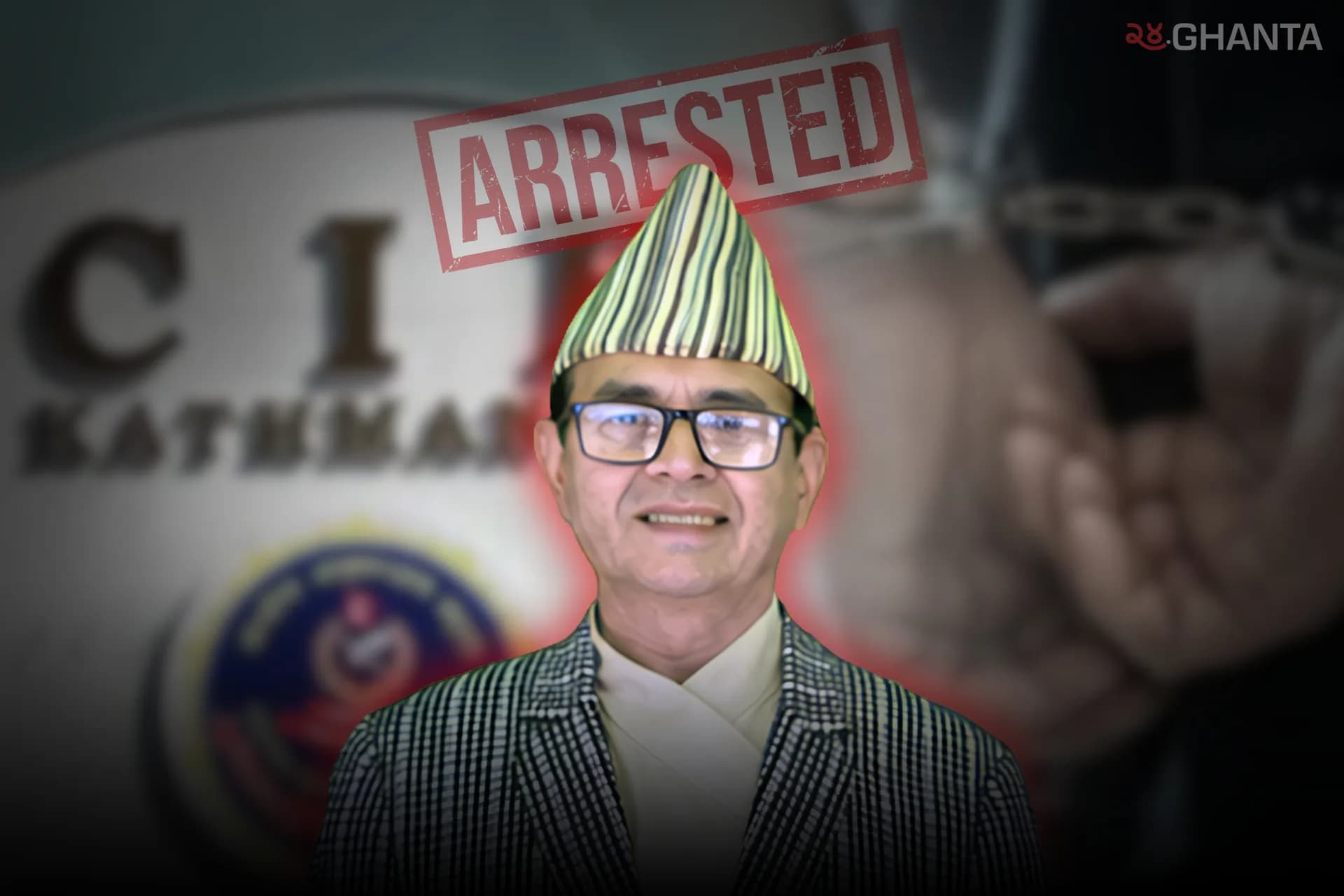
A more than decade-old fake refugee case has returned to public attention after Nepal Police’s Central Investigation Bureau (CIB) arrested Foreign Ministry Joint Secretary Pushpa Raj Bhattarai over allegations related to the misuse of travel documents.
CIB arrested Bhattarai in Kathmandu and presented him before the Kathmandu District Court after filing a case related to the alleged issuance of fraudulent travel documents that were reportedly used to send Tibetan refugees to Germany.

The court will now conduct further proceedings, including Bhattarai’s statement and a decision on whether he should be detained during investigation.
The allegations are based on CIB’s investigation. The final decision on guilt or innocence will be determined by the court.
Investigation Linked To Documents Issued 17 Years Ago
According to the charge sheet submitted by CIB, the case dates back to 2008–2009 (2065–2066 BS) when Bhattarai was working at the Passport Division of the Ministry of Foreign Affairs.
CIB alleges that:
Bhattarai received around 500 travel documents during his assignment at the Passport Division.
Some documents meant for legitimate applicants were allegedly misused.
Travel documents were allegedly issued to Tibetan-origin individuals using false refugee identities.
The documents were later allegedly used for travel to Germany.
The investigation began after Germany’s embassy in Kathmandu sent a letter to CIB in 2011 raising concerns over suspicious travel documents.
Germany Raised Suspicion Over Five Individuals
According to CIB records, the German Embassy contacted Nepal Police after identifying suspicious documents linked to five individuals.
The embassy reportedly questioned travel documents issued in the names of:
Tenzing Namgyal Chungotsang
Tenzing Tendar Chungsung
And other individuals whose identities were considered suspicious
Based on the embassy’s concerns, CIB started investigating whether the documents had been legally issued.
CIB Claims Travel Documents Were Misused
CIB alleges that some travel documents shown as being sent to the Nepali Embassy in Cairo, Egypt, were later misused.
According to investigators, those documents were not actually delivered to Cairo as recorded but were allegedly used for Tibetan refugees attempting to travel to Germany.
The investigation claims that individuals presented themselves as Tibetan refugees seeking family reunification, but German authorities later questioned their documents and identified irregularities.
Some individuals were reportedly returned to Nepal after verification.
Bhattarai Denies Involvement
During questioning, Bhattarai reportedly denied involvement in the alleged misuse.
CIB stated that Bhattarai acknowledged that issuing travel documents was under his responsibility along with another branch official, but rejected allegations that he intentionally issued fraudulent documents.
He reportedly said:
“My signature may have been misused through improper practice by someone else.”
Bhattarai has maintained that he should not be held responsible for any unauthorized use of his official signature.
Questions Over Missing Records
One of CIB’s major claims is that required documents and records for issuing the travel documents were not found in official files.
Normally, travel documents for refugees require recommendations and supporting documents from relevant government agencies.
However, investigators allege that:
Required applications were missing from Foreign Ministry records.
Individual verification documents were unavailable.
Travel documents were issued without following proper procedures.
CIB claims these gaps indicate that the documents were not legally processed.
Alleged Payments Linked To Travel Documents
According to CIB’s investigation, individuals who received the travel documents allegedly paid large amounts of money.
The German Embassy reportedly informed CIB that each person paid:
Around Rs 400,000 for obtaining documents.
Additional amounts to ensure departure from Tribhuvan International Airport.
Investigators have also examined whether financial transactions were involved in the alleged irregular issuance process.
Other Officials Also Mentioned In Investigation
The investigation has also examined the roles of other officials who worked at the Passport Division during that period.
According to statements cited by CIB, another branch official was involved in document verification and approval processes.
The investigation has looked into whether officials failed to follow procedures or whether documents were intentionally misused.
Possible Legal Consequences
The case has been filed under provisions of Nepal’s Passport Act, 2076.
If the charges are proven, the law provides for:
Fine between Rs 200,000 and Rs 500,000
Imprisonment from one to three years
Or both penalties
The final punishment, if any, will depend on the court’s decision.
CIAA Had Also Looked Into The Matter
The issue had previously reached the Commission for the Investigation of Abuse of Authority (CIAA).
CIAA had collected documents and communicated with CIB regarding possible irregularities.
The investigation also included allegations that financial benefits may have been exchanged while issuing travel documents.
What Happens Next?
After Bhattarai’s arrest, the Kathmandu District Court will hear his statement and decide further legal procedures.
The investigation is expected to examine:
Who approved the travel documents
Whether official procedures were bypassed
Whether financial transactions were involved
The roles of officials and intermediaries
The case highlights how old administrative decisions can continue to face legal scrutiny years later.
Published Aug 3 in Crime