
Arnold Dix Defends Nepal’s Tunnel Rescue Efforts As More Than 900 Workers Remain Feared Trapped
International tunnel rescue expert Professor Arnold Dix has praised Nepal’s rescue teams for continuing efforts to reach workers feared trapped inside hydropower tunnels after devastating floods, despite damaged infrastructure and extremely difficult underground conditions.
· 3 min read
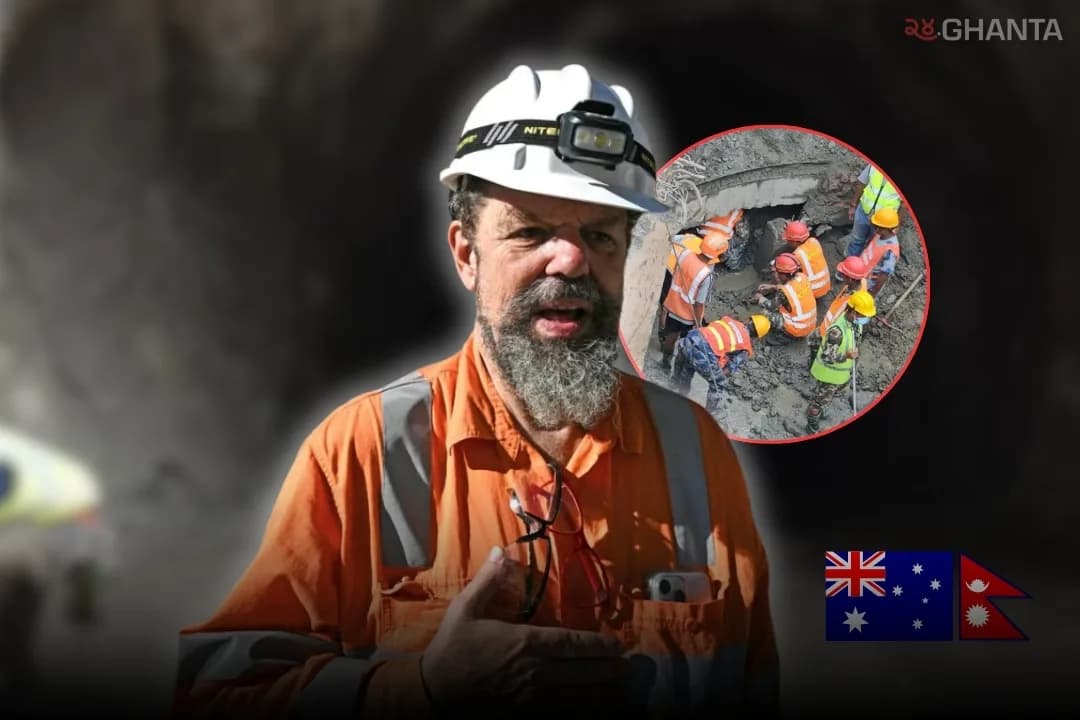
KATHMANDU, September 3, 2026: International tunnel rescue expert and Australian engineer Professor Arnold Dix has defended Nepal’s ongoing efforts to reach workers believed to be trapped inside hydropower tunnels, saying rescuers are trying every possible approach despite the unprecedented scale and difficult conditions of the disaster.
Dix, who helped rescue 41 workers trapped underground in India’s Silkyara tunnel in 2023, is advising Nepali authorities and rescue teams as they search for possible survivors inside underground hydropower facilities from his office in Melbourne.
Dix Praises Nepal’s Rescue Teams
Dix said the situation in Nepal is among the most difficult rescue operations he has encountered. Despite the enormous challenges, he praised Nepali engineers, rescuers and authorities for continuing to work toward reaching those who may still be alive underground.

He has stressed that rescue teams should continue exploring every realistic option while there remains a possibility of survivors.
More Than 900 Workers Feared Trapped
More than 900 workers are feared trapped inside hydropower facilities following the massive floods near the Nepal-China border.
One of the major areas of concern is the Trishuli 3A hydropower project, where 42 workers have reportedly been missing. Rescue planning is also continuing around the Chilime Hydropower Station and other affected facilities.
Experts are particularly examining higher sections of underground powerhouses, sometimes described as the “Goldilocks zone.”
These areas could potentially offer trapped workers:
Access to air
Protected underground space
Greater chances of survival compared with completely flooded sections
Possible routes for rescue teams to reach them
Why Reaching Them Is So Difficult
The floods have severely damaged the infrastructure needed for a conventional rescue operation.
Roads, bridges and tunnel entrances have been washed away or blocked by mud and debris. Heavy drilling equipment is also difficult to transport because helicopters cannot carry large machines in a single trip.
As a result, rescuers are combining different methods rather than relying on a single approach.
Teams Exploring Multiple Rescue Routes
Rescue teams are examining several possible ways to reach underground areas, including surface drilling, chambers and ventilation routes.
Satellite imagery, technical drawings and helicopter observations are being used to understand the damaged facilities and identify possible access points.
Where large machinery cannot be brought in, teams are also relying on manual digging and smaller equipment, while carefully moving through unstable mud, rocks and debris.
The conditions mean rescuers must balance speed with safety, as entering unstable underground sections could put rescuers themselves at serious risk.
Dix Brings Experience From India
Dix became internationally known for his role in the rescue of 41 workers from India's Silkyara tunnel in 2023. The workers survived 17 days underground before they were successfully brought out.
His experience is now being applied to Nepal's much larger and more complex disaster, where flooded hydropower facilities, damaged access routes and unstable underground conditions have created an extremely challenging rescue environment.
Search Continues As Teams Look For A Way In
Nepal's rescue teams are continuing to assess underground structures and possible access routes while working with engineers and international expertise.
The operation remains difficult and uncertain, but Dix has emphasized the importance of continuing to pursue every viable option as long as there is a chance that people trapped underground could still be alive.
Published Sep 3 in Nepal