
Before Books and Classrooms, Nepal Says Flood-Affected Children Need Time to Heal
The government has instructed schools and local authorities in areas affected by the Rasuwa-Bhotekoshi flood to address students’ psychological and emotional needs before returning them to regular classrooms. Schools have been asked to coordinate with health workers, provide psychosocial counselling where needed, and resume normal teaching only when affected children are mentally prepared and a safe, child-friendly learning environment can be ensured.
· 3 min read
KATHMANDU, SEPTEMBER 9, 2026
Healing Before Returning to Class
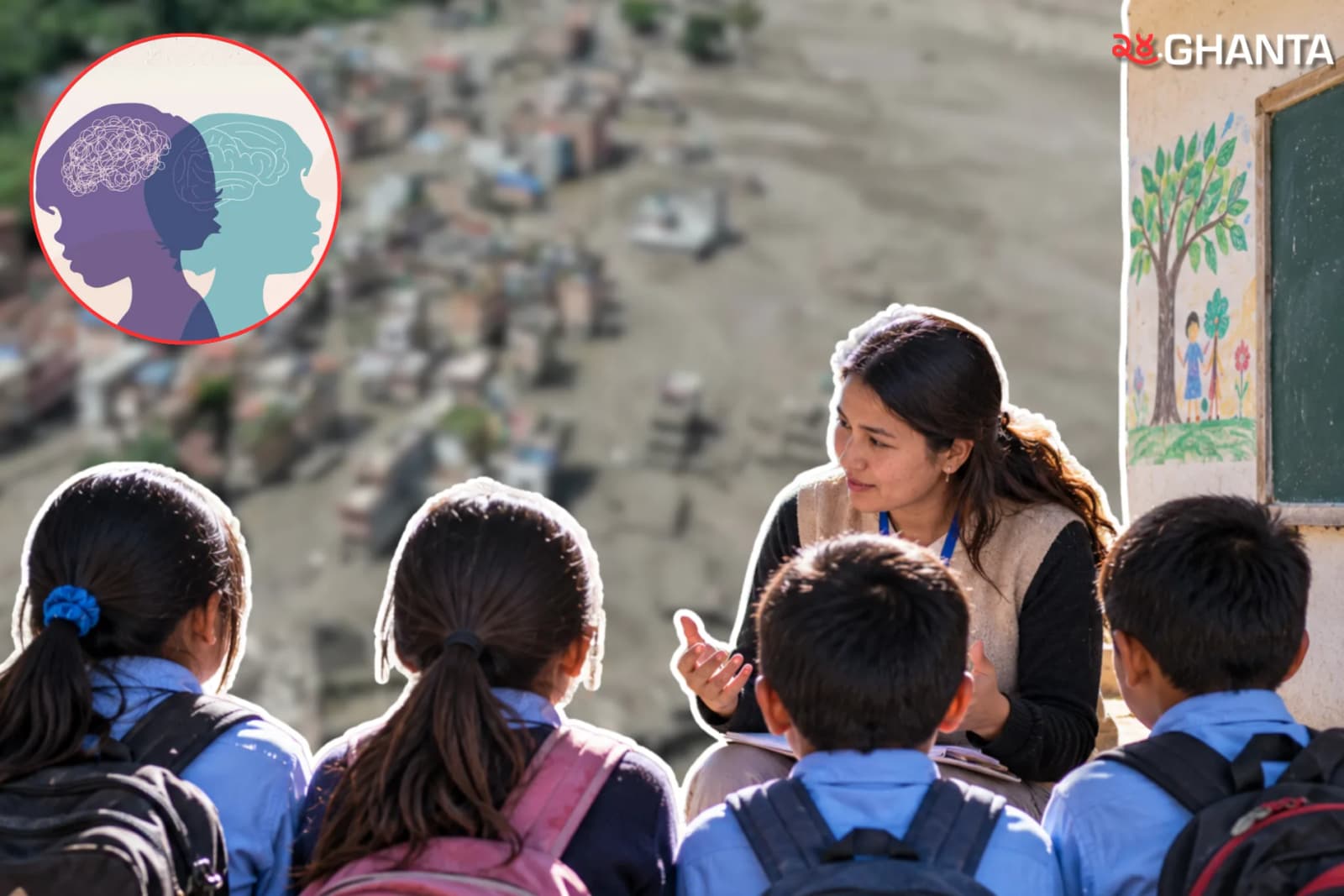
Nepal’s Education Department on Wednesday, September 9, instructed local governments and schools affected by the devastating Rasuwa-Bhotekoshi flood to assess students’ psychosocial condition and provide counselling and necessary support before resuming regular classes, because children exposed to the disaster may still be dealing with fear, stress, trauma and emotional distress that could affect both their wellbeing and ability to learn.
Why Going Straight Back to Class May Not Be Enough
For many children, the disaster did not simply interrupt their education. Some experienced frightening scenes, displacement and destruction around their communities, while others remain affected by missing or lost family members, classmates and teachers.

The Education Department warned that immediately pushing affected children back into routine lessons without first addressing their emotional condition could further harm their mental wellbeing and learning.
Schools Asked to Work With Health Workers
The government has asked affected schools and local authorities to coordinate with health institutions and health professionals.
With their support, schools should identify the psychosocial condition of affected students and provide counselling or other necessary assistance depending on individual needs. Regular teaching should resume only after students are considered mentally prepared to return.
A Safe and Child-Friendly Return
The instruction is not simply about reopening school gates.
Authorities have been asked to ensure that learning resumes in a safe and child-friendly environment, with schools, health institutions and other concerned bodies working together to place students’ educational and psychosocial needs at the centre of the recovery process.
Psychosocial Support Is Already Part of the Response
The latest instruction builds on work already taking place in flood-affected communities. Situation reporting from the disaster response has documented psychosocial counselling for affected students and teachers, including coordination with health, child-protection and protection teams.
The National Child Rights Council has also called for immediate psychosocial counselling and health services for displaced and frightened children affected by the disaster.
Thousands of Children Have Been Affected
The scale of the disruption extends well beyond physically damaged classrooms.
Recent government figures released alongside the “Secured Future Scholarship Plan” said 19 schools in Rasuwa, Nuwakot and Dhading had been completely or partially damaged, while the education of 9,742 students had been affected. The same preliminary figures listed 217 students and 16 teachers as missing.
These numbers have changed across different assessments as authorities continue collecting and verifying information, meaning figures from different dates should not be treated as final.
Education Recovery Goes Beyond Counselling
Psychosocial support is one part of a wider effort to keep flood-affected children connected to education.
The government has also announced a scholarship programme worth around Rs 1 Arba for affected students, covering education from early childhood development through Grade 12. Depending on students’ circumstances, support can include scholarships, textbooks, uniforms, learning materials, food and accommodation.
Rebuilding Schools, Rebuilding Confidence
The flood damaged classrooms, learning materials and other educational infrastructure, but recovery will require more than replacing what was physically destroyed.
For children who have experienced fear, displacement or personal loss, returning to a classroom does not automatically mean returning to normal. The government’s latest direction puts that reality at the centre of school reopening: help children feel safe again first, then help them return to learning.
Published Sep 9 in Nepal