
Inside Nepal’s New Prison Rules: Better Living, Family Rights And Work Beyond Bars
Nepal’s new Prison Regulations 2083 expand prisoner facilities through annual bedsheets, a higher festival allowance, health insurance, video court appearances and formally registered prison-based businesses. The rules also introduce spousal reproductive visits, digital prisoner records, psychosocial support and employment opportunities for eligible inmates under the open-prison system.
· 4 min read
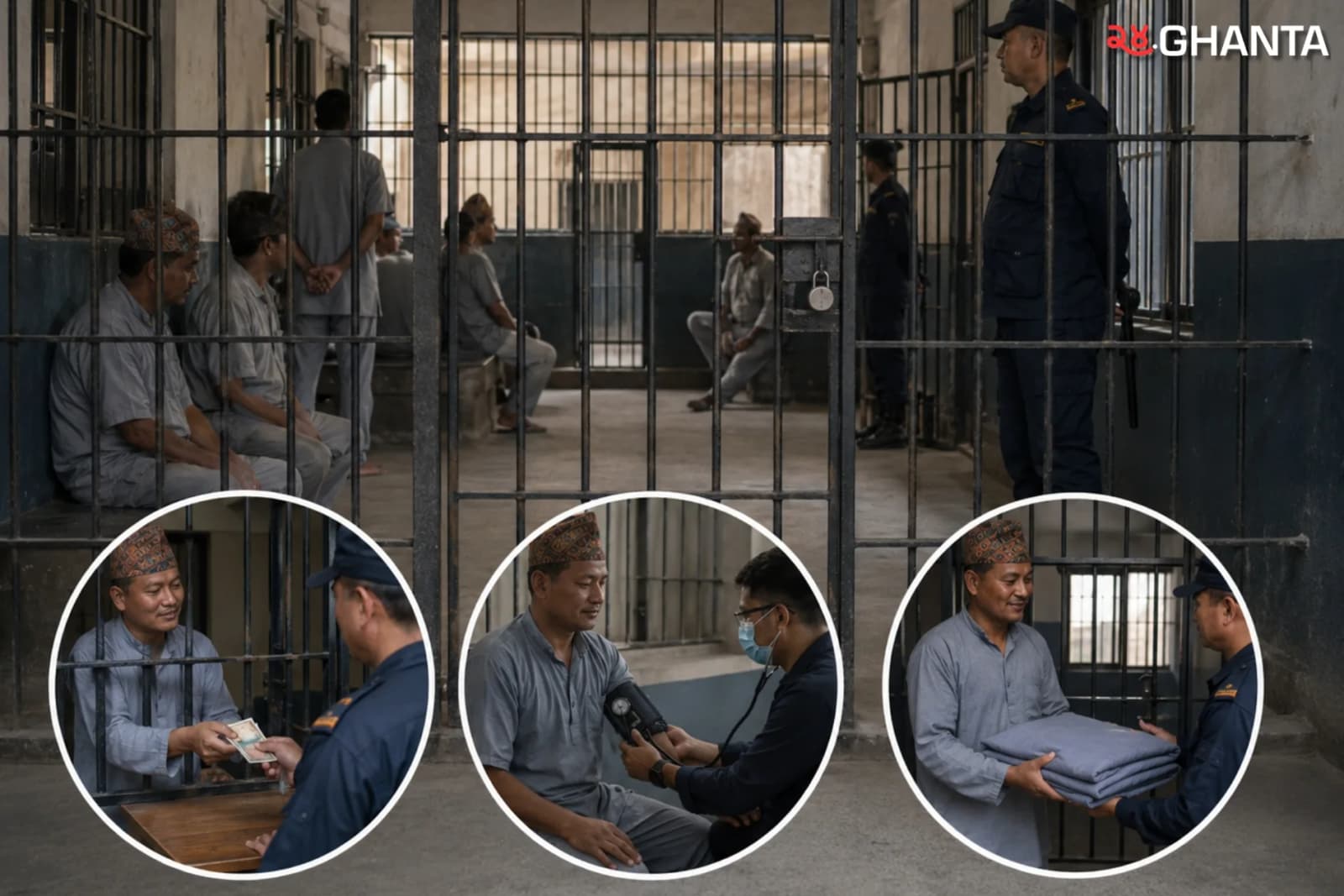
The Government of Nepal has introduced the Prison Regulations 2083 to improve the treatment, management and rehabilitation of prisoners across the country. Approved by the Council of Ministers and published by the Department of Prison Management on Ashad 32, 2083, the regulations apply to prisons throughout Nepal and replace the outdated rules previously used to administer the newer Prison Act 2079. The changes are intended to protect prisoners’ basic rights, improve prison administration and gradually transform prisons from punishment-focused institutions into rehabilitation and correctional centres.
Better Basic Facilities
Under the new arrangement, prisoners will receive a new bedsheet every year instead of one every two years. The annual festival allowance has also been increased from Rs. 300 to Rs. 500, while prisoners are expected to receive government-supported health insurance beginning in the current fiscal year.

These changes address basic living and healthcare needs inside prisons, although their effectiveness will depend on adequate funding and consistent implementation in prisons across the country.
Spousal And Reproductive Rights
The regulations introduce arrangements allowing married prisoners to spend a specified period with their spouses in a separate private room. This provision implements the reproductive rights recognized under Section 23 of the Prison Act 2079.
Existing prisons may face difficulty providing the facility because many older buildings do not contain suitable private rooms. The Department of Prison Management has said that new prison structures will include dedicated spaces for this purpose.
Court Hearings Through Video
Prisoners will no longer always need to be physically transported to court for statements or hearings. Courts may now receive prisoners through video conferencing, reducing transportation requirements, security risks and delays.
The digital system could be especially useful for prisoners held far from the court handling their cases. However, authorities must ensure that prisoners can communicate privately with their lawyers and participate meaningfully in proceedings.
Registered Prison Businesses
Businesses producing carpets, stools, handicrafts and other goods inside prisons can now be officially registered as entrepreneurship centres. The Department of Prison Management may also collaborate with private companies to provide training, materials and market access.
Previously, many skill-based activities operated without a formal registration structure. Under the new rules, designated prisoner leaders may help manage these centres and can receive sentence remission for carrying out assigned responsibilities.
Psychosocial Support
Prisons may appoint trained prisoner leaders to offer psychosocial guidance and help inmates manage stress, anxiety and emotional difficulties. These counselling leaders may also qualify for sentence reductions.
The provision recognizes that imprisonment can create serious psychological pressure. Its success will depend on proper training, professional supervision and access to qualified mental-health specialists when necessary.
Open-Prison Employment
The regulations provide clearer procedures for the open-prison system. Eligible prisoners who have completed two-thirds of their sentence may be allowed to leave prison temporarily for approved work.
Such prisoners may work on federal or provincial government projects while remaining under official supervision. The approach aims to build practical skills, support gradual reintegration and reduce the risk of prisoners returning to crime after release.
Allowances Through Personal Accounts
The daily subsistence payment provided to prisoners, commonly called “sida,” will gradually be deposited into accounts registered in their names. This is expected to make payments more transparent and reduce the risks associated with distributing cash through prison authorities.
Public agencies may also establish agreements to supply essential products at concessional prices through authorized counters or shops inside prisons.
Digital Prisoner Records
The use of the Prison Management Information System has been made mandatory. Prison authorities must enter prisoners’ personal information, photographs and biometric details into the centralized system.
The database is intended to improve recordkeeping, prisoner identification, transfers, sentence tracking and coordination among courts, prisons and government agencies.
Clearer Prison Administration
The new regulations define the qualifications and responsibilities of prison watchmen, prisoner leaders, administrators, chief district officers and the Director General of the Department of Prison Management.
Clearer responsibilities could improve accountability and reduce inconsistent practices between different prisons. However, implementation will require trained staff, upgraded infrastructure and regular monitoring.
Why The Changes Matter
The reforms represent a shift toward viewing prisoners as individuals who retain fundamental human rights even while serving a sentence. They combine better living conditions with healthcare, family contact, digital justice, employment and rehabilitation opportunities.
Nepal’s policy and programme for fiscal year 2083/84 also calls for prisons to be transformed into rehabilitation-oriented correctional centres. The new regulations provide a legal and administrative foundation for that broader goal.
The Implementation Challenge
Several provisions may take time to become fully operational. Older prisons may lack private family rooms, reliable internet connections, medical infrastructure, trained counsellors and appropriate workplaces.
The real impact of the Prison Regulations 2083 will therefore depend not only on what the rules promise, but also on whether the government provides sufficient budgets, infrastructure, trained personnel and independent oversight.
Published Jul 21 in Nepal