
Kathmandu’s LPG Supply Disrupted: Hotels and Restaurants Face Temporary Sales Restriction
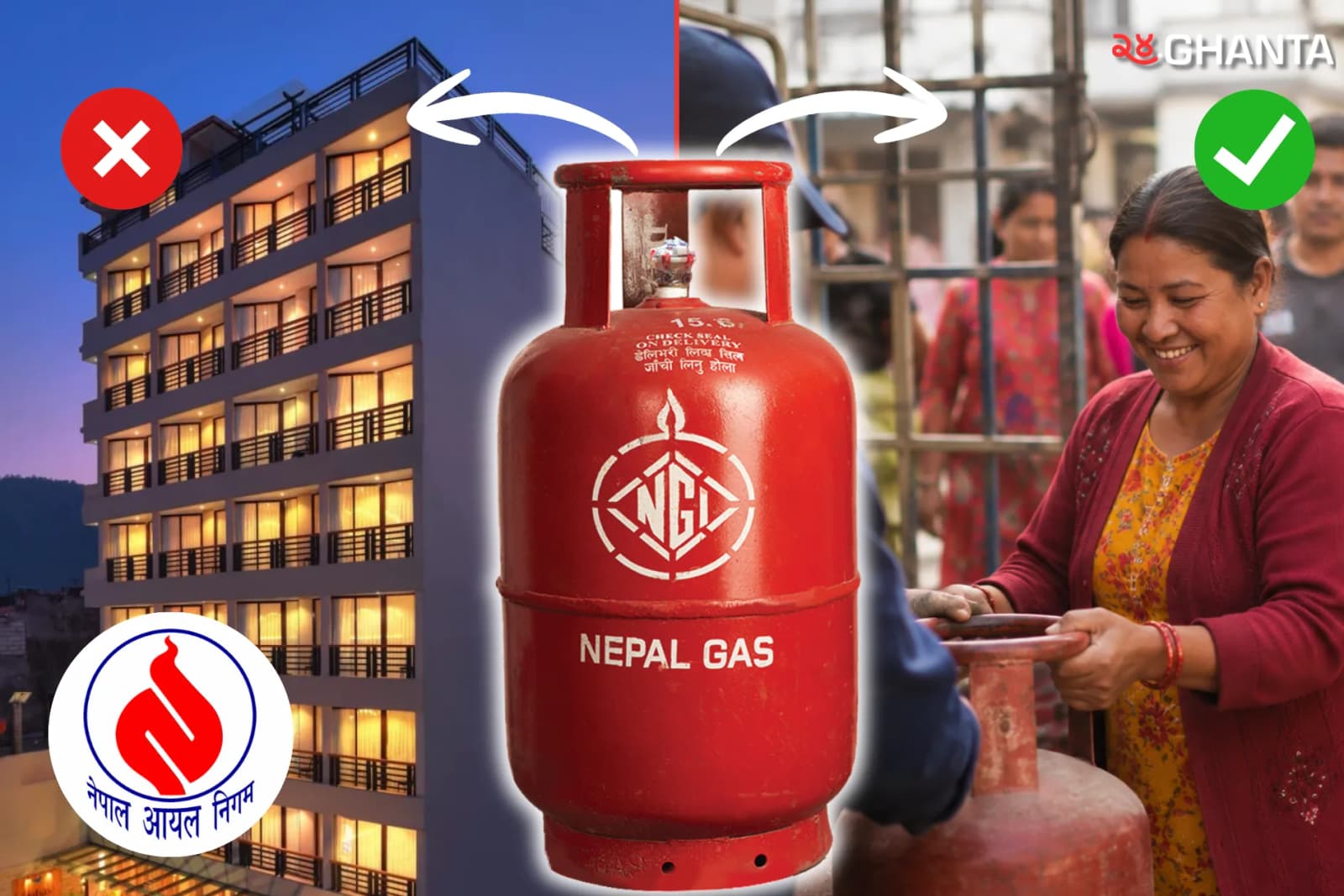
Nepal Oil Corporation has temporarily restricted regular LPG sales to hotels, restaurants, canteens and other commercial users in Kathmandu Valley after flood damage at Krishnabhir disrupted the main supply route into the capital. Available supplies will instead be prioritised for households and vulnerable or essential users, while large businesses have been told to arrange refilling from Terai-based LPG plants and transport cylinders through alternative routes.
· 6 min read
KATHMANDU, NEPAL, September 2, 2026
Nepal Oil Corporation (NOC) has temporarily stopped regular LPG sales for commercial purposes in Kathmandu Valley, including supplies to hotels, restaurants and canteens, after the Trishuli River damaged the Prithvi Highway at Krishnabhir in Benighat Rorang Rural Municipality-7, Dhading, disrupting the movement of LPG into the capital. The temporary measure, agreed on Wednesday by NOC officials and representatives of gas sellers, is intended to protect limited supplies for households and people with urgent needs while gas companies reroute cylinders into Kathmandu through alternative roads.
Why Has NOC Restricted Commercial LPG Sales?
The problem begins at Krishnabhir, one of the critical points on the Prithvi Highway connecting Kathmandu with the rest of the country.

Flooding in the Trishuli River eroded and damaged a section of the highway, blocking normal traffic.
That created a major problem for LPG transportation because the large gas bullet trucks normally used to transport LPG cannot follow their usual route into Kathmandu Valley.
NOC concluded that continuing normal commercial distribution while supplies were disrupted could worsen shortages for ordinary households.
Households Will Get Priority
Under the temporary arrangement, available LPG in Kathmandu Valley will primarily be directed toward household consumers and essential needs.
The objective is to prevent limited supplies from being consumed rapidly by large commercial establishments while families struggle to obtain cooking gas.
NOC's LPG Department has said the restriction is intended to make household availability smoother during the disruption.
Who Else Gets Priority?
The arrangement goes beyond ordinary household consumers.
According to the decision, LPG should be provided on a priority basis according to need to groups including:
students, people requiring assistance, patients, senior citizens, people with disabilities and residents of shelters.
Special attention will also be given to centres established to support people affected by the recent floods.
The aim is to ensure that people who may have few alternatives for cooking or essential daily needs are not pushed to the back of the queue during the supply disruption.
What Happens To Hotels And Restaurants?
Hotels, restaurants, canteens and other businesses have not been permanently banned from using LPG.
The restriction applies to their normal commercial purchases from the limited supply available through dealers and sellers in Kathmandu Valley.
Large commercial users are instead being asked to make separate arrangements for the gas they require.
That distinction is important: commercial LPG use has not been outlawed; normal local commercial distribution has temporarily been restricted.
Businesses Can Bring Their Own Gas
Large hotels, restaurants and other commercial consumers can coordinate with their LPG dealer or the relevant gas company.
Their empty cylinders can then be transported to LPG industries operating in the Terai, refilled there and brought back to Kathmandu through available alternative routes.
In effect, businesses requiring large quantities of LPG are being asked to manage their supply separately instead of competing with households for the cylinders already available inside the Valley.
Why Refill Cylinders In The Terai?
Most of Nepal's LPG bottling infrastructure is located outside Kathmandu Valley.
Plants in areas including Bara, Parsa, Chitwan, Makwanpur and Nawalparasi can receive LPG and fill cylinders without requiring large gas bullets to enter Kathmandu.
Instead of trying to bring the much larger LPG bullet trucks through difficult alternative roads, gas can therefore be transferred into ordinary cylinders in the Terai.
Those cylinders can then be loaded onto smaller trucks and transported toward Kathmandu.
Alternative Routes Are Keeping Supplies Moving
NOC had already begun preparing alternative arrangements soon after the Krishnabhir section became impassable.
One major option for petroleum products is the route through Hetauda–Bhaise–Palung–Naubise–Kathmandu.
Because LPG cylinders can be transported using smaller vehicles than gas bullets, additional alternative roads may also be used where practical.
NOC has been coordinating with local administrations to facilitate the movement of trucks carrying fuel and LPG.
Gas Companies Can Coordinate With Other Plants
Another temporary change allows LPG companies supplying Kathmandu to coordinate with bottling industries outside the Valley.
If a company's normal LPG supply cannot reach its usual facility, arrangements can be made with suitable plants in the Terai to unload the gas and refill cylinders there.
The cylinders can then travel by truck to Kathmandu.
This gives the industry more flexibility while its normal supply chain remains disrupted.
The LPG Problem Did Not Start At Krishnabhir
The highway damage has intensified the problem, but reports indicate that some consumers were already struggling to find LPG before the latest road disruption.
Consumers in Kathmandu and other areas had reported delays in obtaining cylinders in recent weeks.
The closure of the Prithvi Highway therefore placed additional pressure on an LPG market that was already experiencing supply difficulties.
That helps explain why NOC has moved to protect household supplies rather than waiting for the situation to become more severe.
Why The Prithvi Highway Matters So Much
The Prithvi Highway is one of Kathmandu Valley's most important supply corridors.
Large quantities of fuel, LPG, food and other essential goods enter the capital using this route.
When a critical section becomes impassable, the impact extends far beyond ordinary passenger traffic.
Supply trucks must travel longer alternative routes, transportation becomes slower and large vehicles may be unable to use some roads altogether.
The Krishnabhir damage has demonstrated how dependent Kathmandu remains on a relatively small number of road corridors for essential supplies.
Is Kathmandu Running Out Of Gas?
The restriction does not mean Kathmandu has completely run out of LPG.
Gas continues to be transported toward the Valley through alternative arrangements.
The immediate problem is that the normal supply chain has been disrupted and transporting the same volume of LPG has become more difficult.
NOC's strategy is therefore to manage available stocks and incoming supplies so households and vulnerable users continue receiving gas while the highway remains affected.
How Long Will The Restriction Last?
The commercial restriction has been introduced temporarily.
Current arrangements are linked to the disruption at Krishnabhir and the difficulties in transporting LPG into Kathmandu through the normal route.
NOC has been working with LPG companies, dealers and local administrations to maintain supply through alternative routes until normal highway movement can resume.
The duration will therefore depend heavily on road access and the recovery of the normal LPG transportation network.
What Consumers Should Understand
For households, the most important message is that LPG distribution has not stopped completely.
Supplies are still being brought toward Kathmandu, but the disruption has forced authorities to prioritise how available cylinders are distributed.
For businesses, the message is different.
Large commercial users may temporarily have to take greater responsibility for obtaining LPG directly through industries outside the Valley rather than relying on the same local stock used by household consumers.
A Temporary System During An Unusual Crisis
The new arrangement is essentially an emergency measure designed to prevent transportation disruption from becoming a deeper household LPG crisis.
Until the Krishnabhir route is restored, NOC is trying to balance three priorities:
keep gas moving through alternative routes, protect household and essential supplies, and allow large businesses to arrange their own commercial requirements outside the Valley.
For Kathmandu residents already dealing with the wider consequences of the recent floods, the effectiveness of that system will determine whether disrupted transportation turns into a serious cooking-gas shortage.
Published Sep 2 in Nepal