
Khushbu Oli Pushes Death Penalty Debate for Heinous Crimes: Can Nepal’s Law Actually Change?
RPP lawmaker Khushbu Oli has called for Nepal to debate whether the death penalty should be considered for heinous crimes such as rape and murder, arguing that discussion should go beyond simply increasing prison terms. She also urged a review of the statute of limitations in rape cases and questioned whether Nepal’s existing constitutional and international commitments should stand in the way of tougher punishment.
· 4 min read
KATHMANDU, AUGUST 24, 2026
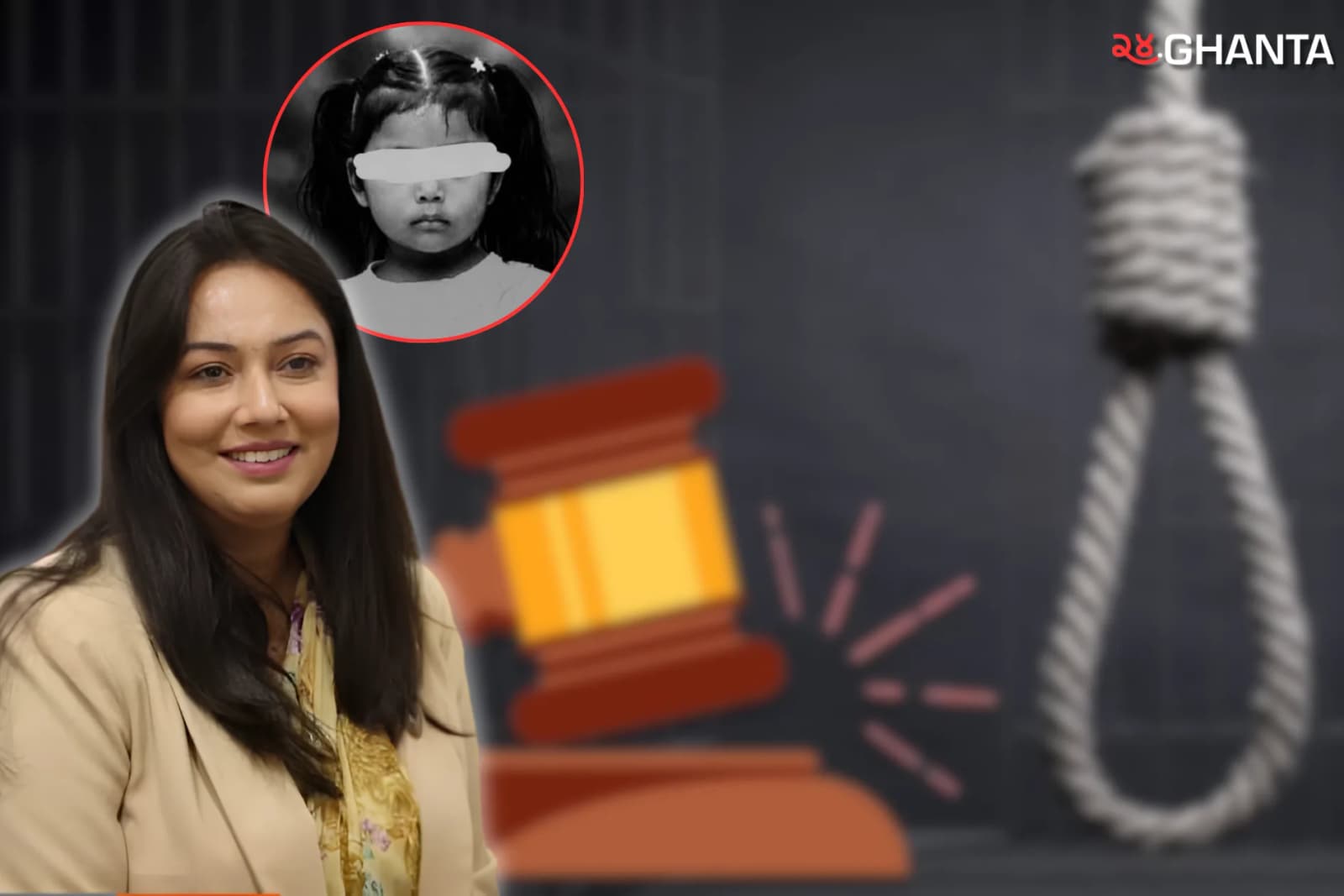
Rastriya Prajatantra Party (RPP) lawmaker Khushbu Oli on Monday called from the House of Representatives in Kathmandu for a national debate on whether Nepal should introduce the death penalty for heinous crimes such as rape and murder, arguing that repeated cases of sexual violence have raised questions over whether the country's existing punishment system is strong enough.
From Prison Terms to the Death Penalty
Addressing Parliament, Oli argued that the discussion should no longer focus only on how many years a person convicted of rape should spend in prison. Instead, she said Nepal should examine whether capital punishment should be considered for the gravest crimes.

Her remarks came as lawmakers raised concerns over serious cases of sexual violence, including the rape and killing of a three-year-old girl in Bara. Other MPs also demanded tougher laws and faster justice in such cases.
Oli Questions Nepal’s International Commitments
Oli acknowledged that Nepal's Constitution prohibits the death penalty but questioned whether international commitments should prevent the country from reconsidering its approach when dealing with extreme crimes.
She argued that if international obligations are viewed as standing in the way of justice, the government should be prepared to examine the issue rather than dismissing the debate outright. She also pointed to India, where capital punishment remains legally available for certain offences.
What Nepal’s Constitution Actually Says
Despite Oli's call, Nepal currently cannot introduce the death penalty through an ordinary criminal law.
Article 16(2) of the Constitution states that no law can be made providing for the death penalty. This means introducing capital punishment would require addressing a direct constitutional prohibition, rather than simply increasing sentences through an ordinary amendment to criminal legislation.
Nepal Also Has an International Commitment
There is another major legal barrier. Nepal acceded to the Second Optional Protocol to the International Covenant on Civil and Political Rights, which aims to abolish the death penalty, on March 4, 1998. Nepal's own report to the UN states that it joined the protocol without any reservation.
This makes the issue more complicated than simply deciding in Parliament to introduce capital punishment. Any serious proposal would have to confront both Nepal's constitutional prohibition and its international human-rights commitments.
Victims’ Rights at the Center of Oli’s Argument
Oli also challenged the way human-rights arguments are discussed in serious criminal cases. She questioned why attention is often placed on protecting an offender's rights while, in cases involving rape and murder, the victim's right to life has already been permanently taken away.
She argued that the central question should therefore be whether Nepal's existing punishment and justice system is strong enough to respond to such crimes and protect potential victims.
Call to Review Rape Laws Beyond Capital Punishment
Oli's speech was not limited to the death penalty. She also called for people convicted of rape to be clearly covered by provisions relating to crimes involving moral turpitude so that convicted offenders cannot later misuse public positions.
She further urged lawmakers, courts and other stakeholders to review the statute of limitations applying to rape cases. Her argument was that delayed reporting should not automatically close the door to justice for survivors of serious sexual offences.
A Wider Parliamentary Demand for Tougher Action
Oli was not the only MP demanding stronger action. During Monday's parliamentary discussions, several lawmakers raised the Bara case and called for tougher punishment, effective investigation and stronger laws against sexual violence.
Questions were also raised over how confidential investigation material connected with the case reportedly became public, adding concerns about the handling of sensitive criminal investigations to the wider debate over justice for victims.
The Debate Has Started, But the Law Has Not Changed
For now, Oli's statement represents a political demand for debate, not a change in Nepal's criminal law. Capital punishment remains constitutionally prohibited in Nepal, while the country's international commitment to abolition adds another significant legal barrier.
Her intervention, however, has widened the discussion beyond the length of prison sentences to larger questions about punishment, victims' rights, statutes of limitation and whether Nepal's criminal justice system is responding effectively enough to the country's most serious sexual crimes.
Published Aug 24 in Nepal