
Nagdhunga–Sisnekhola Tunnel to Open on July 27; Nepal's First Modern Road Tunnel Begins Trial Operations
Nepal's first modern road tunnel, the Nagdhunga–Sisnekhola Tunnel, opens on July 27 with a three-month trial period. Check official toll rates, vehicle restrictions, two-wheeler ban, and key details.
· 3 min read
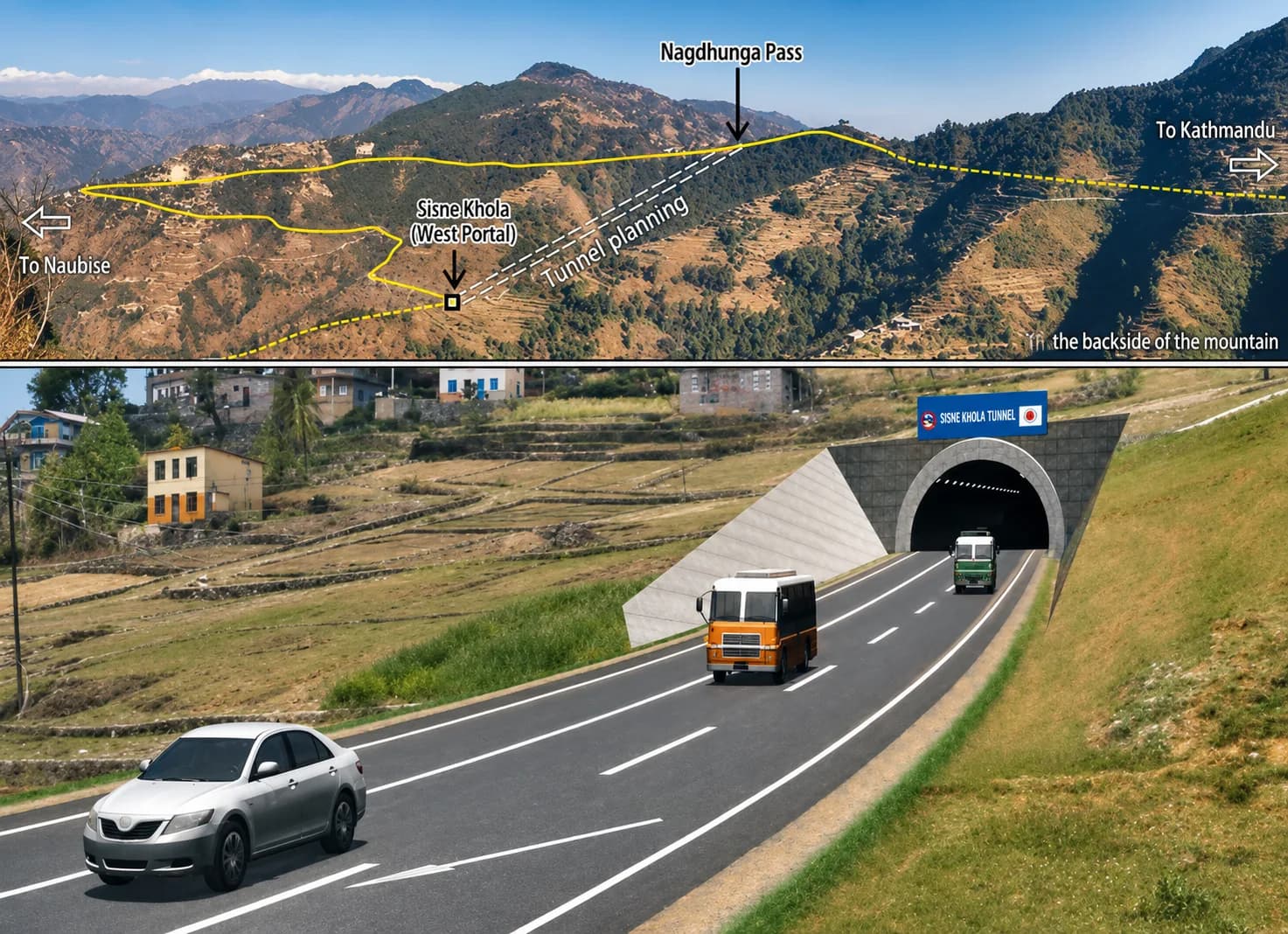
Nepal's first modern road tunnel, the Nagdhunga–Sisnekhola Tunnel, is set to be officially inaugurated on July 27, marking a historic milestone in the country's transport infrastructure. The tunnel will initially operate under a three-month trial period before entering full commercial service, allowing authorities to monitor traffic management, safety systems, and overall operations.
The long-awaited tunnel connects Nagdhunga in Kathmandu with Sisnekhola in Dhading, providing a faster and safer alternative to the existing mountain road. The project is expected to significantly reduce travel time, improve road safety, and ease traffic congestion along one of Nepal's busiest highways connecting the Kathmandu Valley with the rest of the country.
Two-Wheelers Not Allowed
Authorities have confirmed that motorcycles, scooters, and other two-wheelers will not be allowed to use the tunnel. The restriction has been introduced primarily for safety reasons and to ensure smooth traffic flow during the initial phase of operations.

Only four-wheeled and larger vehicles meeting the operational guidelines will be permitted to pass through the tunnel.
Official Toll Rates Announced
The government has also released the official toll charges, which vary depending on the type of vehicle and the direction of travel. Vehicles entering Kathmandu will generally pay higher tolls than those leaving the valley.
The approved toll rates are:
Cars, Jeeps, Pickups, Vans, Microbuses, and other light vehicles
Entering Kathmandu: Rs. 65
Leaving Kathmandu: Rs. 60
Mini Buses and Mini Trucks
Entering Kathmandu: Rs. 115
Leaving Kathmandu: Rs. 80
Buses and Trucks (Single Rear Axle)
Entering Kathmandu: Rs. 260
Leaving Kathmandu: Rs. 200
Multi-Axle Trucks, Heavy Vehicles, and Heavy Equipment
Entering Kathmandu: Rs. 600
Leaving Kathmandu: Rs. 250
Historic Infrastructure Project
The Nagdhunga–Sisnekhola Tunnel is considered one of Nepal's most important infrastructure projects. Built with support from the Japan International Cooperation Agency (JICA), the tunnel is expected to improve connectivity between Kathmandu and the country's western and southern regions.
The project is designed to reduce travel delays caused by steep roads, traffic jams, and difficult weather conditions while making transportation safer and more efficient for thousands of vehicles traveling daily.
Japanese officials, including representatives from JICA and the Japanese Ambassador to Nepal, are expected to attend the official inauguration ceremony.
What the Tunnel Means for Nepal
The opening of the Nagdhunga–Sisnekhola Tunnel represents a major step forward in Nepal's road transport network. By shortening travel time, reducing fuel consumption, and improving road safety, the tunnel is expected to benefit commuters, transport operators, businesses, and tourists alike.
With trial operations beginning on July 27, authorities will closely monitor the tunnel's performance before it enters full commercial operation after the three-month testing period.
Published Jul 24 in Nepal