
Nepal Government Introduces One-Door System for Bhotekoshi Flood Relief to Centralise Donations and Prevent Unauthorised Fundraising
Nepal introduces a one-door system for Bhotekoshi flood relief, centralising cash and material donations and warning against unauthorised fundraising.
· 4 min read
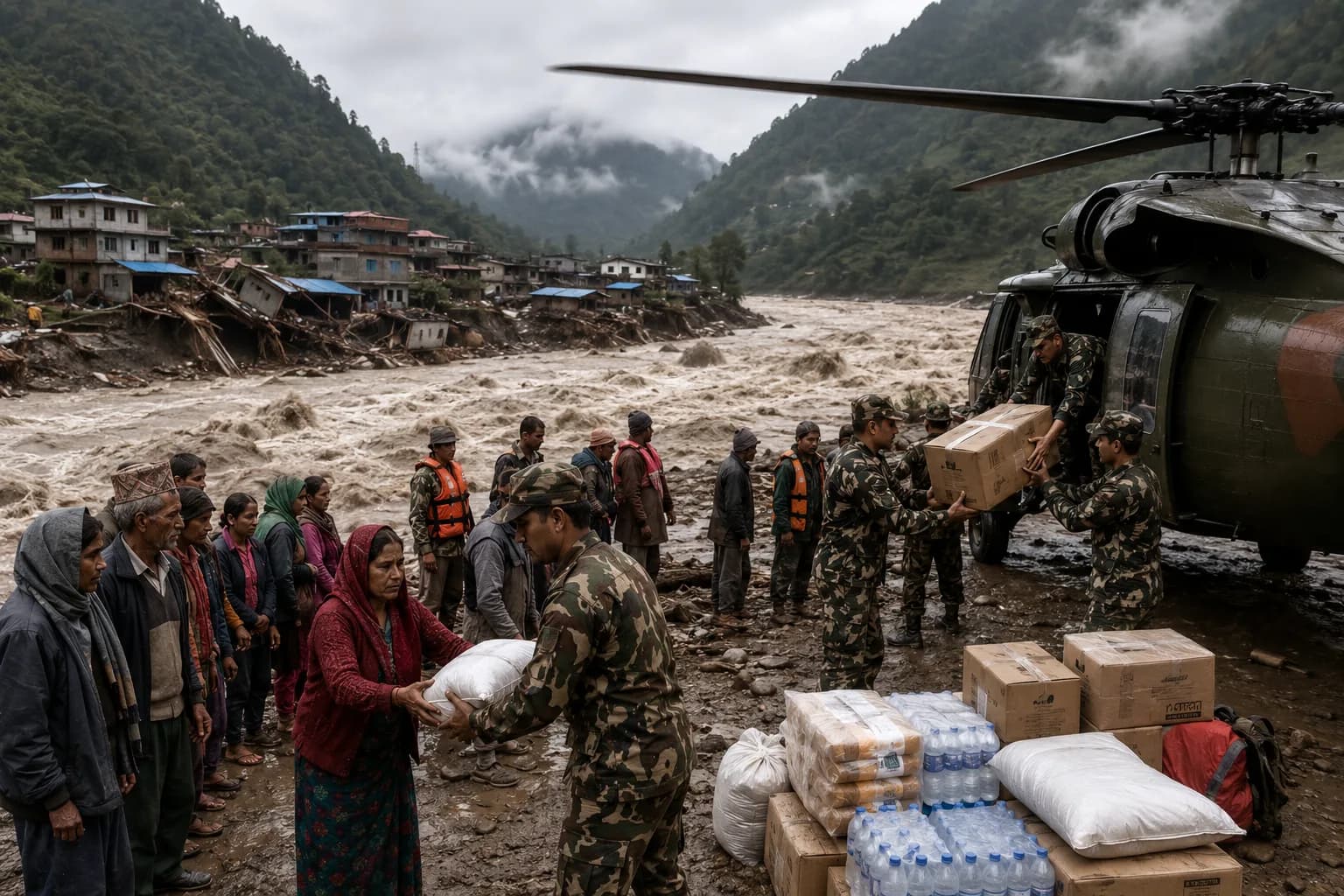
Kathmandu, August 27, 2026: The Nepal government has introduced a one-door system for Bhotekoshi flood relief following the devastating floods in Rasuwa. The system is aimed at bringing cash donations and relief materials under one coordinated mechanism, helping authorities prevent irregularities, reduce duplication and ensure that assistance reaches affected communities quickly and fairly.
What Is the One-Door System for Bhotekoshi Flood Relief?
The one-door system means that donations for flood victims are managed through officially designated government channels rather than being collected independently by different groups. Individuals, private companies, donor agencies and international organisations can still provide financial assistance or relief materials, but the government has established specific points and officials to coordinate the collection and distribution of aid.
The government says the system will make relief operations more organised and transparent while reducing the possibility of donations being misused or duplicated.

Where Can Donors Submit Relief Materials?
The government has established designated collection points for both domestic and international relief supplies.
For international relief materials, donations can be delivered to the National Emergency Operation Centre Warehouse at Tribhuvan International Airport in Kathmandu.
For domestic relief supplies, collection has been arranged at the Nepali Army’s Maithili Barracks in Battar, Nuwakot, and the Baireni Barracks in Dhading. Donors can also coordinate with the Chief District Officer of the respective affected district.
Government Warns Against Unauthorised Fundraising
The government has clearly stated that private organisations, groups and individuals have not been authorised to independently collect relief funds or materials for the Bhotekoshi flood disaster.
This also applies to fundraising campaigns being circulated through social media. The Ministry of Home Affairs has been instructed to stop unauthorised collection drives, while officials have warned the public to be careful before sending money or materials to unverified campaigns.
How Will Relief Reach Flood Victims?
Collected donations and relief supplies will be distributed through a coordinated mechanism involving the civil administration, Nepal Army, Nepal Police, and local and provincial governments.
The purpose is to ensure that relief reaches affected families according to their needs and that no disaster-affected community is left out of the response.
Can People Donate Relief Materials Instead of Cash?
Yes. The one-door system allows donors to provide essential goods as well as money. Depending on the type and location of the donation, materials can be handed over through the designated collection hubs or coordinated with authorities for delivery to affected communities.
The system is therefore not intended to stop people from helping flood victims. Instead, it provides official channels through which assistance can be collected and distributed.
Can People From Abroad Donate?
Yes. Overseas donors can contribute to the Prime Minister’s Disaster Relief Fund through international bank transfers. According to the government’s instructions, donors should provide the beneficiary bank's SWIFT/BIC information and clearly mention the purpose of the payment, such as Rasuwa/Bhotekoshi flood relief.
There is no stated ceiling on the amount of cash or volume of materials that donors can provide. Foreign-currency transfers are generally converted by the receiving bank according to applicable banking procedures.
Why Did the Government Introduce the System?
The main goal is to create a single, coordinated relief mechanism during the emergency. When multiple organisations independently collect and distribute donations, authorities can face difficulties tracking resources, identifying gaps and preventing duplication.
By coordinating donations through designated channels, the government aims to improve accountability and make sure limited relief resources reach people who need them most.
Relief Operations Continue in Flood-Affected Areas
The one-door system comes as rescue and relief operations continue in areas affected by the Bhotekoshi River floods. Government agencies and security forces are continuing efforts to rescue stranded people, provide essential supplies and support affected communities.
The Nepal Army has also been involved in transporting relief materials to flood-hit areas, while government agencies and local authorities continue working on emergency response and recovery.
The government has urged people and organisations willing to help to use officially recognised channels rather than sending donations to unverified individuals or social media campaigns.
Published Aug 27 in Nepal