
Nepal Plans New City for Flood-Displaced Families Instead of Rebuilding in Devastated Areas
Nepal’s government plans to develop a new organized settlement on safer land for families displaced by the recent floods instead of returning them to some of the worst-hit locations. Infrastructure Minister Sunil Lamsal said the proposed settlement would include schools, hospitals and industries, although its location, budget and construction timeline have not yet been announced.
· 5 min read
Kathmandu, September 21, 2026
Government Looks Toward a New Home for Flood Survivors
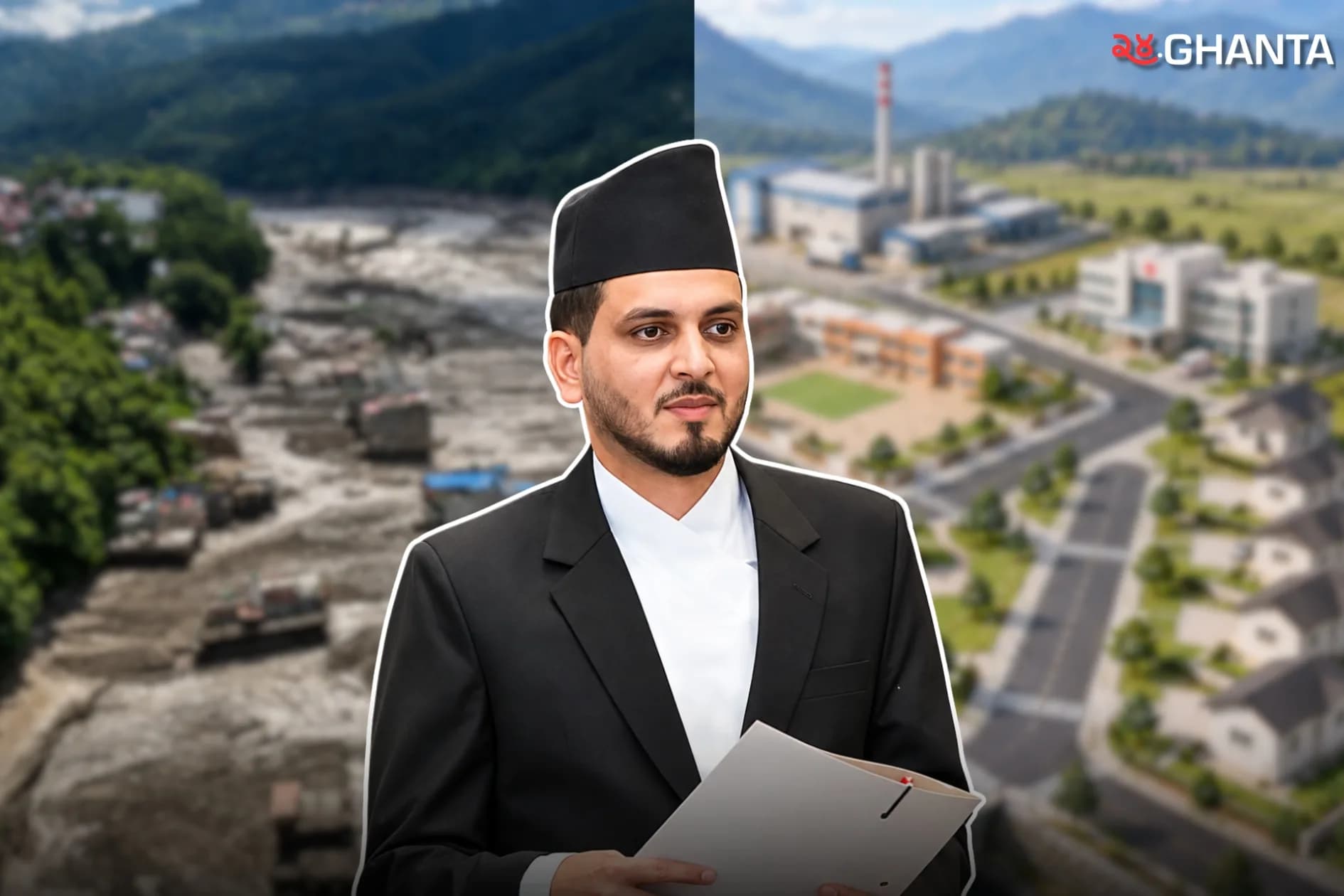
Infrastructure Development Minister Sunil Lamsal said on Monday that the government plans to develop a new, organized settlement for people displaced by the recent floods rather than resettling families in locations that were severely damaged and remain unsafe. Speaking at a meeting of the House of Representatives’ Infrastructure Development Committee in Singha Durbar, Lamsal said the proposed settlement would be developed on safer land and include essential facilities such as schools, hospitals and industries, with the government planning to purchase the land required for the project.

The parliamentary committee had officially convened on September 21 to discuss damage to lives and infrastructure in Rasuwa, Nuwakot and Dhading, rehabilitation and reconstruction, and financing required for rebuilding following the devastating floods.
Why Not Rebuild in the Same Places?
Lamsal said the government does not intend simply to return displaced residents to the same places devastated by the floods.
According to the minister, the situation requires a different reconstruction approach from the one Nepal followed after the 2015 earthquake. Some areas hit by the latest floods have been so severely damaged that rebuilding settlements in exactly the same locations may not be practical or safe.
The scale of that destruction is visible in communities such as Betrawati, where floodwaters buried or destroyed homes, businesses and other structures under mud, rocks and debris.
A Settlement With More Than Just Houses
The proposal is not being presented simply as a project to construct replacement homes.
Lamsal said the planned city would include facilities such as hospitals, schools and industries, creating a more organized settlement where displaced families could have access to essential services as well as economic opportunities.
The government intends to acquire land for the development, according to the minister. However, officials have not yet publicly confirmed where the new settlement will be located, how large it will be, how many families it will accommodate, what it will cost or when construction will begin in the information released so far.
This means the proposal remains at the planning and policy stage rather than being a fully detailed construction project.
Floods Changed the Government’s Reconstruction Approach
The August 26 disaster caused widespread destruction along the Bhote Koshi-Trishuli river system, damaging settlements, roads, bridges, hydropower infrastructure and other public facilities.
The government has since been working to restore basic connectivity. Lamsal said damaged roads, bridges and drinking-water infrastructure are among the immediate priorities, with temporary access being restored where permanent reconstruction cannot yet begin.
He has also indicated that the government does not want to reconstruct certain infrastructure in places where the flood demonstrated that rebuilding there would leave it exposed to the same danger.
No Separate Reconstruction Authority Planned
The government is also taking a different institutional approach from the reconstruction that followed Nepal’s 2015 earthquake.
Lamsal has said the government does not currently plan to establish another separate reconstruction authority. Instead, reconstruction is expected to be carried out through the existing National Disaster Risk Reduction and Management Authority (NDRRMA).
After the 2015 earthquake, Nepal established the National Reconstruction Authority to oversee rebuilding. Lamsal said that at the time there was no existing disaster-management authority capable of playing that role. Nepal now has the NDRRMA, and the government intends to strengthen and use that institution rather than create another structure.
A Lesson for Local Governments
Lamsal also said the disaster showed the need to make local governments better equipped to respond to emergencies.
The federal government has been coordinating with local representatives in affected areas as reconstruction planning continues. Earlier this month, Lamsal said eight thematic task forces had been formed to accelerate work on roads and bridges, while local representatives were asked to coordinate damage assessments and reconstruction plans.
The wider challenge will be moving from immediate relief and temporary infrastructure restoration toward permanent settlements and livelihoods for families who may no longer be able to safely return home.
What Happens Next?
For flood-displaced families, the announcement signals an important change in Nepal’s reconstruction thinking: recovery may not always mean rebuilding exactly where communities stood before the disaster.
The government is instead considering moving affected families to safer land and creating an organized settlement where housing, education, healthcare and economic activity can exist together.
But major questions remain unanswered. The government has yet to announce the proposed city’s location, size, budget, construction timeline, eligibility criteria or number of families to be relocated.
Those details will determine how the proposal moves from a government concept to an actual new home for families who lost their communities in the floods.
Key Points
Infrastructure Development Minister Sunil Lamsal says the government plans a new settlement for flood-displaced families.
The government does not intend to return residents to some severely damaged locations.
The proposed settlement would include homes, hospitals, schools and industries.
The government plans to purchase land for the development.
The exact location, budget, timeline and number of beneficiaries have not yet been announced.
Reconstruction is expected to be handled through the existing NDRRMA rather than a new reconstruction authority.
The September 21 parliamentary committee meeting focused on flood damage, rehabilitation, reconstruction and financing in Rasuwa, Nuwakot and Dhading.
Published 9 hours ago in Nepal