
Nepal Scraps 3% Education and Health Tax—But How Will Citizens Get Their Refunds?
Nepal’s Cabinet has withdrawn the three percent equity fees imposed on private education and healthcare services after strong public criticism that the charges would increase costs for students, parents and patients. Taxes collected after the measure took effect on July 17 will be refunded within 50 days, although the government has not yet publicly explained the detailed claim process.
· 4 min read
Cabinet Reverses Controversial Tax
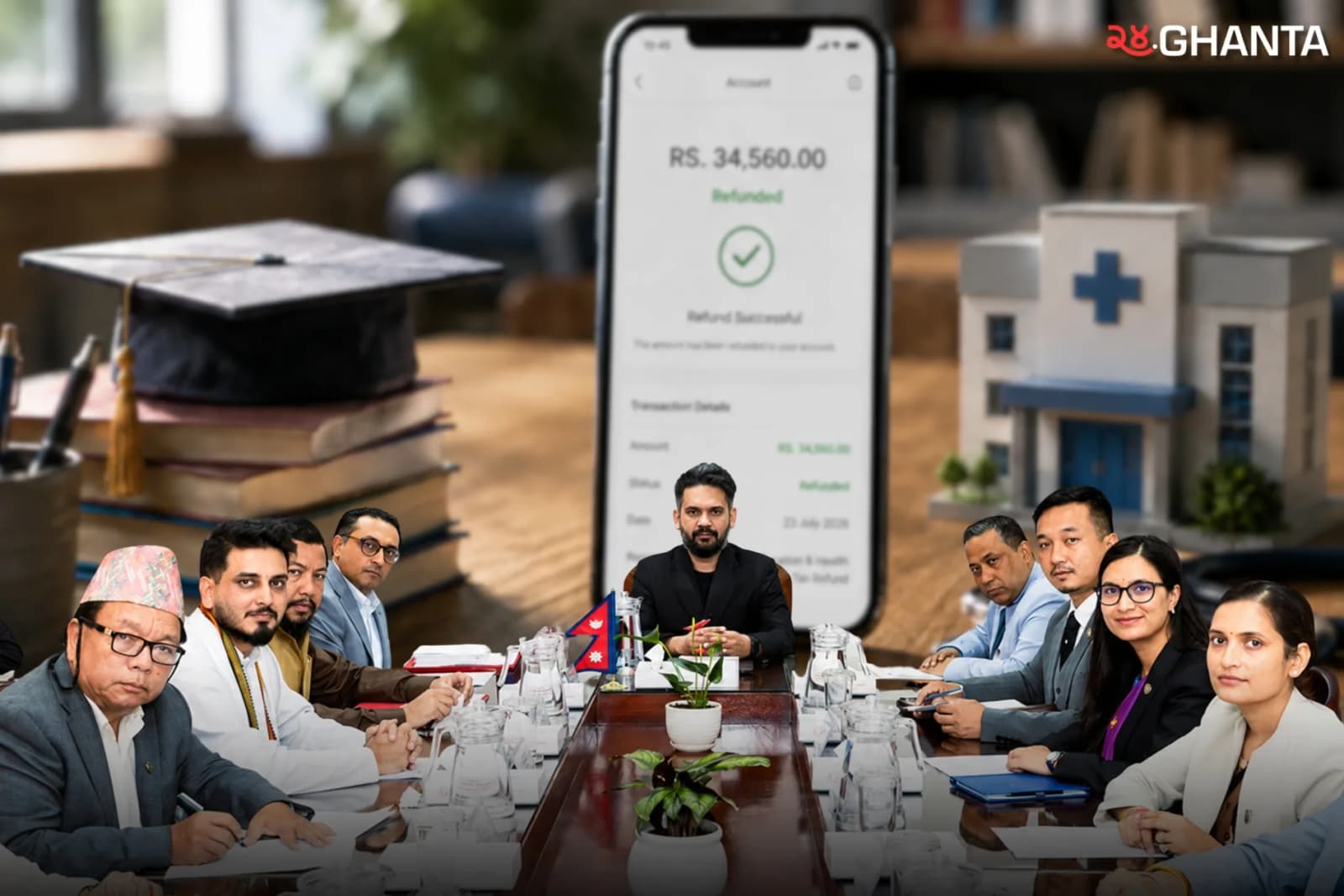
Nepal’s Cabinet, led by Prime Minister Balendra Shah, decided in Kathmandu on Wednesday, July 22, 2026, to withdraw the three percent Education Equity Fee and Health Equity Fee imposed on private education and healthcare services from July 17. The government reversed the policy because students, parents, patients, private institutions and other stakeholders argued that the additional charge would make essential services more expensive, and it has promised to return the money already collected within 50 days.
What The Tax Covered
The levy required privately operated schools, colleges and universities to collect an additional three percent on the fees charged to students. Private hospitals, medical colleges, nursing homes and other healthcare providers were similarly required to collect three percent on service charges paid by patients.
Institutions were expected to issue invoices for the additional charge and deposit the collected revenue through the Inland Revenue Office. The measure was introduced through the Financial Act for the 2026–27 fiscal year and became effective on July 17.

Why The Government Introduced It
The government originally presented the levy as a way to raise money for improving public education and healthcare, particularly in remote and disadvantaged areas. Officials said the revenue would support marginalised and low-income communities, improve access to education, expand health insurance and help widen Nepal’s tax base.
Finance Minister Swarnim Wagle had earlier defended the education fee in Parliament, saying the money would help secure educational opportunities for children from marginalised communities and improve the public education system.
Why The Policy Faced Backlash
Critics argued that although the fee was formally imposed on private institutions, schools and hospitals would eventually pass the cost on to families and patients. Education and healthcare organisations warned that the levy would raise tuition fees, hospital bills and treatment expenses rather than reduce inequality.
Opposition grew after patients began seeing the new charge on healthcare bills and private education organisations demanded its withdrawal. Prime Minister Shah acknowledged that the policy, in its existing form, would create additional financial pressure and frustration for ordinary citizens.
How The Refunds Will Work
The Ministry of Finance has been assigned to implement the Cabinet’s decision and coordinate with agencies including the Inland Revenue Department. According to the Prime Minister’s Office, money collected from citizens during the period when the tax was active will be returned directly to their bank accounts within 50 days.
However, the government has not yet published full instructions explaining whether citizens must submit their original bills, contact the school or hospital that collected the fee, register through a government portal or provide separate bank details. Until those instructions are issued, taxpayers should safely keep their invoices, payment receipts and bank records.
The Prime Minister’s Office has said that money which cannot be refunded because a person does not claim it or because of technical difficulties may eventually be transferred to the government’s consolidated fund.
Questions Still Unanswered
The biggest uncertainty is how the government will identify each student, parent or patient who paid the levy. It is also unclear whether refunds will be processed automatically by schools and hospitals, through tax offices or directly by the Ministry of Finance.
There has also been conflicting reporting about the formal legal procedure. Earlier reports said a tax waiver under the Finance Bill would need to be communicated to Parliament and published in the Nepal Gazette, while the Prime Minister’s Office later said the Cabinet’s executive decision took immediate effect without Gazette publication.
A clear written refund directive from the Ministry of Finance will therefore be important for preventing confusion, duplicate claims and delays.
What Happens To Welfare Plans
Although the equity fees have been removed, the government says it has not abandoned its goal of helping disadvantaged citizens. Prime Minister Shah has reiterated plans requiring private hospitals to reserve 10 percent of their beds for underprivileged patients and private colleges and universities to allocate 10 percent of their seats to disadvantaged students through a transparent system.
What Citizens Should Do Now
Anyone who paid the three percent education or health fee after July 17 should keep the original invoice showing the tax amount. Citizens should also retain payment confirmations, hospital or educational institution details, and the bank account used for payment until the Finance Ministry announces the official refund procedure.
The withdrawal offers immediate relief from an unpopular charge, but the success of the decision will depend on whether the government can return the collected money transparently and within its promised 50-day deadline.
Published Jul 23 in Politics