
Nepal Seeks India’s Approval to Accept National Identity Card for Cross Border Travel
Nepal has officially asked India to recognise its biometric National Identity Card as a valid travel document for cross border journeys. If approved, the move could make visa free travel easier while supporting Nepal's plan to replace traditional citizenship certificates with a secure digital identity system.
· 4 min read
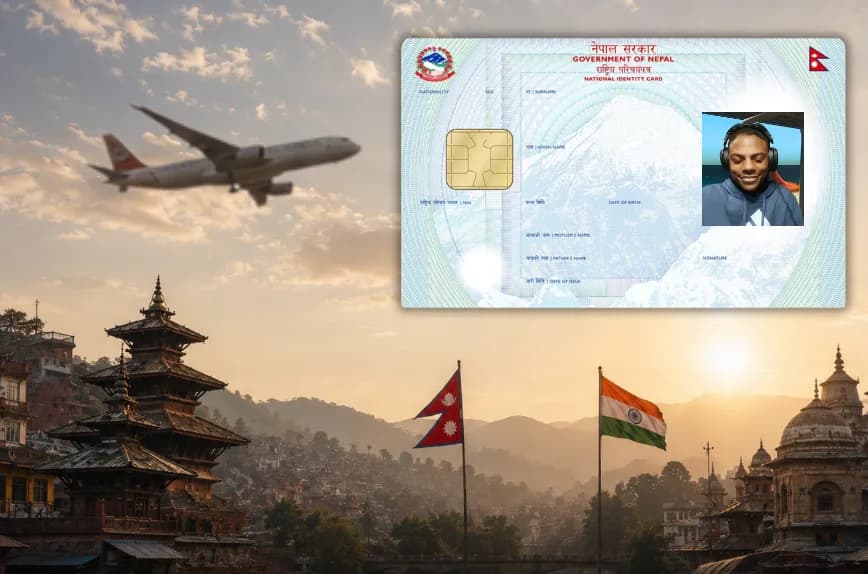
Nepal has officially requested India to recognise its biometric National Identity (NID) card as a valid travel document for cross border travel, a move that could make travel easier for millions of Nepali citizens if approved.
The proposal has been formally sent to New Delhi through diplomatic channels, and Nepal's Department of Immigration (DoI) is now waiting for a response from the Indian government.
According to Director General of the Department of Immigration Ram Chandra Tiwari, Nepal has already forwarded the request through the Ministry of Foreign Affairs.

"We have already forwarded the proposal to the Indian side through the Ministry of Foreign Affairs," Tiwari said.
Current Travel Rules
At present, Nepali citizens travelling to India, especially by air, must carry either a valid passport or their original citizenship certificate.
Likewise, Indian citizens travelling to Nepal are required to present either a valid passport or an original voter identity card with a photograph.
Although Nepal and India share an open border and citizens of both countries can travel without a visa, valid identity documents are still required depending on the mode of travel.
Why Nepal Wants the Change
The Government of Nepal is gradually expanding the use of the National Identity Card across public services. The biometric card is already becoming mandatory for banking services, land registration, passport applications, and other government services.
Officials say the long term goal is to replace the traditional citizenship certificate with a single secure digital identity document.
Recognising the National Identity Card for travel would allow people to use one modern document instead of carrying multiple identity papers.
"It is verified, authentic and technology friendly," Tiwari said. "That is why we have requested India to allow the use of the National Identity Card while travelling by both air and land routes."
A Secure Biometric Identity
Nepal's National Identity Card contains advanced biometric information, including fingerprint scans, facial recognition data, and iris scans.
The programme was first launched as a pilot project in Panchthar district and among government employees in 2009.
Since then, more than 4.5 million Nepali citizens have received the card, while nearly 20 million additional applications have already been submitted.
Although every citizen has not yet received the card, immigration officials believe it is the country's most secure identity document.
Positive Initial Response
Senior immigration officials said representatives from the Indian Embassy recently met with officials from Nepal's Department of Immigration to discuss the proposal.
According to officials, the Indian delegation responded positively and confirmed that the request has been forwarded to decision makers in New Delhi for further consideration.
No final decision has been announced yet.
Better Border Management
Officials from Nepal's Home Ministry also said discussions between the two countries have included plans to improve systems for recording cross border movement.
A formal travel data system would help both governments better understand travel patterns while maintaining the long standing visa free movement enjoyed by citizens of both countries.
Potential Benefits
If India approves Nepal's request, the National Identity Card would become an additional accepted travel document alongside passports and citizenship certificates.
The move would make travel more convenient for people who do not have immediate access to a passport or are transitioning to the new identity system.
It would also support Nepal's broader digital identity programme by expanding the practical use of the biometric card beyond domestic services.
According to Department of Immigration records, around 150,000 Nepalis travelled to India last year. However, officials note that the total number of travellers is likely much higher because comprehensive data covering both land border crossings and air travel is not currently available.
Awaiting India's Decision
Nepal's proposal now awaits official approval from the Indian government. If accepted, it would mark a significant step in modernising travel between the two neighbouring countries while supporting Nepal's transition towards a single national biometric identity system.
Published Jul 26 in Nepal