
Nepal’s Rare Himalayan Giant: The Story Behind Kenzo, The Flower That Looks Like A Mountain Tower
Hidden in the high Himalayas of eastern Nepal, Kenzo (Padamchal) is a rare and extraordinary flowering plant that grows only in cold, high-altitude environments. With its unusual pyramid-like shape, traditional importance, and limited habitat, the flower has become both a natural treasure and a growing symbol of Himalayan conservation and eco-tourism.
· 4 min read
Kathmandu, September 20, 2026
The Rare Himalayan Flower Standing Like A Natural Tower

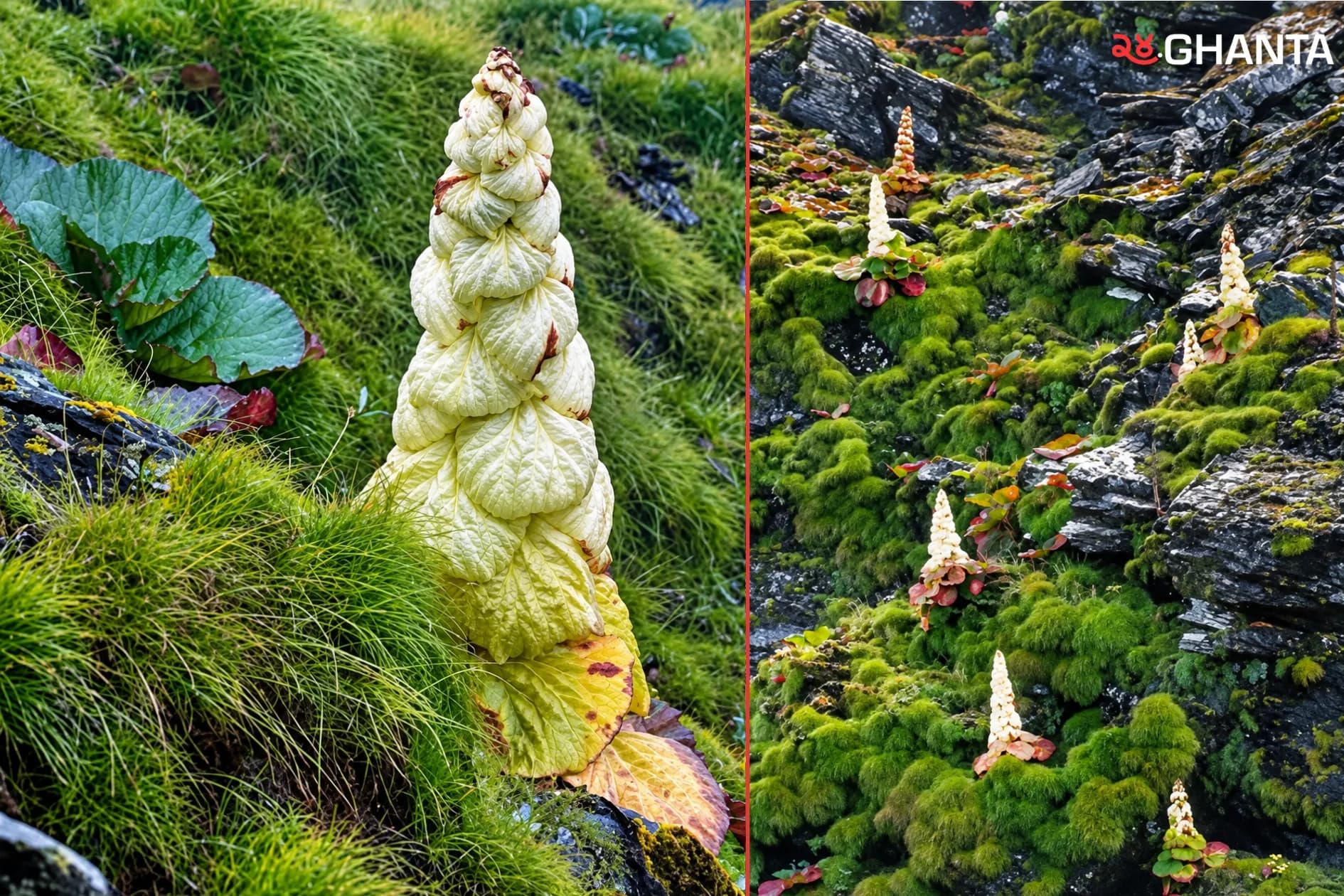
Deep inside the high mountains of eastern Nepal, a rare flower has been attracting nature lovers with its extraordinary shape and beauty. Kenzo, locally known as Padamchal, grows in places like Timbung Pokhari of Taplejung, where the flower transforms alpine landscapes into a unique natural garden during its short blooming season. The flower blooms mainly from Shrawan to the second week of Ashoj, making the opportunity to witness it available only for a limited time every year.
Unlike ordinary flowers found across Nepal, Kenzo survives only in harsh Himalayan conditions at elevations of around 3,200 to 4,500 metres above sea level. Its ability to grow in cold, rocky mountain environments makes it a special part of Nepal’s high-altitude ecosystem.
A Flower Unlike Any Other In Nepal
Kenzo is easily recognised because of its unusual structure. Its broad leaves support layers of small flowers that become narrower as they rise upward, creating a shape similar to a pyramid, tower, or mountain peak.
The plant can grow several feet tall, standing out against open Himalayan landscapes. From a distance, groups of Kenzo flowers appear like small towers spread across mountain slopes, making them highly attractive for photographers and travellers.
This rare appearance has made Kenzo one of the most unique floral attractions of eastern Nepal.
Why Kenzo Is Considered Rare
Kenzo is not a flower that grows everywhere. It requires specific Himalayan conditions, including:
High altitude locations
Cold mountain climate
Open alpine grasslands
Limited growing seasons
The plant is mainly found in Himalayan regions of Nepal, India, and Bhutan. Within Nepal, it has been reported in high-altitude areas of Taplejung, Panchthar, and Sankhuwasabha.
Because of its restricted habitat and short flowering period, seeing Kenzo in full bloom is considered a rare natural experience.
More Than A Beautiful Flower: Its Ecological Importance
Kenzo plays an important role in the fragile Himalayan ecosystem. High-altitude plants like Kenzo help maintain biodiversity in mountain regions where many species depend on limited natural resources.
The survival of such plants also reflects the health of Himalayan landscapes. Changes in climate, increasing human activity, and habitat disturbance can affect these sensitive mountain species.
Protecting Kenzo means protecting the wider ecosystem where many rare Himalayan plants and animals survive.
Traditional Importance And Possible Uses
Apart from its beauty, Kenzo has traditional value among local communities. The plant has been recognised for its medicinal importance, with local people traditionally using parts of Himalayan plants like Padamchal for various purposes.
Traditional knowledge in Himalayan communities has linked such plants with uses related to:
Supporting digestion
Traditional herbal remedies
Local healing practices
However, because wild Himalayan plants are sensitive and slow-growing, experts emphasise sustainable use and conservation rather than uncontrolled collection.
A Flower That Inspired Scientists More Than 170 Years Ago
Kenzo’s beauty has attracted attention for generations. British botanist Sir Joseph Dalton Hooker documented seeing similar Himalayan vegetation during his expedition to the Sikkim region in 1849.
Hooker described the striking appearance of the pyramid-shaped plant growing among high mountain landscapes, showing that Kenzo has fascinated explorers long before it became a tourism attraction.
Timbung Pokhari: Nepal’s New Kenzo Destination
Today, Timbung Pokhari in Taplejung has become one of the best-known places to experience Kenzo. Visitors who travel to see the sacred high-altitude lake often discover the flower-covered landscapes surrounding it.
The growing popularity of Kenzo has encouraged local authorities to focus on conservation and tourism promotion. Sidhingba Rural Municipality has been working on plans to highlight the area as the “Capital of Kenzo” while protecting the plant’s natural habitat.
A Himalayan Treasure That Needs Protection
Kenzo is not only a flower for photographs. It represents Nepal’s rare mountain biodiversity, traditional knowledge, and the natural beauty hidden in remote Himalayan regions.
As more travellers discover this unique plant, conservation efforts will be important to ensure that future generations can also witness the rare sight of Kenzo standing like a natural tower above Nepal’s mountains.
Published Yesterday in Nepal