
No Festive Fare Shock: Nepal’s Airlines Keep Prices Down as Roads Remain Disrupted
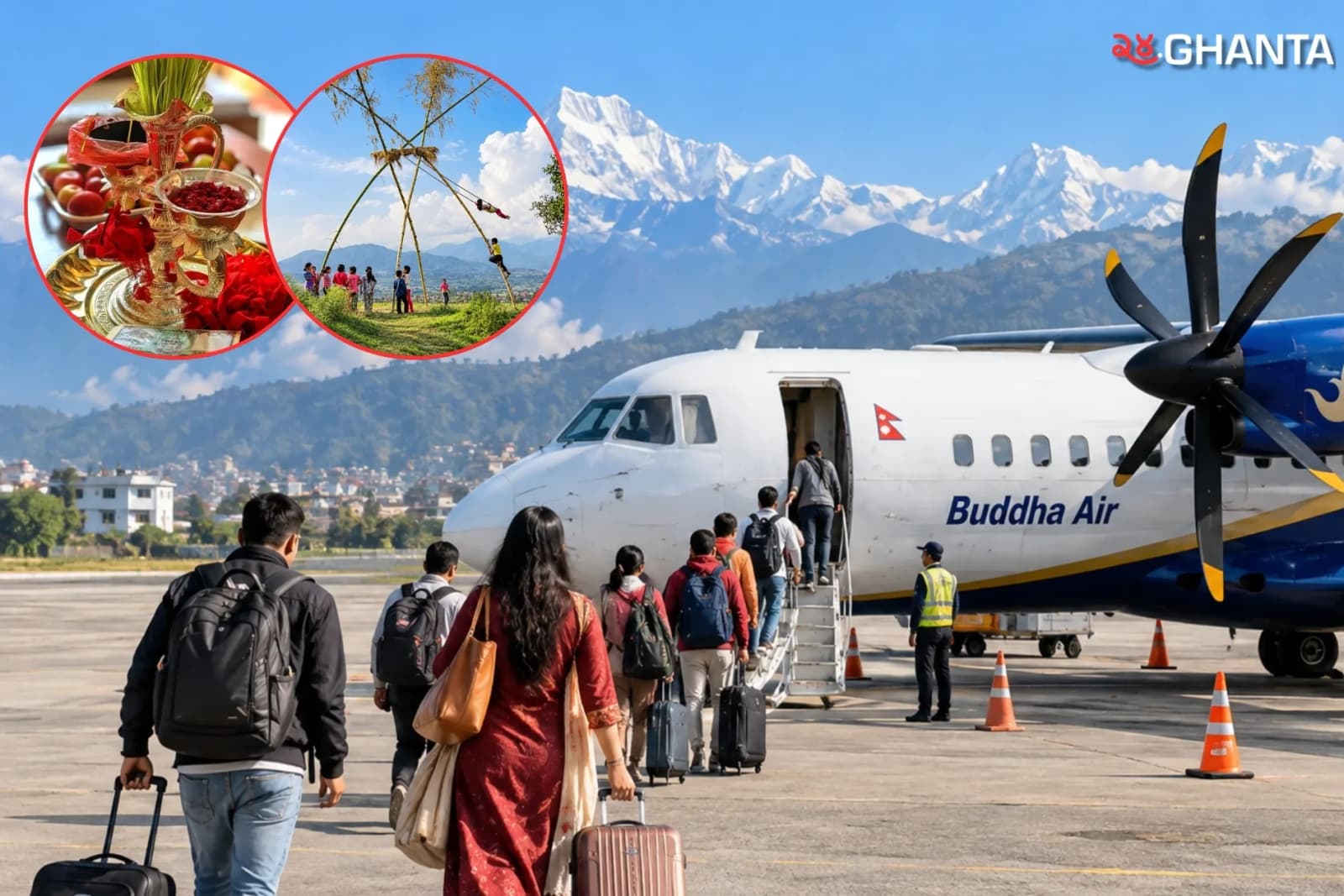
Nepal's domestic airlines are holding back the demand-driven fare increases often seen during the busy festival travel season as flood-damaged and disrupted roads push more passengers toward flights. Buddha Air says it will operate at minimum fares through Dashain, Tihar and Chhath, while Shree Airlines has introduced fixed fares on its domestic routes until the situation returns to normal.
· 4 min read
KATHMANDU, NEPAL, SEPTEMBER 8, 2026
Airlines Hold Fares as Festival Rush Approaches
Nepal's domestic airlines are taking steps to keep air travel affordable during the upcoming Dashain, Tihar and Chhath festival period, as passengers across the country increasingly depend on flights because flood damage has disrupted major roads and highways. Buddha Air has committed to operating at minimum fares during the festival period, while Shree Airlines says it has fixed fares for destinations it serves, responding to exceptional travel pressure created by the disaster and helping prevent demand from pushing ticket prices sharply higher.
Why This Year Is Different
Festival travel normally creates one of the busiest periods of the year for Nepal's domestic aviation sector.

Thousands of people leave Kathmandu to return home for Dashain and Tihar, increasing demand for limited airline seats. As cheaper fare categories sell out, passengers can end up purchasing tickets from higher fare bands.
This year, however, the circumstances are very different.
The devastating Bhotekoshi flood and subsequent road disruptions have damaged or obstructed important transport links, leaving many travellers with fewer options for moving between Kathmandu and other parts of Nepal.
Buddha Air Promises Minimum Fares
Buddha Air has made one of the clearest commitments.
The airline says it will continue operating at minimum fares through Dashain, Tihar and Chhath, while road transportation remains difficult.
Buddha Air Executive Chairman Birendra Bahadur Basnet said the airline considers providing an “air bridge” during the disaster a responsibility, even if keeping fares low creates a financial burden for the company.
The airline has also increased flight frequencies as passenger numbers have risen following the disaster.
Fuel Prices Could Still Affect Fares
There is one important condition attached to Buddha Air's commitment.
The airline has indicated that fares could require adjustment if aviation fuel prices increase.
Fuel represents a major part of airline operating expenses, and Buddha Air says aviation fuel costs have risen sharply this year. However, the company says it does not plan to apply the usual demand-driven higher fare levels during the festival period under the current circumstances.
Shree Airlines Sets Fixed Prices
Shree Airlines has taken a slightly different approach.
Instead of allowing fares to rise according to increasing demand, the airline says it has established fixed fares for various destinations and intends to maintain those prices until the situation returns to normal.
According to Shree Airlines spokesperson Anil Manandhar, the fixed-fare policy was introduced in response to the disaster.
What Shree Airlines Is Charging
Current reported Shree Airlines fixed fares include:
Kathmandu–Dhangadhi: Rs 10,800
Kathmandu–Nepalgunj: Rs 8,300
Kathmandu–Bhadrapur: Rs 8,500
Kathmandu–Bharatpur: Rs 5,946
Kathmandu–Janakpur: Rs 6,200
Kathmandu–Pokhara: Rs 6,000
Kathmandu–Biratnagar: Rs 7,700
These are the airline's reported current fixed fares, rather than a permanent fare structure.
CAAN Had Already Told Airlines Not to Raise Fares
The airlines' decisions also follow intervention from Nepal's aviation regulator.
After the flood disrupted highways and increased pressure on air travel, the Civil Aviation Authority of Nepal (CAAN) instructed domestic carriers not to increase existing fares and to ensure passengers could obtain tickets at rates below the legally permitted maximum fare.
The instruction covered Nepal Airlines, Buddha Air, Yeti Airlines, Shree Airlines, Summit Air, Tara Air and Sita Air.
CAAN emphasized that airlines should not take advantage of passengers who had become increasingly dependent on flights because of the disaster.
Air Travel Demand Is Already Rising
The pressure on domestic aviation is already visible.
Buddha Air reported carrying more than 10,000 passengers per day, with both passenger numbers and flight frequencies rising sharply following the flood. The airline also extended operations, with some final flights operating as late as 11 p.m.
Pokhara has experienced a similar increase.
According to Pokhara International Airport General Manager Jagannath Niraula, the airport has recently been handling around 48 flight arrivals and departures per day, compared with roughly 30 daily movements two weeks earlier.
Buddha Air Is Also Carrying Relief Supplies
Buddha Air's response has gone beyond passenger fares.
The airline has also been transporting relief materials free of charge for communities affected by the Bhotekoshi disaster.
According to the airline, thousands of kilograms of relief supplies have been transported to destinations around the country as organizations continue responding to the flood.
A Different Dashain for Nepal's Travellers
For many families, flying home during Dashain is usually an expensive alternative to travelling by road.
This year, damaged and disrupted highways mean that choice may no longer exist for some passengers.
With demand rising just as Nepal enters its busiest travel season, unrestricted demand-based pricing could have pushed more passengers into higher fare categories.
Instead, Buddha Air's minimum-fare commitment, Shree Airlines' fixed-price approach and CAAN's wider instruction against fare increases could provide some financial relief to people already dealing with the consequences of the disaster.
Seats may still become difficult to find as Dashain approaches, but for passengers worried that the festival rush could automatically mean sharply higher ticket prices, the airlines' current commitments offer some relief.
Published Sep 8 in Nepal