
“Where Is the State?” Rabi Lamichhane Says It Is Inside the Ruins, Searching for Lives and Rebuilding People’s Trust
RSP Chair Rabi Lamichhane told Parliament that the strongest response to people asking “Where is the state?” is to visibly show the rescue, relief and recovery work being carried out after the devastating Bhotekoshi disaster. He said the state is searching for missing citizens in dangerous ruins and tunnels, supporting displaced families, restoring damaged infrastructure and must now rebuild public trust while preparing Nepal better for future disasters.
· 4 min read
KATHMANDU, SEPTEMBER 9, 2026
“Where Is the State?”
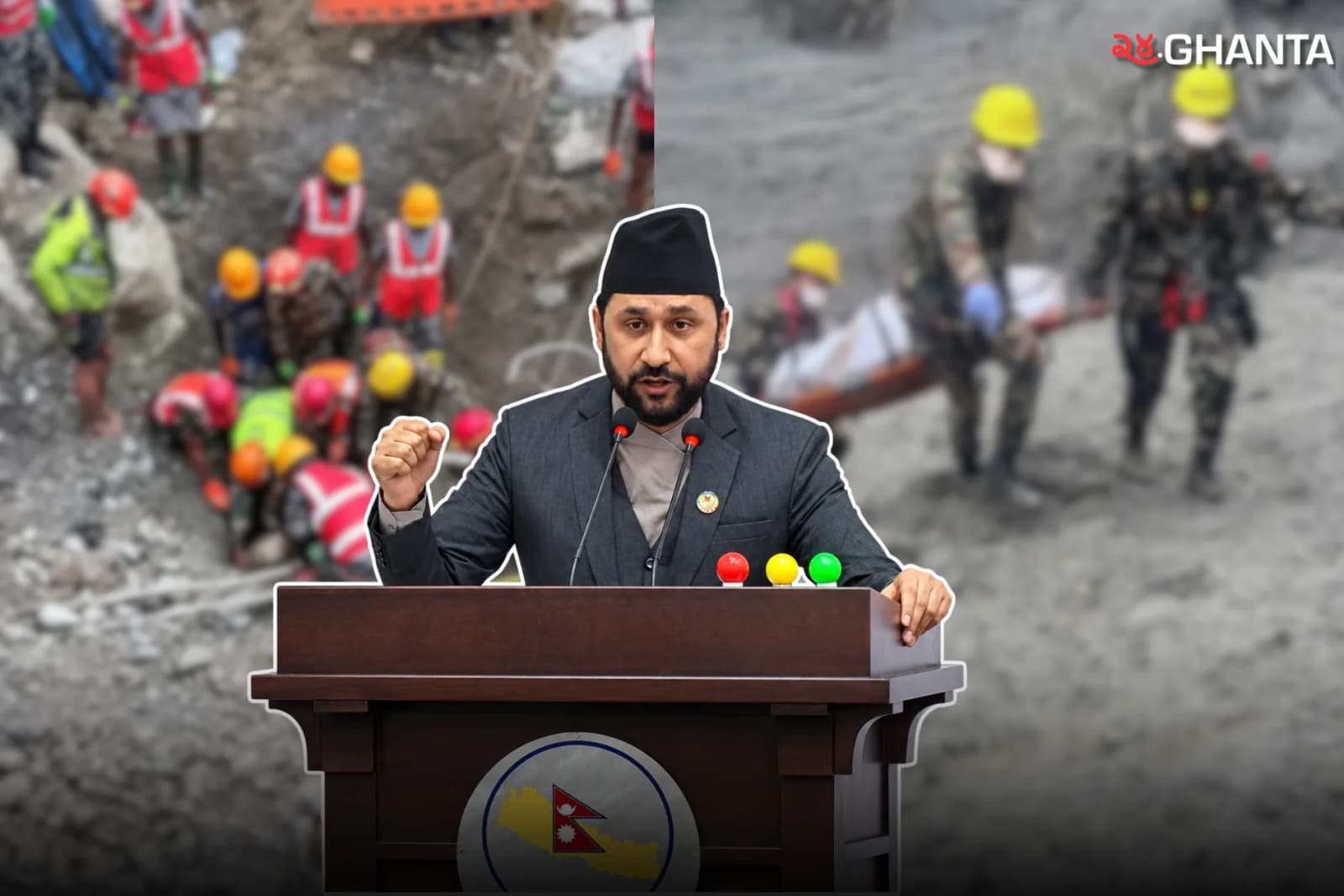
Rastriya Swatantra Party (RSP) Chair Rabi Lamichhane, speaking in the House of Representatives in Kathmandu on Wednesday, September 9, responded to public questions over the state’s presence following the devastating Bhotekoshi flood, saying government agencies and rescue teams are still searching for missing citizens, helping displaced families, and restoring damaged infrastructure because saving lives and rebuilding communities remain the immediate priorities after the disaster.
An Answer That Must Be Seen
Lamichhane said people have been asking what the state has done and “Where is the state?” His response was that the most powerful answer cannot simply come through words—it must be visible through the work taking place on the ground.

He said the state is currently inside dangerous ruins and tunnels searching for its citizens, while also working day and night to become a source of shelter for people who lost everything and were forced to live under the open sky.
Beyond Roads and Bridges
For Lamichhane, recovery cannot stop at repairing physical damage. He said the state is trying not only to reconnect roads swept away by floodwaters and bridges torn apart by the disaster, but also to restore the trust of citizens whose lives have been deeply shaken.
Reports on his speech also noted that damaged roads, bridges, electricity systems, drinking-water infrastructure and other essential services are being brought back into operation.
Rescuers Still Searching
Lamichhane praised Nepal’s security personnel and rescue workers for continuing search and rescue operations despite dangerous conditions, limited resources and exhaustion.
He said the courage shown by the Nepali Army, Nepal Police and Armed Police Force goes beyond ordinary duty, particularly as personnel enter areas where further landslides and other dangers remain possible in the search for missing people.
Anger From Victims Must Be Heard
While defending the work being carried out by the state, Lamichhane also said people who have lost loved ones, homes and livelihoods have every right to express anger and frustration.
He urged people not to insult disaster victims for questioning the government and warned that RSP members making insensitive comments about suffering citizens on social media could face action. He argued that criticism from people experiencing deep grief should be met with sensitivity rather than hostility.
Disaster Should Not Become Party Politics
Lamichhane said Nepal should not view a national disaster simply through the traditional divide between the government and opposition.
He praised the contributions of security agencies, local communities, the private sector, media, non-resident Nepalis and international partners, calling for continued cooperation as Nepal moves from rescue and immediate relief toward rehabilitation and reconstruction.
Preparing Before the Next Disaster
Lamichhane stressed that rebuilding what was destroyed is only part of the responsibility ahead. Nepal must learn from the catastrophe, strengthen disaster preparedness and build safer infrastructure so that future floods, landslides and other disasters do not cause losses on the same scale.
His message placed preparedness alongside rescue, relief and reconstruction: the state must respond to today’s emergency while reducing tomorrow’s risk.
A Wider Question of Climate Justice
Lamichhane also framed the Bhotekoshi tragedy as part of a larger climate challenge. He argued that communities suffering from increasingly severe climate-related disasters should not bear the burden alone and called for Nepal to seek stronger international solidarity and climate justice.
For a country highly exposed to Himalayan climate risks, he said the lessons from the disaster should become a reason to strengthen both domestic preparedness and Nepal’s voice internationally.
Rebuilding More Than What the Flood Destroyed
The central message of Lamichhane’s address was that the presence of the state should ultimately be measured through action: finding the missing, protecting survivors, giving displaced families shelter, restoring essential infrastructure and preparing communities for what may come next.
The roads and bridges destroyed by the disaster can eventually be rebuilt. The harder task will be restoring the confidence of families who have lost people, homes and livelihoods, and showing them through action that the state remains beside them.
Published Sep 9 in Nepal