
Why Are Nepal’s Unidentified Flood Victims Being Buried, And Can Families Get Them Back?
Unidentified victims recovered after the devastating Bhotekoshi flood are being temporarily buried after forensic evidence is collected because many bodies are rapidly decomposing and available mortuary space cannot accommodate the extraordinary number of remains. Each victim is documented through DNA and other identifying information, assigned a unique number, and placed at a recorded burial location so the remains can later be exhumed and returned to the family if their identity is established.
· 10 min read
KATHMANDU, NEPAL, September 1, 2026
Nepal is using a revised legal framework to manage unidentified victims recovered after the August 26 Bhotekoshi disaster. Under the Unidentified and Unclaimed Dead Body Management (First Amendment) Directive, 2083, authorities may temporarily bury unidentified bodies and body parts when identification is not immediately possible and mortuary capacity is insufficient. But burial is not supposed to end the search for identity. Before remains are buried, authorities must preserve DNA or other biological evidence, assign identification codes, document physical details and record the burial location so that the victim can still be identified and returned to the family later.
Is It Legal To Bury An Unidentified Body?
Yes.

The 2083 directive gives authorities a legal process for managing unidentified and unclaimed remains during situations where normal storage and identification systems are overwhelmed.
The directive was issued under Section 22(A) of the Nepal Police Act and updates the earlier 2078 guidelines.
This means unidentified flood victims are not supposed to be buried simply because hospitals run out of space.
There must be a documented process before burial, including efforts to preserve the victim’s identity.
What should happen when a body cannot yet be identified but cannot remain in a mortuary indefinitely?
The 2083 directive provides the framework for answering that question.
Why Are Some Bodies Being Buried?
The main reason is the combination of decomposition, limited storage and the scale of the disaster.
Some victims remained in floodwater, mud and debris for long periods before recovery.
By the time forensic teams received them, several bodies were already badly decomposed or damaged.
At the same time, hospitals and mortuaries were dealing with far more remains than they were designed to store.
Keeping every unidentified body refrigerated for weeks or months is therefore not always physically possible.
Temporary burial becomes a way to manage the remains while keeping future identification possible.
Burial Does Not Mean Identification Stops
This is one of the most important points for families.
Once an unidentified body is buried, the investigation does not automatically end.
Authorities must maintain records that can later connect that body to a missing person.
That can include:
DNA or other biological samples
photographs
estimated age and sex
height and physical characteristics
scars, birthmarks and tattoos
fingerprints where possible
dental information
clothing
jewellery and belongings
postmortem information
recovery location
recovery date
burial location
identification code
The idea is simple:
Even if authorities do not know the person’s name today, they should still know exactly which records belong to that body.
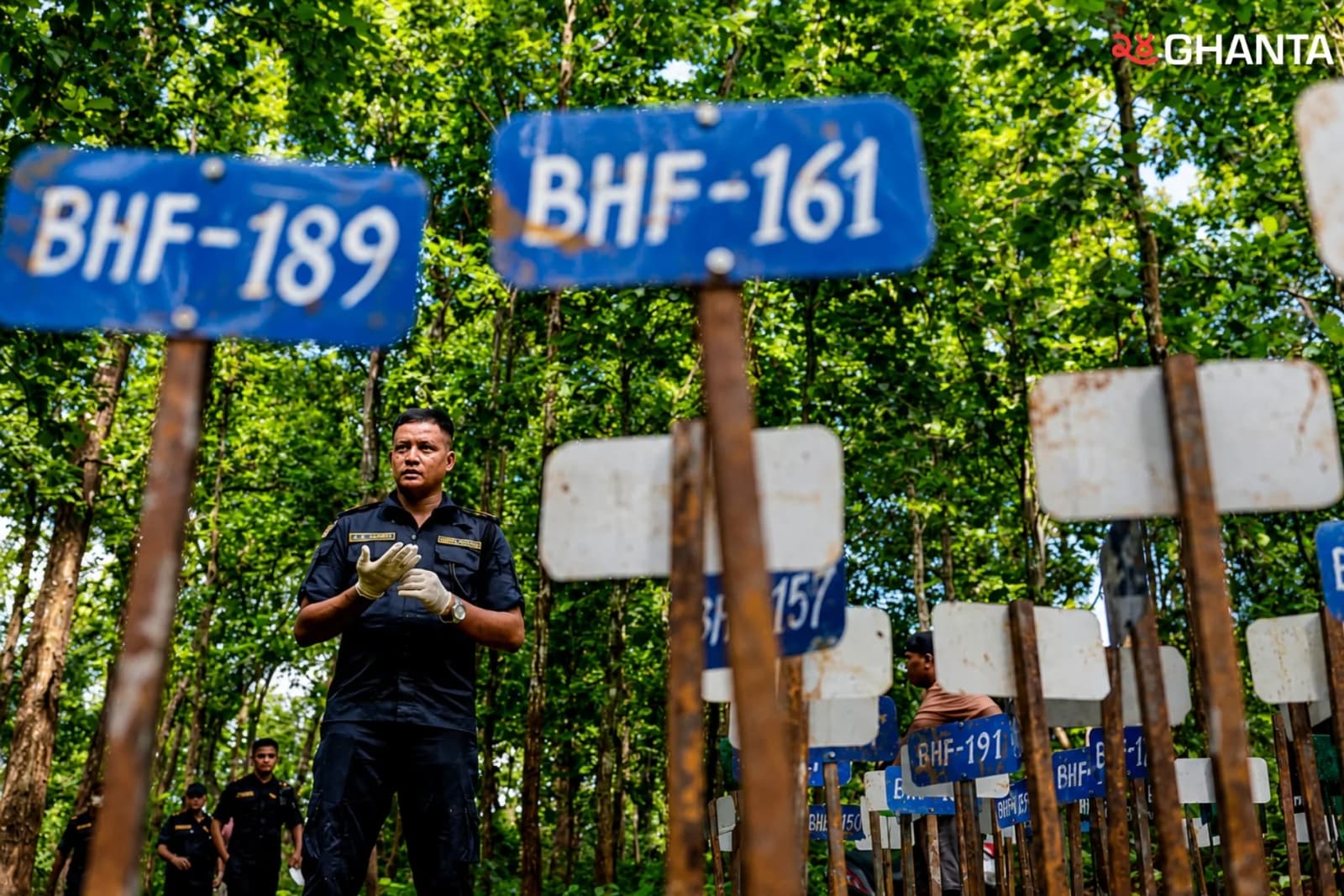
Why Does Every Body Receive A Code?
The code temporarily replaces the victim’s name.
Until identity is confirmed, that number links the remains to all forensic and administrative information collected about them.
If a family later provides DNA that matches the unidentified victim, the code can lead authorities back to the correct burial record.
That is why numbering is not a minor detail.
It is one of the main tools that keeps the entire identification system connected.
Why Is DNA Collected Before Burial?
Visual identification becomes less reliable as decomposition progresses.
A person may no longer be recognisable from the face alone.
DNA provides another way to establish identity.
Before burial, biological samples can be taken from the victim and stored for future comparison.
A close relative of a missing person can later provide a reference sample.
Scientists can compare the two profiles and determine whether there is a biological relationship.
This means a family does not necessarily need to know where the body was found before giving DNA.
Can Families Give DNA Even If Their Relative Is Still Missing?
Yes.
In a large flood, the place where someone disappeared may be very different from the place where their body is eventually recovered.
A person missing in Rasuwa may have travelled many kilometres downstream before being found.
That is why relatives can provide DNA even without identifying a particular body first.
Their sample can be compared against unidentified victims already recorded by police and forensic teams.
Can Teeth Help Identify A Victim?
Yes.
Teeth are useful in two different ways.
First, biological material protected inside a tooth can sometimes provide DNA even when other tissues are badly decomposed.
Second, dental features themselves can be compared.
Fillings, crowns, missing teeth, previous dental treatment and the arrangement of teeth can sometimes help specialists identify someone.
This is why dental experts can play an important role in disaster victim identification.
DNA Is Only One Part Of The Process
Forensic identification should not depend on a single method whenever multiple types of evidence are available.
Experts can compare:
fingerprints, dental records, physical marks, clothing, jewellery, medical information, photographs and DNA.
Sometimes several pieces of evidence together provide stronger identification than relying on only one.
Forensic expert Dr Harihar Wasti has repeatedly stressed the importance of a full disaster victim identification system involving forensic doctors, police, dentists, fingerprint specialists and DNA experts.
Why Can't Bodies Simply Stay Outside Until Families Arrive?
Because decomposition continues quickly.
Heat, humidity, rain and exposure can significantly change a body.
As decomposition advances, facial recognition becomes more difficult and physical evidence may deteriorate.
Leaving remains exposed also creates problems for dignity, sanitation and safe handling.
So waiting longer does not necessarily improve the chance of identification.
In some cases, it can make identification harder.
Do Dead Bodies Automatically Spread Disease?
No.
Bodies from people killed in natural disasters generally do not automatically cause epidemics.
The smell from decomposition is unpleasant, but smell itself does not spread disease.
The real concerns are different:
safe handling, sanitation, possible contamination of water sources, dignity of the dead and protection of forensic evidence.
So the burial policy should not be explained simply as a disease-control measure.
Why Does Burial Help?
Burial does not freeze a body in time.
Decomposition still continues underground.
What burial provides is a protected and controlled location.
It reduces exposure to sunlight, rain, repeated handling and other surface disturbances.
Most importantly, if the grave is properly recorded, authorities know where those remains are located.
That makes future recovery possible.
Why Are Burial Locations Recorded?
Because identification may happen later.
The directive requires authorities to keep the burial traceable.
That means the identification number must remain connected to the grave location.
If DNA or other evidence later confirms who the victim was, officials need to be able to locate the correct remains without disturbing unrelated graves.
A burial site therefore becomes part of the forensic record.
Are Bodies Being Mixed Together?
The system is supposed to prevent that.
Bodies should remain individually traceable.
In some locations, including Chitwan, authorities have used organised burial arrangements with individual numbers and recorded positions.
Those local methods help show how traceability can work in practice.
But it is important not to treat every exact measurement used in Chitwan as a nationwide legal requirement unless it appears in the directive itself.
The central rule is that individual remains must remain identifiable and recoverable.
Why Is There Space Between Bodies?
Where trench burial is necessary, keeping individual remains separated helps prevent them from becoming mixed.
International disaster-management guidance recommends maintaining separation between bodies in organised burial arrangements.
This makes later exhumation more precise.
Authorities can recover one victim without unnecessarily disturbing neighbouring remains.
Why Are Graves Deep?
Adequate burial depth helps protect remains from surface disturbance.
This includes possible disturbance by scavenging animals such as dogs, jackals or other wildlife.
If remains are scattered or damaged, later identification becomes more difficult.
But burial depth should not be described as being only about animals.
The broader goal is to protect the physical integrity and dignity of the remains.
Does A Buried Body Stay Preserved For A Fixed Time?
No.
There is no scientifically reliable rule saying every buried body remains unchanged for three months, six months or one year.
Decomposition depends on many factors, including:
temperature, moisture, soil, burial depth, body condition, microorganisms, clothing and how much decomposition had already happened before burial.
So it would be misleading to promise families that a body will remain physically unchanged for a specific period.
Then What Is Actually Being Preserved?
The most important things being preserved are:
identity evidence and traceability.
DNA collected before burial can remain available for comparison.
Teeth and bones may continue to provide forensic information.
Photographs, fingerprints, clothing records and belongings remain in the case file.
And the exact burial location remains connected to the victim’s code.
That is what keeps future identification possible.
Can A Family Get The Body Back Later?
Yes.
If authorities later establish the victim’s identity, the burial record can be used to find the corresponding remains.
The body or body part can then be exhumed, meaning carefully removed from the grave.
After the required official process, the remains can be handed over to the family.
The family can then perform final rites according to their own religious and cultural traditions.
Is There A Fixed Waiting Period Before Exhumation?
No.
Families do not have to wait a fixed number of months or years.
The key issue is identification.
Once authorities have enough evidence to establish whose remains they are and the required legal process is completed, exhumation can take place.
The important question is therefore not:
“How long must the body stay underground?”
It is:
“When can authorities confidently identify the victim?”
What Does The 12-Year Provision Mean?
The 12-year rule is often misunderstood.
It does not mean a family must wait 12 years before getting the body back.
The provision is about protecting the burial site from construction for a long period so that unidentified remains can still be recovered later.
If a victim is identified much earlier, the family does not have to wait until the end of that period.
The 12 years protect the possibility of future recovery, not a mandatory burial duration.
Why Not Cremate Unidentified Victims Instead?
Because cremation is irreversible.
If a person is cremated before identification and their DNA is matched months later, the family may no longer have physical remains to recover.
Temporary burial keeps another option open.
If identity is confirmed later, the body can still be located, exhumed and returned.
That can be especially important for families who want to conduct their own final rites.
Why Must Information About Unidentified Bodies Be Made Public?
The directive also focuses on helping families search.
Information recorded in the official unidentified-body system should be published or shared through public media.
That can include photographs, descriptions and other identifying information.
The purpose is straightforward:
Families cannot recognise or claim a missing relative if they never know that an unidentified body has been recovered.
Public information therefore becomes part of the identification process.
The Legal And Medical Process In Simple Words
1. A body or body part is recovered.
Police record where it was found.
2. Identification work begins.
Photographs, physical details, clothing, belongings, fingerprints, dental evidence and other information may be collected.
3. A unique number is assigned.
The code links all evidence to the same victim.
4. DNA or biological samples are preserved.
These can later be compared with family samples.
5. Information is entered into official records.
Relevant details can also be made public to help families searching for missing relatives.
6. If identity remains unknown and storage is not practical, temporary burial may be authorised.
7. The burial location is recorded.
The grave remains connected to the victim’s code.
8. Families can provide DNA later.
9. If identification is established, authorities can locate the grave.
10. The remains can be exhumed and handed over to the family.
What Is The Purpose Of The 2083 Directive?
The directive is trying to balance several difficult needs at the same time.
Authorities have to manage large numbers of remains safely.
They have to treat the dead with dignity.
They have to preserve forensic evidence.
They have to keep the identification process open.
And they have to protect the right of families to eventually recover their loved ones.
That is why the system focuses on four things:
documentation, DNA, traceability and future recovery.
Buried Does Not Mean Forgotten
For families still searching after the flood, this is the most important message.
An unidentified victim may already have been recovered.
The body may have been given a number instead of a name.
It may even already be underground.
But if the process is followed correctly, that number should still be connected to DNA, photographs, physical information, belongings and an exact burial location.
That means the search can continue.
A grave carrying only a code today could eventually be connected to a name.
And once that happens, the remains can still make the final journey back to their family.
Published Sep 1 in Nepal