
From Royal Notes to Digital Cash: How Dashain Changed Nepal’s Money Tradition
For nearly eight decades, exchanging new notes during Dashain has been a major Nepali tradition linked with blessings, family gatherings, and the growth of Nepal’s own currency system. This year, Nepal Rastra Bank has changed the approach by moving away from fixed distribution programs and allowing people to exchange new and clean notes through banks and ATMs based on demand.
· 4 min read
Kathmandu, September 30, 2026
New Rules for Dashain Notes
Nepal Rastra Bank has introduced a new system for Dashain 2083, allowing people to exchange new notes throughout the festival season instead of waiting for fixed dates and long queues. The central bank, along with banks and financial institutions, will provide new notes based on public demand. The facility will be available through selected bank branches and Nepal Rastra Bank’s Thapathali office in Kathmandu.

The change aims to make the process easier for the public while reducing crowds and pressure on banks during the festival period.
A Tradition That Started With Nepal’s Own Currency
The practice of giving new notes during Dashain is connected to Nepal’s journey toward establishing its own monetary identity. In 2002 B.S., Rana Prime Minister Juddha Shumsher introduced an ordinance allowing Nepal to issue its own currency through Sadar Muluki Khana.
Following this decision, Nepal introduced its first paper notes in denominations of Rs 5, Rs 10, and Rs 100. However, Indian currency remained dominant in daily transactions at the time.
The establishment of Nepal Rastra Bank in 2013 B.S. helped strengthen the use of Nepali currency. In 2016 B.S., the central bank issued its first notes of Rs 1, Rs 5, Rs 10, and Rs 100, and the government later made Nepali currency mandatory for domestic transactions.
This period also marked the beginning of linking new notes with Dashain celebrations.
Why Did Dashain Become the Season for New Notes?
The tradition was not created only because of cultural practices. It was also connected with the government’s goal of increasing the circulation of Nepali currency.
During Dashain, economic activities increase significantly. People travel, purchase goods, exchange gifts, and provide cash blessings during tika ceremonies. This movement of money from cities to villages created an opportunity to bring more Nepali currency into public use.
Over time, the practice became deeply connected with Dashain culture. Receiving fresh notes as dakshina from elders became a symbolic part of festival celebrations for many Nepali families.
The Hidden Cost Behind Fresh Notes
While new notes bring happiness during festivals, they also create challenges for currency management.
During Dashain and other major festivals, cash transactions increase sharply. Notes used for tika, gifts, and daily purchases often become damaged faster due to repeated handling.
According to Nepal Rastra Bank’s experience, smaller denomination notes usually have shorter lifespans. Rs 5 and Rs 10 notes generally remain usable for around three years, while higher denomination notes such as Rs 500 and Rs 1,000 can last longer because they are handled less frequently.
Nepal Rastra Bank has also been destroying damaged and unusable notes. In the fiscal year 2078/79 alone, old currency worth around Rs 4.45 billion was sent for destruction.
From New Notes to Clean Notes
In recent years, Nepal Rastra Bank has gradually shifted its focus from distributing only brand-new notes to promoting clean and usable currency.
The central bank believes maintaining good-quality notes is more important than replacing every festival note with freshly printed currency. This approach helps reduce printing costs and improves cash management.
Printing currency requires significant resources. Nepal Rastra Bank has estimated that producing one note costs around Rs 2.50 on average, making proper handling and preservation important.
Nepal’s law also prohibits damaging currency notes. Destroying or writing on notes can result in punishment, including fines and imprisonment.
ATMs Bring a New Way to Receive Cash
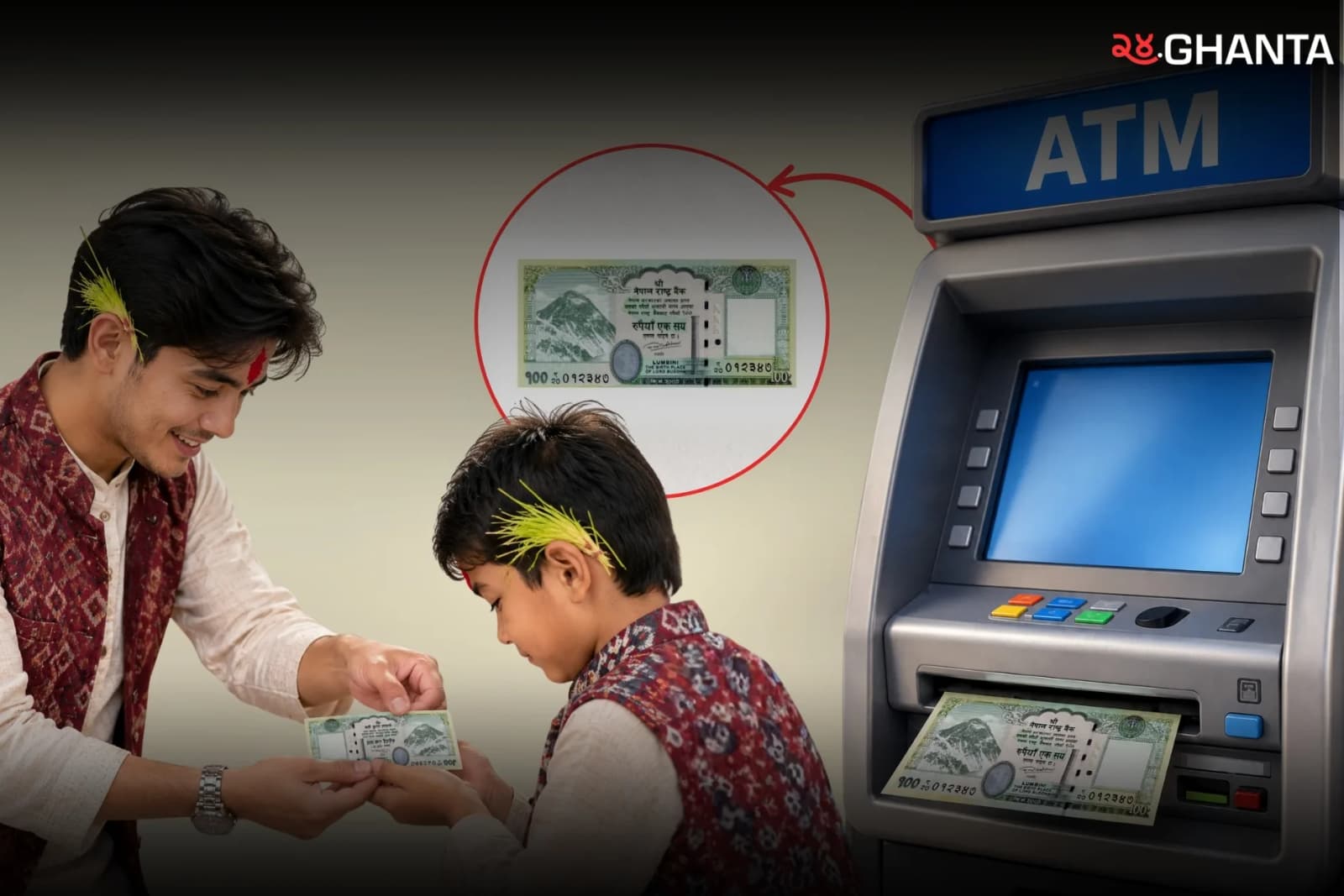
Another major change this year is the introduction of Rs 100 notes through ATMs.
Previously, most ATMs mainly provided Rs 500 and Rs 1,000 notes. Since Dashain creates higher demand for smaller denominations, bankers had suggested allowing Rs 100 notes through ATMs to reduce pressure on bank counters.
The move is expected to provide another option for people who need smaller cash amounts during festivals.
Nepal’s Cash Demand Rises During Dashain
Dashain creates one of the biggest seasonal increases in cash demand in Nepal.
According to Nepal Rastra Bank data, around Rs 5.14 trillion worth of currency was in circulation until Shrawan 2083. During Dashain, the amount of cash in public circulation generally increases as people withdraw money for shopping, travel, and family celebrations.
However, much of this additional cash returns to the banking system within around two to three weeks after the festival period ends.
A Cultural Tradition Entering a New Financial Era
The tradition of exchanging new notes during Dashain has survived for nearly 80 years, but the way people access those notes is changing.
From its early role in promoting Nepal’s own currency to becoming a symbol of Dashain blessings, the practice has remained connected with both Nepal’s economy and culture.
Today, the focus is shifting from distributing large amounts of fresh currency to managing cash efficiently through banks, clean notes, and digital banking systems.
The tradition remains alive, but the method of delivering it is entering a new era.
Published 1 hour ago in Nepal