
Government Temporarily Suspends ‘Lakhpati’ Lottery As Nepal Directs Resources Toward Rasuwa Flood Relief
Nepal has temporarily suspended the Lakhpati taxpayer lottery as the government focuses on rescue, relief and recovery following the devastating Rasuwa flood. The scheme was designed to encourage consumers to demand genuine PAN or VAT bills and improve tax compliance, while disaster response has now become the immediate national priority.
· 5 min read
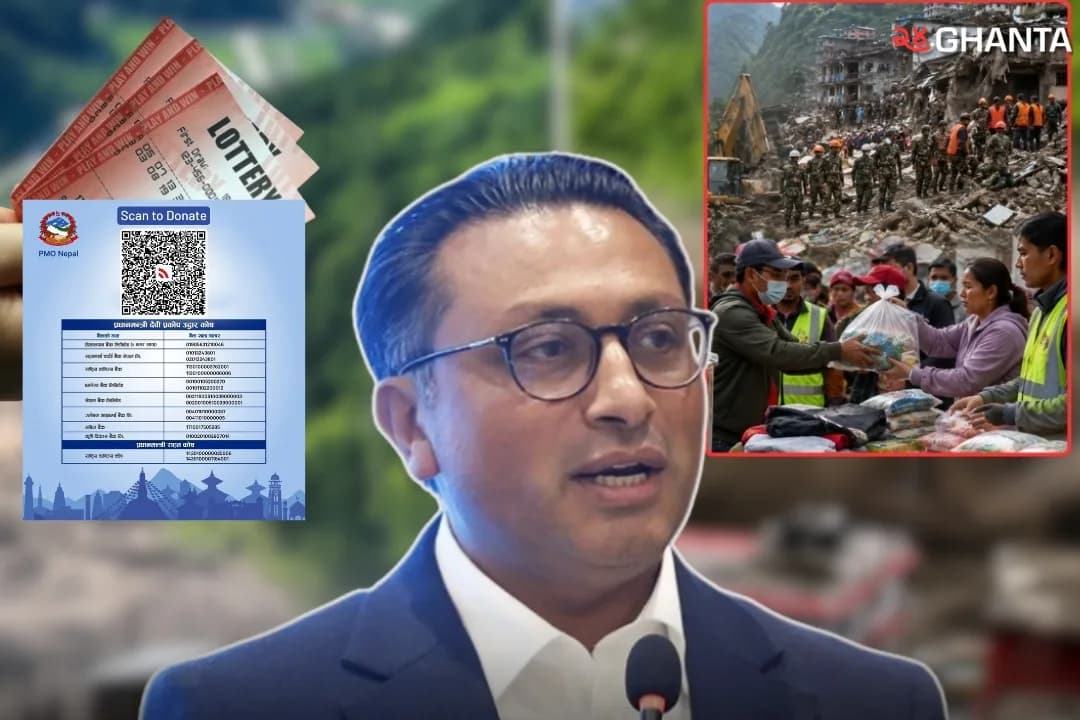
Kathmandu, September 3,2026 : The government has temporarily suspended its Taxpayer Incentive Gift Programme, popularly known as the “Lakhpati” scheme, at a time when Nepal is directing public resources and attention toward rescue, relief and recovery following the devastating Bhotekoshi flood.
The programme had offered consumers a chance to win cash prizes when purchasing eligible goods or services worth more than Rs. 100 and obtaining a genuine PAN or VAT bill. It was introduced as part of the government’s effort to encourage consumers to demand official bills, improve tax compliance, bring more transactions into the formal system and reduce tax leakage.
Why Was The Lakhpati Scheme Introduced?
The programme was announced by Finance Minister Dr Swarnim Wagle in the fiscal year 2083/84 budget. The Ministry of Finance later issued the Taxpayer Incentive Gift Programme Operation Procedure, 2083, while the Inland Revenue Department was given responsibility for implementing the programme.

The basic idea was simple: encourage people to ask for genuine bills every time they shop. When consumers demand official PAN or VAT invoices, businesses have greater pressure to record their actual sales, making it more difficult to hide transactions and avoid taxes. The programme also aimed to encourage electronic payments and improve voluntary tax compliance.
The scheme became operational in the current fiscal year. The Inland Revenue Department’s official programme portal says it was created to improve the public’s habit of taking bills and strengthen compliance with tax laws.
How Did The Lakhpati Scheme Work?
Consumers purchasing eligible goods or services worth more than Rs. 100 for personal use could participate if they received a genuine bill from a PAN- or VAT-registered seller. Cash buyers had to register eligible bills through the Inland Revenue Department’s system, while eligible QR and card payments could be registered automatically.
The programme provided daily cash prizes as well as a larger Rs. 10 lakh bumper prize every 15 days. In its first draw covering the first 15 days of Shrawan, the government selected 16 winners, including 15 daily winners and one bumper winner. The bumper prize went to a consumer whose qualifying purchase was worth just Rs. 250.
Not every transaction qualified. Business purchases, bills issued in the name of government or public institutions, and bills for services including telephone, internet, electricity, vehicles, transport and air tickets were excluded. Purchases from sellers without PAN registration were also not eligible.
Why Does The Rasuwa Flood Change The Immediate Priority?
The temporary suspension comes against the backdrop of a major national disaster. On August 26 (Bhadra 10, 2083), a massive flood in the Bhotekoshi River in Rasuwa caused extensive loss of life and property and affected river areas across Rasuwa, Nuwakot, Dhading and Gorkha. Search, rescue, emergency relief and damage assessment have since become major government priorities.
The government has said survivors need immediate support as well as longer-term rehabilitation. It has publicly appealed to citizens, organisations and institutions to contribute financially to the Prime Minister’s Natural Disaster Relief Fund and Prime Minister’s Relief Fund. Till Bhadra 17, the government announced that Rs. 7 arba 88 lakh 57 thousand and 2 hundred and 17 (Rs 7,088,857,217) has been deposited into the Prime Minister's Disaster Relief Fund. Of this amount, Rs 1 arba was released on Bhadra 16 to the National Disaster Risk Reduction and Management Authority. From the released amount, Rs 6.75 crore has already been sent to 15 local governments across Rasuwa, Nuwakot, Dhading, Gorkha and Tanahun.
The fund currently has a remaining balance of Rs 6 Arba 88 Lakh 57 thousand and 2 hundred and 17 (Rs 6,008,857,217). In addition, US$6,141,702 has been deposited into the fund.
Authorities have identified major needs including temporary shelter, blankets, sleeping bags, kitchen supplies and water containers for affected families. The government is also providing medical care, food, safe drinking water, and other essential assistance while working to restore damaged infrastructure.

Relief Versus Lottery Spending
The Lakhpati programme and disaster relief serve very different public purposes. The lottery was introduced as a tax compliance tool, using financial rewards to encourage consumers to demand genuine bills and help reduce tax leakage. Disaster funding, on the other hand, is being used for urgent rescue, medical treatment, shelter, food and rehabilitation.
With the country facing large and immediate humanitarian needs following the Rasuwa flood, relief and recovery have become an urgent public spending priority. The suspension of the Lakhpati programme therefore comes at a time when government resources are needed across disaster-affected areas.
However, it would not be accurate to conclude from currently available official information that every rupee that would have been spent on Lakhpati prizes has automatically been transferred to flood relief. The government has separately mobilised disaster funds and appealed for additional contributions. The two funding mechanisms should therefore not be treated as the same unless authorities formally announce such a transfer.
What Happens Next?
The programme is described as temporarily suspended rather than permanently ended. Its original objective of improving billing practices and tax compliance remains relevant, but the immediate national focus has shifted toward responding to the flood disaster.
The Inland Revenue Department’s public portal still describes the Taxpayer Incentive Gift Programme and its participation rules. Further official clarification will be needed on when the lottery will resume and how already eligible transactions or pending prizes will be handled. However, reports suggest that the winners will be announced on Ashoj 1, covering transactions made up to Bhadra 15.
For now, Nepal faces two separate policy priorities: improving long-term tax compliance and meeting the urgent needs of communities affected by one of the country’s most serious recent disasters. The government’s immediate challenge is ensuring that rescue, relief and rehabilitation receive the resources required.
Tags
Published Sep 3 in Nepal