
Nepal Introduces Free Education Up To Bachelor’s Level For Gen Z Martyrs’ Families And Seriously Injured Protesters
Nepal has introduced guidelines providing educational support from basic school through bachelor’s level for eligible families of Gen Z martyrs and seriously or critically injured beneficiaries. Universities will reserve scholarship quotas, while eligible bachelor’s students who are not selected can receive up to Rs 30,000 annually through the UGC, or the prescribed tuition fee, whichever is lower.
· 4 min read
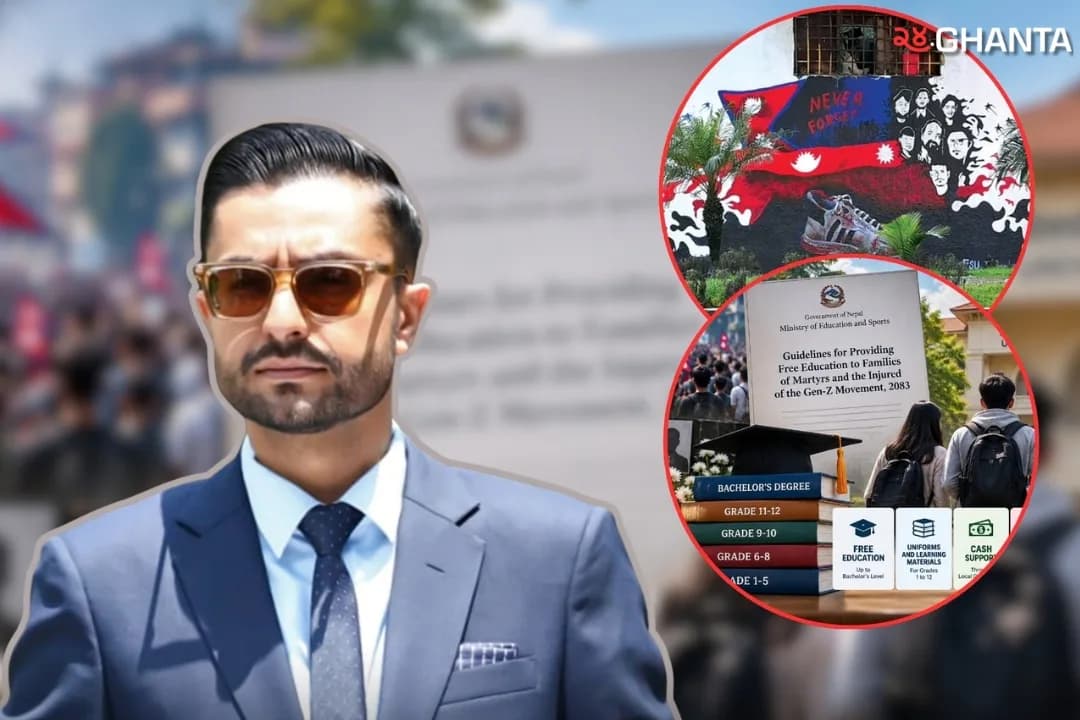
The Government of Nepal has introduced a new education support system for families affected by the Gen Z movement, providing access to free education from the basic level through bachelor’s studies. The programme covers the children and siblings of those recognised as martyrs, as well as people holding government identification cards confirming serious or critical injuries from the movement.
The measure is set out in the Guidelines for Providing Free Education to Families of Martyrs and the Injured of the Gen Z Movement, 2083, prepared by the Ministry of Education and Sports. The guidelines are designed to give eligible families and injured protesters continued access to education while reducing the financial burden of studying.
What Students Will Receive
For students in Grades 1 to 8, the programme provides free education along with support for uniforms and learning materials. Cash assistance will also be provided through local governments according to existing laws and the new guidelines.

Class 1- 5: Rs. 12,000/- per year
Class 6-8: Rs. 16,000/- per year
Students in Grades 9 to 12 will similarly receive support covering uniforms, textbooks and other learning materials, along with cash assistance provided under the programme.
Class 9-10: Rs. 20,000/- per year
Class 11-12: Rs. 24,000/- per year
The support extends beyond school education. Universities will be required to reserve a certain portion of their scholarship quotas for eligible beneficiaries studying up to the bachelor’s level. Students who are not selected under these scholarship quotas will be eligible to receive up to Rs. 30,000 annually through the University Grants Commission (UGC), or the prescribed tuition fee, whichever is lower.
The guidelines also require eligible beneficiaries to be included in scholarship quotas provided by institutional schools under existing law.
Who Is Eligible?
The programme covers three main groups: children of people recognised as martyrs of the Gen Z movement, biological siblings of martyrs, and people officially certified as seriously or critically injured during the protests.
The government finalised a broader list of 2,660 verified injured people from the September 2025 movement earlier this year. However, the new education guidelines specifically refer to holders of serious or critically injured identification cards, meaning the education benefit should not be interpreted as automatically covering every person on the wider injured list.
How To Apply
Students studying at the basic and secondary levels must submit their applications to their local government through their schools. Bachelor’s students must apply to the University Grants Commission through their respective campuses.
Applicants will need to provide their beneficiary identification card, citizenship certificate or birth registration certificate, documents proving their relationship to a martyr where applicable, and a recommendation from the educational institution where they are studying.
From Protest To New Support Measures
The education programme comes about a year after Nepal’s Gen Z movement of September 8 and 9, 2025, which grew from youth anger over corruption, governance and political accountability. The demonstrations became violent, with protesters killed and many others injured. The movement was followed by major changes in Nepal’s political landscape and continuing demands for justice, treatment, rehabilitation and support for affected families.
Over the past year, the government has introduced several measures aimed at those affected. The 2026/27 budget included financial assistance, healthcare, employment and rehabilitation measures, while the government later introduced access to concessional loans of up to Rs. 15 Lakh for eligible martyr families and injured people seeking to start or expand businesses. A separate proposal is also moving forward to extend free legal aid to people injured in the movement.
The new education guidelines turn one of the movement-related support commitments into a more detailed framework, setting out who can benefit, what educational support is available and how students can apply. At the same time, families and injured protesters have continued to raise concerns about the implementation of government commitments, making the delivery of the new programme an important next step.
The education programme ultimately aims to ensure that the loss or serious injury suffered by affected families does not prevent students from continuing their studies, with support extending from Grade 1 all the way to a bachelor’s degree.
Tags
Published 1 hour ago in Uncategorized