
Nepal Moves Toward Home Delivery of Driving Licences Under New Three-Way Agreement
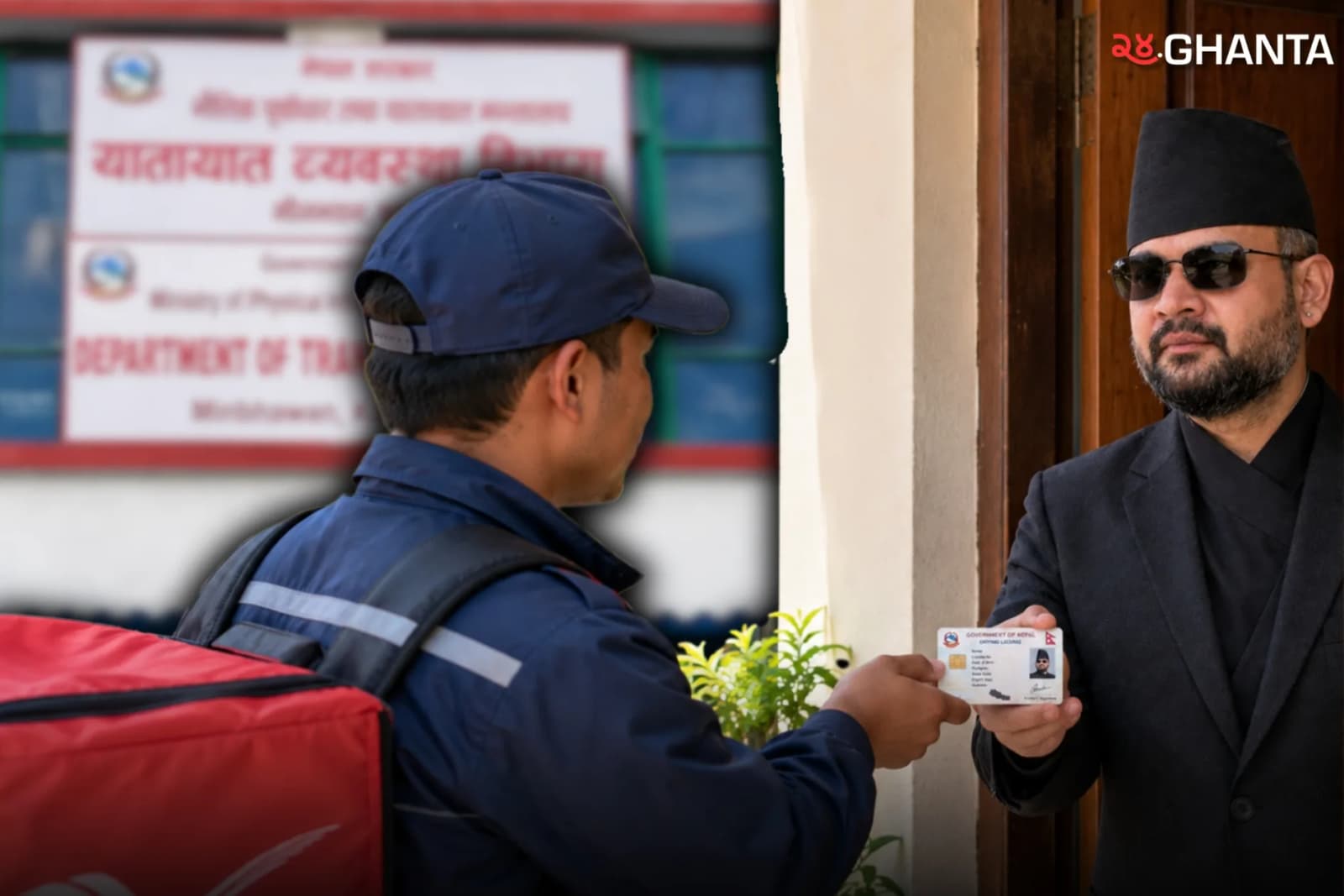
Nepal has signed a three-way agreement connecting the Department of Transport Management, Security Printing Centre and Department of Postal Services to streamline driving licence printing and distribution. Licence data generated through EDLVRS will go directly for secure printing, while printed cards can be distributed through provincial offices or delivered through the postal service to addresses selected by applicants.
· 4 min read
Kathmandu, September 23, 2026
The Department of Transport Management, Department of Postal Services and Security Printing Centre signed a tripartite agreement on September 22 to connect Nepal’s driving licence printing and distribution process under a more integrated system. Under the arrangement, licence information generated through the Electronic Driving Licence and Vehicle Registration System (EDLVRS) will be transferred directly to the Security Printing Centre for printing, after which the postal service will help distribute the cards to provincial offices or addresses selected by service recipients, reducing delays and making licence delivery easier and more organized.
Licence Data Will Go Directly for Printing
A major change under the agreement is how licence information reaches the printer.

Driving licence data generated through the Department of Transport Management’s EDLVRS will be sent directly to the Security Printing Centre’s system.
The Security Printing Centre will then use the transferred information to print the physical licence cards.
This direct digital connection is intended to reduce unnecessary steps in transferring data between government agencies and address technical problems that have previously slowed the process.
Postal Service Will Handle Distribution
After printing, the Department of Postal Services will become a key part of the distribution process.
The agreement provides for printed driving licences to be transported and distributed through the postal network, including delivery to relevant provincial offices.
More importantly for service recipients, the system also provides a path for licences to be delivered to an address selected by the applicant instead of requiring everyone to rely only on collection from a transport office.
Less Need to Visit Transport Offices
The arrangement could reduce one of the biggest inconveniences associated with Nepal’s driving licence system: repeatedly visiting transport offices to check whether a physical card has arrived.
Once the delivery system is fully implemented, eligible service recipients choosing postal delivery could receive their printed licence at their specified address.
The government expects this to make the overall service more convenient while reducing pressure at transport offices.
Printing Has Already Moved to Security Printing Centre
The agreement builds on changes Nepal has already made to its driving licence printing system.
The government previously shifted large-scale licence printing to the Security Printing Centre in Panauti, which worked with the Department of Transport Management to address a backlog that had reached millions of cards.
By July 2026, the government reported completing the printing of around 27 lakh backlogged driving licences. The Security Printing Centre subsequently moved toward printing newly received licence data much faster.
EDLVRS Connects the Process
The Electronic Driving Licence and Vehicle Registration System (EDLVRS) plays a central role in the new arrangement.
The system was introduced from Shrawan 1, 2083, as part of efforts to modernize vehicle registration and driving licence services.
Instead of licence information moving through separate manual processes before reaching the printing stage, the new arrangement connects EDLVRS directly with the Security Printing Centre.
Government Wants Faster Licence Delivery
Infrastructure Development Minister Sunil Lamsal said the agreement is intended to make licence printing and distribution faster, easier and more systematic.
The government expects direct data transfer, centralized secure printing and postal distribution to reduce technical and logistical delays that have affected licence services in the past.
Home Delivery Will Be an Option
The agreement is an important step toward home delivery, but it should not be understood to mean that every driving licence will immediately and automatically arrive at a person's home.
The system provides for printed licences to be distributed to the relevant provincial offices or delivered to an address specified by the service recipient through the postal service.
The practical availability of address delivery will therefore depend on implementation of the new arrangement and the delivery option selected by the applicant.
What Happens Next?
The three government agencies will now have to implement the agreement by connecting the licence data, printing, and postal distribution processes.
Once fully operational, the system could create a simpler journey for applicants: licence data generated digitally, the card securely printed by the Security Printing Centre, and the finished licence distributed through Nepal's postal network.
For thousands of applicants, that could mean fewer trips to transport offices simply to collect a printed card.
Published 15 hours ago in Nepal