
Nepal Proposes New Social Media Rules for Civil Servants: Political Comments and Personal Promotion of Government Work to Be Restricted
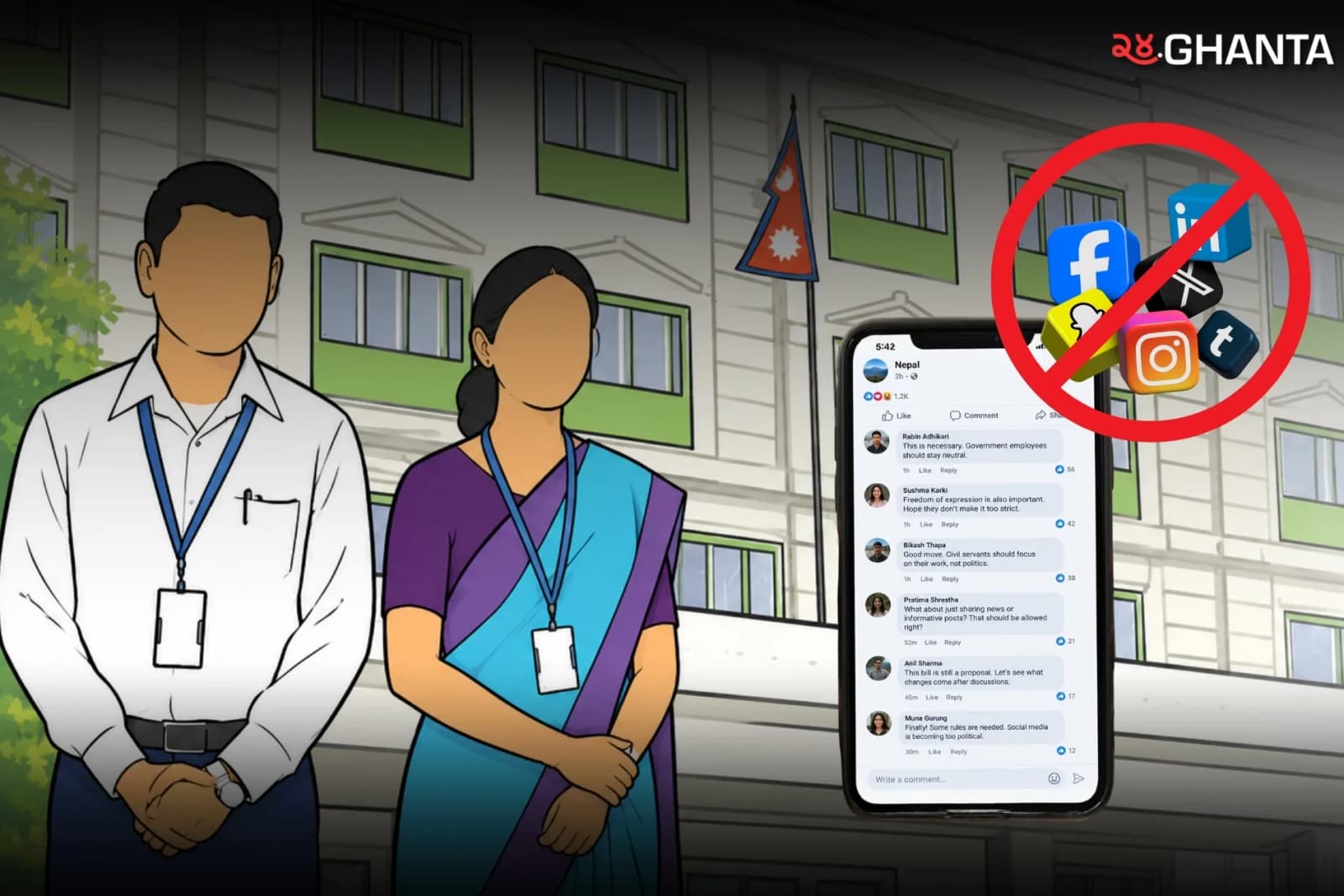
Nepal’s government has proposed new restrictions on civil servants’ social media activities under the Federal Civil Service Bill, 2083, including limits on political comments and personal promotion of official government work. The bill also proposes restrictions on public statements that contradict government policy or harm relations between different levels of government, the public or foreign countries.
· 3 min read
KATHMANDU, OCTOBER 1, 2026
Government Proposes Stricter Social Media Rules for Civil Servants
The Government of Nepal has proposed new social media and public communication restrictions for civil servants under the Federal Civil Service Bill, 2083, registered in Parliament on October 1, 2026. Sections 77 and 88 address employees’ public statements, political comments and use of personal social media accounts. The proposed rules form part of wider civil service reforms intended to establish professional conduct and political neutrality among government employees across Nepal.
Civil Servants Would Face Restrictions on Political Comments
Under Section 88 of the proposed bill, civil servants would be prohibited from posting comments on social media in support of or opposition to political parties, their office-bearers or public officials.

The proposed restriction would cover political comments made through personal social media accounts and other electronic platforms. It would regulate employees’ online political activity rather than prohibit them from using social media altogether.
Personal Promotion of Government Work Would Be Restricted
The bill also proposes preventing civil servants from promoting work carried out as part of their official duties through personal social media accounts.
This would limit employees’ ability to use government projects, services or other official activities for personal publicity. However, the exact scope of the restriction will depend on the final wording of the legislation.
Public Statements Against Government Policy Would Face Restrictions
Section 77 of the proposed bill prohibits civil servants from publishing articles under their real names, pseudonyms or anonymously, providing news to the media, broadcasting statements or making public remarks that contradict Nepal government policy.
It also restricts statements that could harm relations between the federal, provincial or local governments and the public, or damage Nepal’s relations with foreign countries.
The provision covers several forms of public communication, including written articles, news shared with media outlets and statements broadcast through radio or television.
Civil Servants Would Still Be Allowed to Publish Lawful Content
Section 77 does not impose a complete ban on civil servants writing articles or making public statements.
Its second subsection allows employees to publish or broadcast information as long as it does not violate existing laws or Nepal government policy.
This distinction is important because the proposed restrictions concern particular types of public statements rather than all forms of personal expression.
Why Is the Government Proposing These Restrictions?
The Federal Civil Service Bill seeks to establish a professional, politically neutral, accountable and people-oriented civil service.
The proposed social media rules are intended to limit political involvement in public administration and establish clearer standards for employees’ public conduct.
The restrictions would also limit the use of official responsibilities for personal publicity and prohibit online statements that encourage social hatred, conflict or violence.
When Will the New Rules Take Effect?
The proposed restrictions are not yet law. The Federal Civil Service Bill must complete the parliamentary process before its provisions can take effect.
Parliament may amend the rules during its review, meaning their final wording and scope could change.
What Would the Rules Mean for Government Employees?
If approved, civil servants would face stricter limits on political comments, personal promotion of official work and statements that conflict with government policy.
They would still be permitted to publish lawful material consistent with government policy, as provided under Section 77.
The changes would establish clearer boundaries between employees’ official responsibilities and their personal online activities.
Published 51 mins ago in Nepal