
What Did Nepal Tell the World? Foreign Minister Briefs Parliament on UNGA Mission
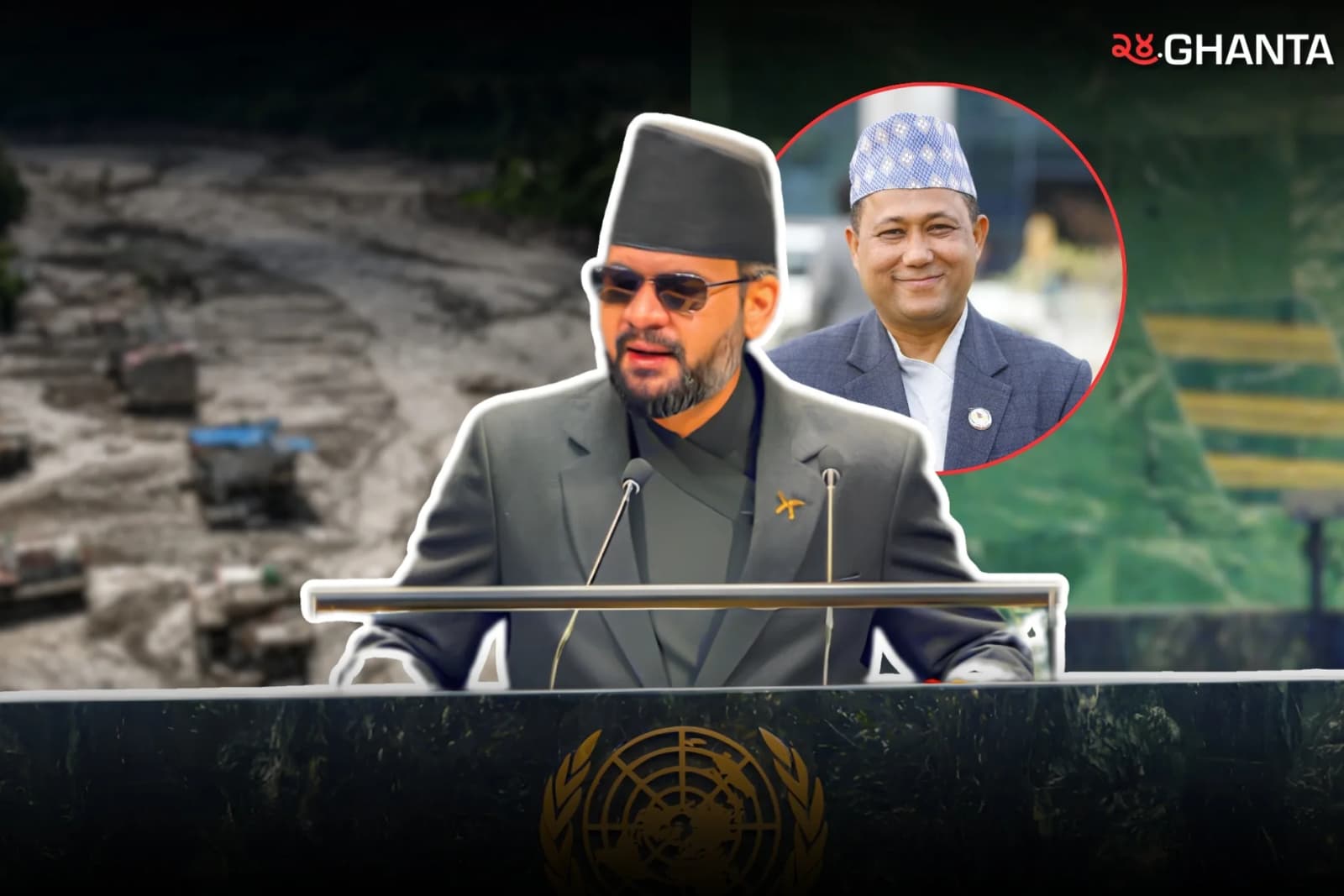
Foreign Minister Shisir Khanal briefed the House of Representatives on October 2 about Nepal’s participation in the 81st United Nations General Assembly, saying Prime Minister Balendra Shah’s address helped push Nepal’s call for climate justice at the global level. Nepal’s delegation also used meetings in New York to raise the country’s climate risks, recent disaster losses, reconstruction needs and other national priorities with international partners.
· 4 min read
Kathmandu, October 2, 2026
Foreign Minister Reports Back to Parliament
Foreign Minister Shisir Khanal informed the House of Representatives on Friday about Nepal’s participation in the 81st United Nations General Assembly in New York, where Prime Minister Balendra Shah led Nepal’s high-level delegation and addressed the General Debate on September 24. Khanal told lawmakers that Nepal used the global gathering to push its national priorities, particularly climate justice, while the delegation also held bilateral meetings and participated in several high-level sessions.
Climate Justice at the Center
Khanal told Parliament that Prime Minister Shah’s UN General Assembly address contributed to Nepal’s efforts to turn the idea of climate justice into practical action.

Climate change became a major part of Nepal’s message in New York following the devastating Bhote Koshi disaster, which caused severe loss of life, infrastructure and property.
Nepal argued that vulnerable mountain countries face serious climate impacts despite contributing relatively little to global emissions, and pushed for stronger international support.
What Prime Minister Shah Raised at the UN
Prime Minister Shah addressed the 81st UN General Assembly General Debate on September 24.
His address focused strongly on Nepal’s climate vulnerability and the risks facing the Himalayan region. Nepal called for greater climate justice, stronger cooperation and better international mechanisms to help vulnerable countries deal with disasters and climate-related losses.
The government also used the recent Bhote Koshi disaster to show how climate threats can quickly turn into major human and economic crises for mountain countries.
Nepal Held Meetings Beyond the UN Speech
Nepal’s participation was not limited to the Prime Minister’s General Assembly address.
Foreign Minister Khanal told Parliament that the Nepali delegation held bilateral discussions with senior officials and counterparts from different countries and participated in several high-level meetings and sessions during its stay in New York.
The Ministry of Foreign Affairs had earlier said that Khanal would take part in ministerial engagements, side events and bilateral meetings during the high-level week.
World Leaders Heard About Nepal’s Disaster
Following his return to Kathmandu, Khanal said Nepal’s recent disaster received significant attention during his meetings in New York.
According to the Foreign Minister, representatives of countries and international organizations expressed concern and solidarity following the Bhote Koshi floods and showed interest in Nepal’s reconstruction needs.
He said questions about how the international community could support Nepal were raised during many of his formal and informal meetings.
UN Talks Focused on Climate Risks
Climate concerns were also discussed during Khanal’s meeting with UN General Assembly President Khalilur Rahman on September 28.
According to the UN’s official readout, the two discussed the impact of recent floods, landslides and avalanches in Nepal, the growing effects of the climate crisis and the need for collective international action.
They also discussed how advanced early-warning systems using digital technology could improve disaster preparedness and resilience.
Nepal Also Raised Equality and Inclusion
Nepal’s UNGA participation covered issues beyond climate change.
During a high-level meeting marking the 25th anniversary of the Durban Declaration and Programme of Action, Khanal spoke about racism, racial discrimination, xenophobia and intolerance.
He highlighted Nepal’s constitutional commitment to equality, inclusion and social justice and called for stronger action against discrimination, including emerging problems involving digital platforms, artificial intelligence and algorithmic bias.
Nepal’s Message: Work With Everyone
Speaking separately at the Asia Society in New York, Khanal described Nepal as a country seeking cooperation across geopolitical divisions.
He said Nepal wanted to work with partners in the United States, Europe, ASEAN, Latin America and elsewhere, presenting the country as open to international cooperation and investment while maintaining its national interests.
He also described Nepal as a potential economic and strategic bridge in a changing Asia.
Why the Parliament Briefing Matters
The October 2 briefing came after lawmakers had questioned why Parliament had not been formally informed about the Prime Minister’s UN visit.
On October 1, Nepali Communist Party chief whip Yuvraj Dulal welcomed the issues Nepal raised at the UN, including climate change and the recent disaster, but criticized Prime Minister Shah for not briefing Parliament before leaving or immediately after returning.
Foreign Minister Khanal’s briefing the following day formally placed information about Nepal’s UNGA participation before the House.
From Global Speech to Action
Nepal’s UNGA participation put climate justice, Himalayan vulnerability and disaster recovery at the center of its international message.
The next challenge will be turning those diplomatic discussions into practical cooperation for Nepal, particularly as the country faces the long process of reconstruction, disaster preparedness and climate adaptation following recent disasters.
Published 1 hour ago in Nepal