
Nepal Sent Kids To War; One Never Forgets
In 2002, Maoist guerrillas walked into a school in Kavre and recruited 12 year old Lenin Bista training him to make bombs, spy on army bases, and fight a war where two of his classmates died beside him. Twenty years later, after being labelled disqualified, paid just Rs 10,000 and jailed for his activism, Nepal's Supreme Court finally declared what was done to him and 4,000 other children a heinous war crime.
· 10 min read
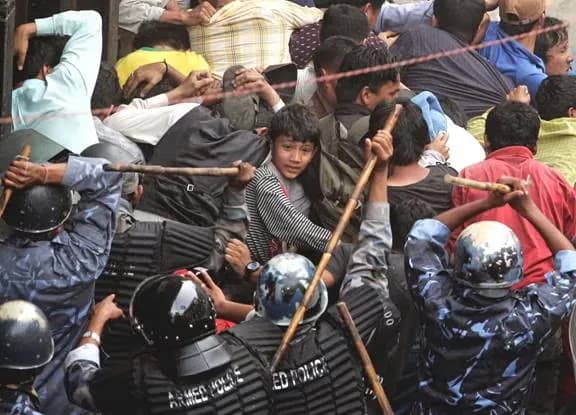
Nepal's Supreme Court has declared child soldier recruitment a war crime, 20 years after the civil war ended and over 4,000 children were sent to fight and then abandoned.
The Story in Brief
On June 13, 2026, Nepal's Supreme Court issued a landmark verdict declaring the recruitment of child soldiers a heinous war crime and ordering the government to create a law that criminalizes it with a specific punishment. The ruling came after Lenin Bista, a 36 year old former child soldier from Kavre district, spent 20 years fighting for justice the state refused to give him.

"The Supreme Court ruling is not just a victory for Nepal, but sets an excellent international precedent. It has been a long and hard battle to regain our lost childhood. We are happy that even though justice was delayed, it was not denied." - Lenin Bista (Nepali Times, June 13, 2026)
Who Is Lenin Bista?
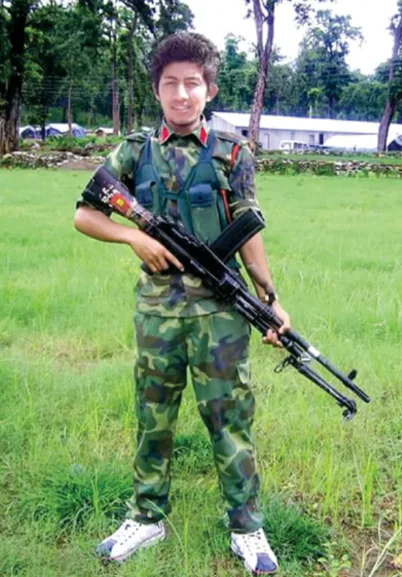
Source: Recruited At Age 12, Former Maoist Combatant Lenin Bista. Facebook, Nepali Times, 13 June 2026.
Lenin Bista is a 36 year old man from Kavre district, Nepal. He is married with two children and is currently pursuing his MPhil degree at Tribhuvan University's History Department. His name Lenin was inspired by the famous Russian Communist revolutionary, Vladimir Lenin. But when he was recruited into the Maoists at age 12, he had no idea who Lenin was or what Communism even meant. He was simply a normal schoolboy with an unusual name.
Bista is the founding chair of D-PLAN (Discharged People's Liberation Army Nepal), a non-governmental advocacy organization he set up to fight for the rights of over 4,000 child soldiers who were abandoned after Nepal's civil war ended in 2006.
A Schoolboy Recruited Into War
The year was 2002. Nepal was in the middle of a brutal decade long civil war between the government and Maoist guerrillas that had been raging since 1996. Lenin Bista was 12 years old and attending school in Kavre district when Maoist guerrillas walked directly into his school.
The guerrillas gathered all students in an assembly, performed revolutionary songs, and delivered a speech calling on students to join the fight against injustice, exploitation and discrimination. Every household in the area was forced to give one person to join the militia.
Lenin and four of his classmates decided to join together. The Maoists assigned him to their intelligence unit, where he worked as a spy gathering information about army and police bases that the guerrillas planned to attack. A child was the perfect spy. Nobody suspects a 12-year-old. It was easy for him to go in secret places and nobody would even suspect a teen boy.
He was trained to make improvised explosive devices and use firearms. He participated in two attacks.
"It was a case of kill or be killed. Two of my classmates who joined with me were killed." —Lenin Bista
Bista explains how, when he should have been studying and developing skills, he was instead learning to make bombs and use guns. He adds that many children who were used as spies during the war are now jobless and are demanding employment in sectors such as firefighting and forest protection, as well as opportunities to learn new skills.
The War Ended But Justice Didn't Come
Nepal's civil war ended with the Comprehensive Peace Accord in November 2006. More than 17,000 people had been killed, nearly 1,400 remained missing and millions were displaced. Surveys conducted during the conflict estimated that up to 30 percent of the Maoist military consisted of minors.
The United Nations Mission in Nepal (UNMIN) set up demobilization camps to verify and register all Maoist fighters. Adult combatants who passed verification received official recognition, Rs.500,000 to Rs. 800,000 in compensation, rehabilitation support and the option to join the Nepal Army.
But for Bista and nearly 3,000 other child soldiers, the process ended differently. Because they were minors, they were declared 'disqualified' combatants and thrown out of the camps. According to court documents cited by The Kathmandu Post, child combatants who were not included in the army integration process were initially given Rs. 10,000 each and promised Rs. 200,000 in the future. However, not all were given the promised amount.
Bista came home at 18 with six years of his childhood gone, two school friends dead, a label that said 'disqualified', and Rs 10,000 in his pocket. Adult soldiers received 80 times more.
Twenty Years of Fighting Alone
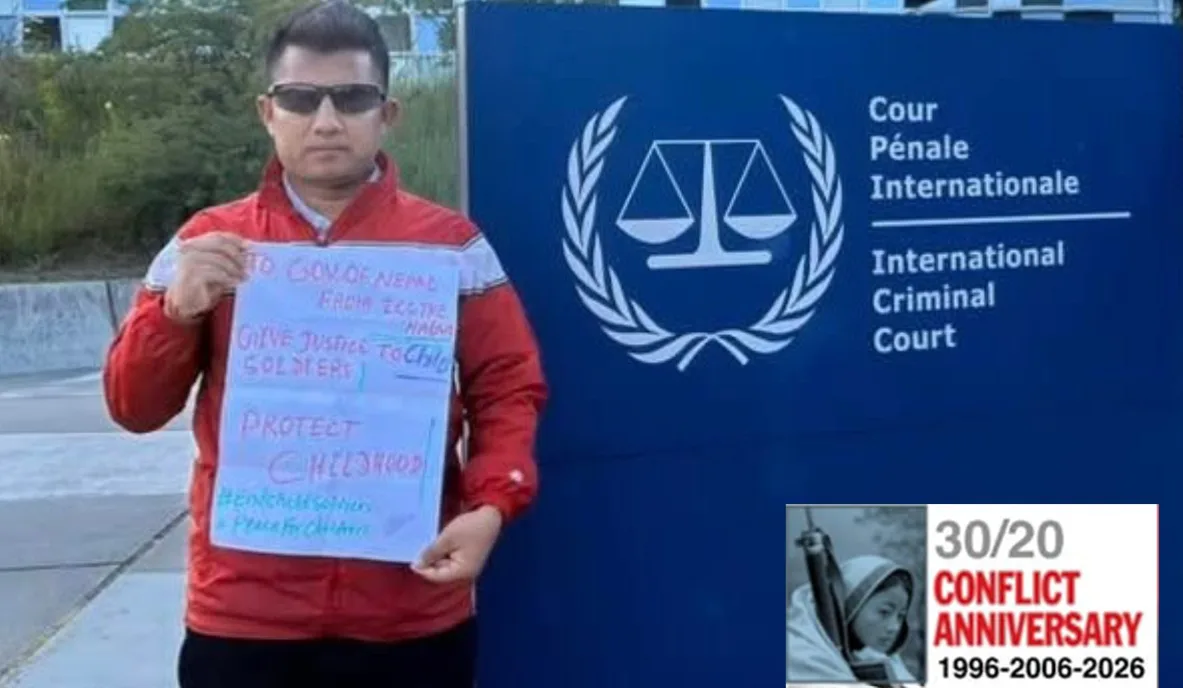
Source: Justice For A Child Soldier Named Lenin. Nepali Times, 13 June 2026.
Instead of giving up, Bista founded D-PLAN and began fighting for justice. The response from the state was swift and hostile. When the Maoist party came to power, the government jailed him for one year for his activism. On another occasion, he was stopped at the airport and prevented from attending an international peace conference.
The United Nations whose own verification process had labelled him disqualified washed its hands of the issue and walked away.
In June 2023, Bista filed a writ petition in the Supreme Court on behalf of an estimated 4,000 child soldiers, challenging amendments to Nepal's transitional justice laws. He argued that the laws failed to address the plight of former child soldiers whose records had been erased, and that there was no clear legal provision criminalizing child soldier recruitment in Nepal despite the country's international obligations. The case was filed against former Maoist leaders and former Prime Ministers Pushpa Kamal Dahal and Baburam Bhattarai.
The case lingered in court for three years, postponed repeatedly. Bista travelled to The Hague, home of the International Criminal Court to pursue international support. The message was clear: if Nepal would not act, the world would be asked to.
The Supreme Court Verdict June 13, 2026
A full bench of Justices Sapana Pradhan Malla, Sunil Kumar Pokharel and Shanti Singh Thapa delivered the verdict on June 13, 2026 three years after the case was filed and 20 years after the civil war ended.
What the Court Ordered
The court directed the government to enact a law explicitly classifying the recruitment or use of anyone aged 18 or below in any military force as a serious human rights violation and a punishable offence. According to People's Review, the court stated: "The state has a legal duty to reintegrate those separated from society by conflict. This is not an act of charity."
The court also ordered state agencies to immediately stop referring to former child combatants as 'disqualified' or 'discharged' in official records and archives, ruling that such labels were discriminatory and inconsistent with constitutional guarantees of dignity and equality, as well as Nepal's obligations under the Convention on the Rights of the Child.
The bench directed transitional justice commissions to provide compensation to child soldiers at par with adult combatants who had received Rs 800,000 after discharge from UN camps.
What the Court Refused
Bista had also sought the direct prosecution of former Prime Ministers Dahal and Bhattarai. The court declined to order this, ruling that questions of individual criminal liability should be addressed through Nepal's transitional justice mechanisms, The Truth and Reconciliation Commission and the Commission of Investigation on Enforced Disappeared Persons and their recommendations.
The court also noted that the third amendment to the Truth and Reconciliation Commission Act had excluded the use of child soldiers from the definition of 'serious human rights violations' a gap the new law must now fill.
"The court has clearly said that the use of minors is a human rights violation and the existing transitional process fails to address our genuine concerns. It has generated a sense of hope that justice will be delivered to hundreds of former minor soldiers like me." — Lenin Bista, The Kathmandu Post, June 12, 2026
The Numbers Behind the Story
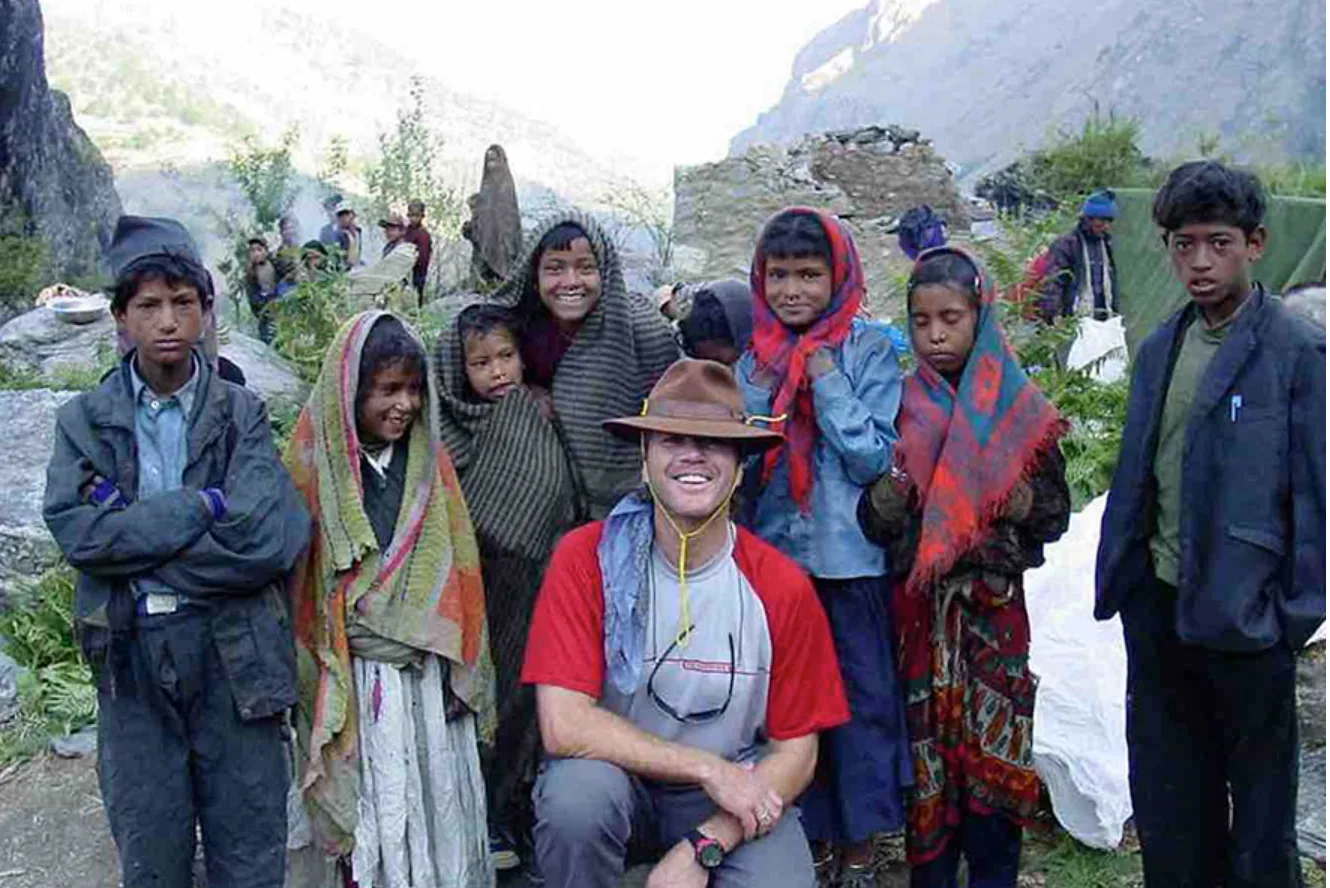
Source: Photo Of The Week: Captured By Maoist In Nepal, The Walker Method, 18 February 2015.
According to The Kathmandu Post, among the 4,008 combatants who did not qualify for integration into the Nepal Army, 2,973 were verified as minors during the UN process while the remaining 1,035 had joined the Maoist People's Liberation Army after the first ceasefire of May 26, 2006 six months before the peace deal was signed.
The civil war killed more than 17,000 people, left nearly 1,400 missing and displaced millions. This year marks the 20th anniversary of the ceasefire and 30 years since the Maoists first took up arms in 1996.
After the Verdict Threats Continue
Following the Supreme Court verdict, Bista has received increasingly vicious death threats from former Maoist comrades using fake social media accounts warning that he will be beheaded for being a traitor to the Maoist cause. Bista said he got intimidating messages, but the threats have intensified since the ruling.
Despite the threats, Bista said the verdict represented a milestone. He participated in Nepal's Gen Z protest in 2025 and was offered an election ticket by advisors to Prime Minister Balendra Shah, which he then declined. He contested as an independent candidate from Kavre-2 in the March 2026 elections, but was unsuccessful.
Why This Verdict Matters
The Supreme Court ruling is significant beyond Nepal. It is one of the few instances in South Asia where a domestic court has explicitly ordered the criminalization of child soldier recruitment through a judicial directive. It also sets a precedent that victims of civil war era crimes can still seek and receive judicial recognition decades after the conflict ended.
However, advocates point out that the ruling stops short of the full accountability that Bista and thousands of others had sought. Without individual prosecution of those who ordered child recruitment, the most powerful symbol of accountability remains missing.
For Lenin Bista who was 12 when he was handed a gun, 18 when he was handed a label that said disqualified, and 36 when a court finally called what happened to him a crime, the fight is not yet over. But, for the first time in 20 years, the state has been told by its own highest court that what it did to children was wrong.
The armed conflict has affected children of all ages through its impact on their families. However, it has particularly affected children by disrupting their education and interfering with their access to healthcare. Some children had been removed from school to help at home, as older members of the family migrated away from their home village to avoid recruitment by the Communist Party of Nepal– Maoist or harassment by the security forces. Children of families displaced by the fighting had their schooling temporarily suspended or even stopped, their access to healthcare was made more difficult, and their living and environmental conditions deteriorated and became less stable. Some children were pushed into the labor market.
Key Facts at a Glance
Civil war duration: 1996 to 2006 , 10 years
Total killed: More than 17,000 people
Still missing: Nearly 1,400 people
Child soldiers: 4,008 combatants not integrated , 2,973 verified minors
Children as percentage of Maoist army: Up to 30 percent
Adult soldier compensation: Rs 800,000
Child soldier compensation: Rs 10,000 ,promised Rs 200,000, never fully paid
Years from war to verdict: 20 years
Verdict date: June 13, 2026
Petitioners: 9 former child soldiers led by Lenin Bista
Works Cited
“Justice for a Child Soldier Named Lenin.” Nepali Times, 13 June 2026.
“Nepal Supreme Court Orders Registration of Writ Petition Against PM Prachanda.” The Print, June 2023.
“SC Admits Writ of 9 Former Maoist Child Soldiers.” The Himalayan Times, 12 June 2023.
“SC Orders Govt to Criminalize Use of Child Soldiers.” People’s Review, 13 June 2026.
“SC Seeks Prohibition of Child Soldiers by Law.” Radio Nepal, 12 June 2026.
“Supreme Court Directs Government to Criminalize Child Soldier Recruitment.” The Kathmandu Post, 12 June 2026.
“Supreme Court Orders a New Law as Transitional Justice Act Overlooks Child Soldiers’ Issue.” The Kathmandu Post, 12 June 2026.
UNICEF. Situation of Women and Children in Nepal 2006. 2006.
Published Jun 17 in Researched Article