
One Card for Everything? Why Nepal's National Identity Card Is Becoming Essential for Digital Wallets, Public Services and Even India Travel
Nepal’s NID aims to simplify identity verification across public services, digital wallets and possible India travel. However, card delays, implementation issues and privacy concerns remain.
· 8 min read
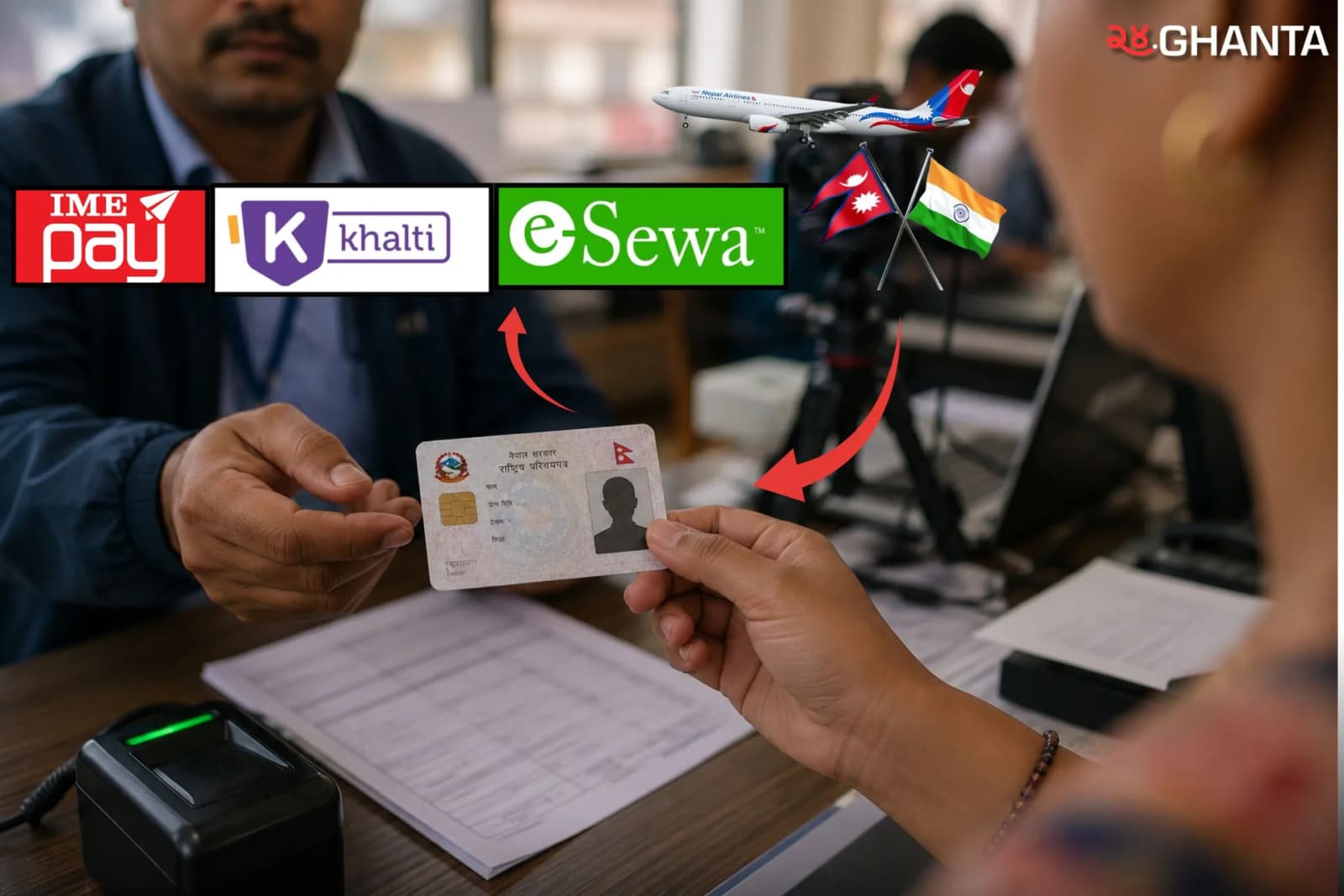
A citizenship certificate proves that someone is Nepali. Nepal’s National Identity Card is designed to do more: digitally verify that the person presenting the card is the same person recorded in the government’s national database.
Known as the NID, the chip-based card is connected to a permanent National Identity Number and personal biometric information, including a photograph, fingerprints and iris data. The government wants it to become a common identity that citizens can use across public services, banking, property transactions, passport applications, and potentially, international travel.
Nepal has already asked India to recognize the NID as a valid travel document. The request has been sent to New Delhi, but India has not formally approved it. Indian representatives reportedly responded positively during discussions, although the proposal remains under consideration.

The travel proposal is only one part of a much bigger plan: Nepal wants the NID to gradually become the primary means citizens use to prove who they are.
Why Nepal Created The NID
The legal foundation for the system is the National Identity Card and Registration Act, 2076.
The Act says the system was created to maintain reliable identity records, provide citizens with unique National Identity Numbers, collect personal and biometric information, and establish an integrated national identity management system.
It also envisions connecting verified identities with government services, development planning and security management.
The physical card is therefore only the visible part of the project. Behind it is an electronic system designed to store, verify and update citizens’ information.
In practical terms, the government wants authorized institutions to rely on one verified record instead of repeatedly asking people for photographs, photocopies and the same personal details.
How Is It Different From Citizenship?
A citizenship certificate establishes that a person is a citizen of Nepal.
The NID is designed to make that person’s identity electronically verifiable.
During enrollment, authorities collect a clear digital photograph, fingerprints from both hands, iris information, a signature, and other prescribed personal details. The card itself contains an electronic chip and security features.
The NID does not automatically cancel or replace citizenship certificates. The two documents continue to have different legal roles. However, the Act creates a path through which the NID may eventually perform some functions now handled by citizenship certificates and other identity documents.
One Person, One Permanent Number
Every eligible person is meant to receive a unique National Identity Number that cannot be duplicated.
The number remains connected to the individual even if the physical card is lost, cancelled, or no longer valid. It also remains in the official record after the person dies.
A physical card can be replaced, and personal information can be corrected. The identity number, however, is intended to remain permanent.
The Act also allows a National Identity Number to be issued during birth registration in areas where the system has been implemented. Biometric information is not required simply to issue the number to a child. This means Nepal’s national identity record could eventually begin at birth rather than when a person first applies for citizenship or a passport.
What Information Does The System Store?
The visible card contains details such as the holder’s:
Name
Date of birth
Gender
Nationality
Photograph
Permanent address
National Identity Number
Citizenship category and number, where applicable
The central database can contain additional information, including temporary addresses, biometric details, parents’ and grandparents’ names, a spouse’s name and other information prescribed by law.
This does not mean every institution can see a citizen’s full record.
Access and use must follow the Act, its regulations and other applicable laws.
Could It Become Nepal’s Main Identity?
Section 10 of the Act gives the NID a broad potential role.
The law recognizes it as a principal basis for receiving public services and proving identity. It also allows services to be provided through the National Identity Number when the physical card is unavailable, and the person can be verified electronically.
Government and private institutions may use the NID or identity number instead of another identity document after developing the necessary technical infrastructure.
The government may also publish a notice in the Nepal Gazette allowing the NID to perform the function of another card or certificate once the required information has been integrated into the system.
But the word “may” is important.
The Act does not mean the NID has already replaced passports, citizenship certificates, driving licences or voter records. Those changes would require further legal and administrative decisions.
The NID Is Already Becoming Necessary
The National Identity Card is no longer only a long-term government project. Its use is already expanding into everyday services.
In July 2026, Nepal Rastra Bank amended its Integrated Payment Systems Directive, requiring licensed digital wallet providers to verify the electronic records of a customer's National Identity before opening new wallets for Nepali citizens.
Existing wallet users who already have a National Identity Card must also update their wallet details with their National Identity Number within the deadline set by the central bank. The change marks one of the first major examples of the NID becoming a practical requirement beyond traditional government services.
Why The India Proposal Matters
Nepali citizens flying to India currently generally use a passport or citizenship certificate. If India approves Nepal’s proposal, the NID would become another accepted option.
This could help people who do not have passports or do not want to carry their original citizenship certificates while travelling.
However, approval has not been granted. Nepal has submitted the proposal, and India’s formal response is still pending.
The Department of Immigration reported that around 1,50,000 Nepalis travelled to India during the previous year, but it does not have a complete count combining air and land crossings. As a result, the exact number of people who could benefit remains unclear.
The India proposal shows how Nepal wants to expand the NID beyond domestic government services and make it a more widely accepted identity document.
Millions Have Applied, But Many Are Still Waiting
According to Department of Immigration figures reported in July 2026, around 2 crore people had applied for the NID, while only more than 45 lakhs had received physical cards.
That gap is one of the program’s biggest challenges.
The Act allows institutions to verify people through their identity numbers even when physical cards are unavailable. But this depends on functioning digital systems and employees who understand how to use them.
If a database is unavailable, a record contains an error, or an institution cannot complete electronic verification, a person without the physical card may still face delays.
The government must therefore be careful when making the NID necessary for additional services while millions of applicants remain without cards.
What Happens When Information Is Wrong?
The Act allows citizens to request corrections when information recorded on their cards is inaccurate or needs to be updated.
The details may be changed, but the National Identity Number remains the same.
People can also apply for duplicate cards when the original is lost, destroyed, damaged or unusable.
These protections are important because a single error in a centralized identity system could affect several connected services.
A national digital identity will only be useful if mistakes can be corrected quickly, affordably and without forcing citizens through a lengthy administrative process.
Is Biometric Information Protected?
The law says personal and biometric information stored in the database must be kept confidential.
However, confidential does not mean the information can never be used.
The department may conduct verification, deduplication or identification for legally authorized purposes, including criminal investigations, court requests and requests made by the person concerned.
Government agencies and authorized service providers may also receive controlled access for identity verification while maintaining personal privacy.
The Act requires backup storage and establishes a Data Security Committee responsible for protecting the database, networks, applications and identity cards.
Still, the law alone cannot guarantee security.
A password can be changed after a data breach. A fingerprint, face or iris cannot easily be replaced. Public trust will depend on strong cybersecurity, strict access controls, reliable audits and meaningful punishment for misuse.
One Card, Major Responsibility
Nepal’s National Identity Card could make everyday life easier.
Citizens may eventually need fewer photocopies, repeated forms and visits to different government offices. Institutions could verify identities more quickly, and acceptance by India could make travel more convenient for some Nepalis.
But the same system could also create new problems if cards remain delayed, information is entered incorrectly, biometric verification fails, or personal data is misused.
The NID is already moving toward the center of the relationship between Nepali citizens and the state.
Its success should not be judged only by how many people enroll. It should be judged by whether every eligible citizen can obtain it, correct mistakes, receive essential services, and trust that their permanent information is protected.
One card may eventually open the door to almost everything.
Nepal must ensure it never becomes the reason someone is locked out.
Source:
"Nepal seeks India's recognition of NID card as valid travel document," The Kathmandu Post, July 25, 2026.
National Identity Card and Registration Act, 2076 (राष्ट्रिय परिचयपत्र तथा पञ्जीकरण ऐन, २०७६), Department of National ID and Civil Registration, Ministry of Home Affairs, Government of Nepal.
Tags
Published Jul 26 in Researched Article