
Trishuli 3A Tunnel Rescue: Two Workers Found Alive After 10 Days As Teams Push Deeper Into Powerhouse
Two workers, Sanjay Sah and Kabir Maharjan, were rescued alive from the Trishuli 3A hydropower tunnel after surviving for 10 days following the Rasuwa flood. Rescue teams have also recovered one unidentified body, while the Nepal Army and other agencies continue searching deeper into the underground powerhouse for other missing workers.
· 7 min read
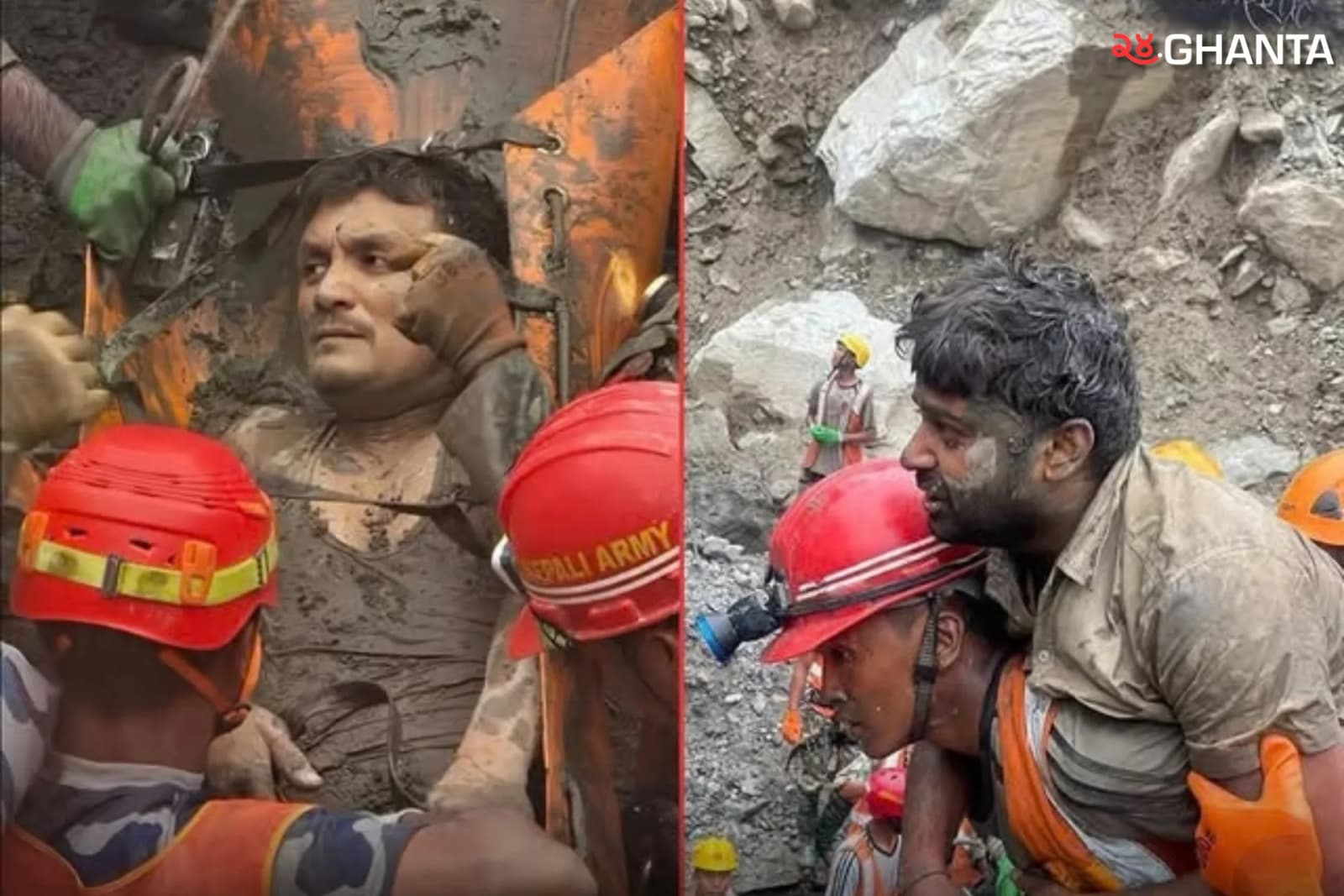
Kathmandu, September 4, 2026: A week of difficult digging, rock blasting and round the clock rescue work at the Upper Trishuli 3A Hydropower Project produced a major breakthrough on Friday morning when rescuers brought Sanjay Sah and Kabir Maharjan out alive, 10 days after the Bhotekoshi flood trapped workers inside the project. The operation is continuing, however, as authorities believe many more workers could still be deeper inside the underground powerhouse area.
Later on Friday, rescuers also recovered one unidentified body from the tunnel. Search teams from the Nepal Army, Armed Police Force, Nepal Police and Nepal Electricity Authority are continuing to move toward the underground powerhouse in an effort to locate others.
How The Trishuli 3A Disaster Began
The crisis began after the devastating Bhotekoshi flood struck the Rasuwa region on August 26 (Bhadra 10), badly affecting the Trishuli 3A Hydropower Project and blocking access to its underground facilities.

The 60-megawatt project had been shut down for a complete overhaul at the time, meaning engineers, technicians, and other employees were working around the underground powerhouse. The Nepal Electricity Authority estimates that around 42 engineers and employees may have been trapped in the powerhouse tunnel system, although officials say the exact number and their condition remain unclear.
Reaching them quickly was extremely difficult because flood debris had buried and blocked access to the tunnel.
A Rescue Operation Through Mud, Rocks And Concrete
The rescue was not simply a matter of entering the tunnel.
Teams first had to create a safe route through huge amounts of flood debris. By September 3 (Bhadra 18), rescuers had removed around 20,000 cubic metres of mud, sand, rocks, concrete slabs, beams and other debris in five days using two excavators. Some boulders were described as being as large as houses. More than two dozen large rocks had to be blasted as teams worked around the clock.
The cable duct being used as an access route is about 160 metres long and 5.5 metres high. Controlled explosives, excavators and breakers were used to gradually clear a path toward the tunnel.
Earlier in the operation, teams had also drilled five openings to send air into the tunnel while trying to understand conditions inside. Rescuers later located the cable access tunnel, which offered a possible route toward the trapped workers.
By September 3, a technical team including Nepal Army personnel had entered the tunnel after clearing debris from the entrance, only to encounter more material deeper inside.

Then Rescuers Heard Human Voices
Friday morning brought the breakthrough rescuers and families had been waiting for.
During the search, teams detected signs of people alive inside. Reports said human voices were heard, leading rescuers to intensify their efforts.
Nepal Army Lt Col Ganga Baral, who is commanding the operation, said rescue personnel had been working day and night under extremely difficult conditions. The operation involved the Army's specialised teams, including Special Forces, Combat Engineers and Collapsed Structure Search and Rescue personnel, alongside the Armed Police Force, Nepal Police, NEA staff and technical experts.
The effort finally reached two survivors.
Sanjay Sah And Kabir Maharjan Rescued Alive
The men were identified as 30-year-old Sanjay Sah, a mechanical foreman, and 45-year-old Kabir Maharjan, a mechanical supervisor. A joint Nepal Army and Armed Police Force team brought them out alive on the tenth day after the flood.
According to Trishuli 3A Project Chief Awas Ojha, they were found along the tunnel leading toward the powerhouse. At the time they were rescued, the rescue team itself had not yet reached the powerhouse. Because of the darkness and difficult conditions underground, officials could not immediately determine exactly how far the two had been from it.
Their rescue immediately raised hopes that others could also have survived deeper inside.
Sanjay Says He Stayed Behind To Warn Others
After being rescued, Sah provided an important account of how he became trapped.
He worked in the project's control room. According to his account reported after the rescue, when the flood struck, he warned other workers to escape. In doing so, he was delayed and could not get out himself before becoming trapped.
His family in Saptari had spent 10 days waiting for news. His brother said the family had been unable to sleep and described the rescue as a happiness they had never expected. Shah also said he had been chanting a Mahamantra while trapped and believed it helped him survive the ordeal.
Kabir's Family Calls His Survival A Miracle
Kabir Maharjan's rescue brought similar scenes of relief for his family.
His sister, Vidya Dangol, said that the family had almost given up hope after 10 days without him. She said she had prayed for her brother on Friday morning and later saw news on her phone that he had been found alive.
She described his survival as something the family had never expected and called it a miracle.
Maharjan was taken to the Military Hospital in Chhauni after his rescue, while Sah was also placed under medical observation. Later reports citing the Nepal Army said both were being treated at the military hospital and their condition was normal.
One Body Recovered As Search Continues
The joy surrounding the two survivors was followed by a painful development.
Later on Friday, rescuers recovered one body from the tunnel. Project Chief Awas Ojha said the identity had not yet been established at the time of reporting.
The discovery also underlined how uncertain conditions remain deeper underground.
The NEA estimates that around 42 engineers and employees were trapped in the powerhouse tunnel, with most believed to have been inside or around the underground powerhouse. However, authorities have cautioned that the exact number still inside remains unclear.

Rescue Teams Have Not Yet Reached The Powerhouse
This is one of the most important details in Friday's rescue story.
Shah and Maharjan were found on the route leading toward the powerhouse, rather than inside the powerhouse itself. At the time of the morning rescue, Project Chief Ojha said teams had still not reached the underground powerhouse.
That means Friday's successful rescue is a breakthrough, but not the end of the operation.
Army personnel remained inside the tunnel after bringing the two men out, continuing to search farther ahead. Lt Col Baral said conditions were still being assessed and that it was too early to provide complete details about what rescuers were finding deeper inside.
A Joint Nepali Rescue Effort
The operation has brought together several agencies and technical specialists.
The Nepal Army has taken a leading role, supported by the Armed Police Force, Nepal Police, Nepal Electricity Authority personnel, engineers and tunnel specialists. Technical knowledge has been particularly important because teams have had to understand the project's underground layout while simultaneously dealing with unstable debris, darkness, mud and flood damage.
Lt Col Baral credited coordination between the security agencies and engineers for making Friday's rescue possible. He said teams had continued working day and night despite the difficult conditions.
What Happens Next?
The immediate priority remains reaching deeper sections of the tunnel and the underground powerhouse.
The rescue of Sah and Maharjan after 10 days has shown that survival for an extended period inside the damaged tunnel was possible. But authorities have not confirmed how many people remain alive, and Friday's recovery of an unidentified body means the situation remains extremely serious.
Search teams are therefore continuing rather than treating the rescue of the two men as the end of the operation. The focus has shifted farther into the tunnel, toward the area where most of the missing workers are believed to have been located.
For families who have spent more than a week waiting for news, Friday brought both hope and grief: two men came out alive after 10 days, one body was recovered, and the search for the others continues.
Tags
Published Sep 4 in Nepal