
Why Do World Leaders Gather at the UN Every Year, And Does Anything Actually Change?
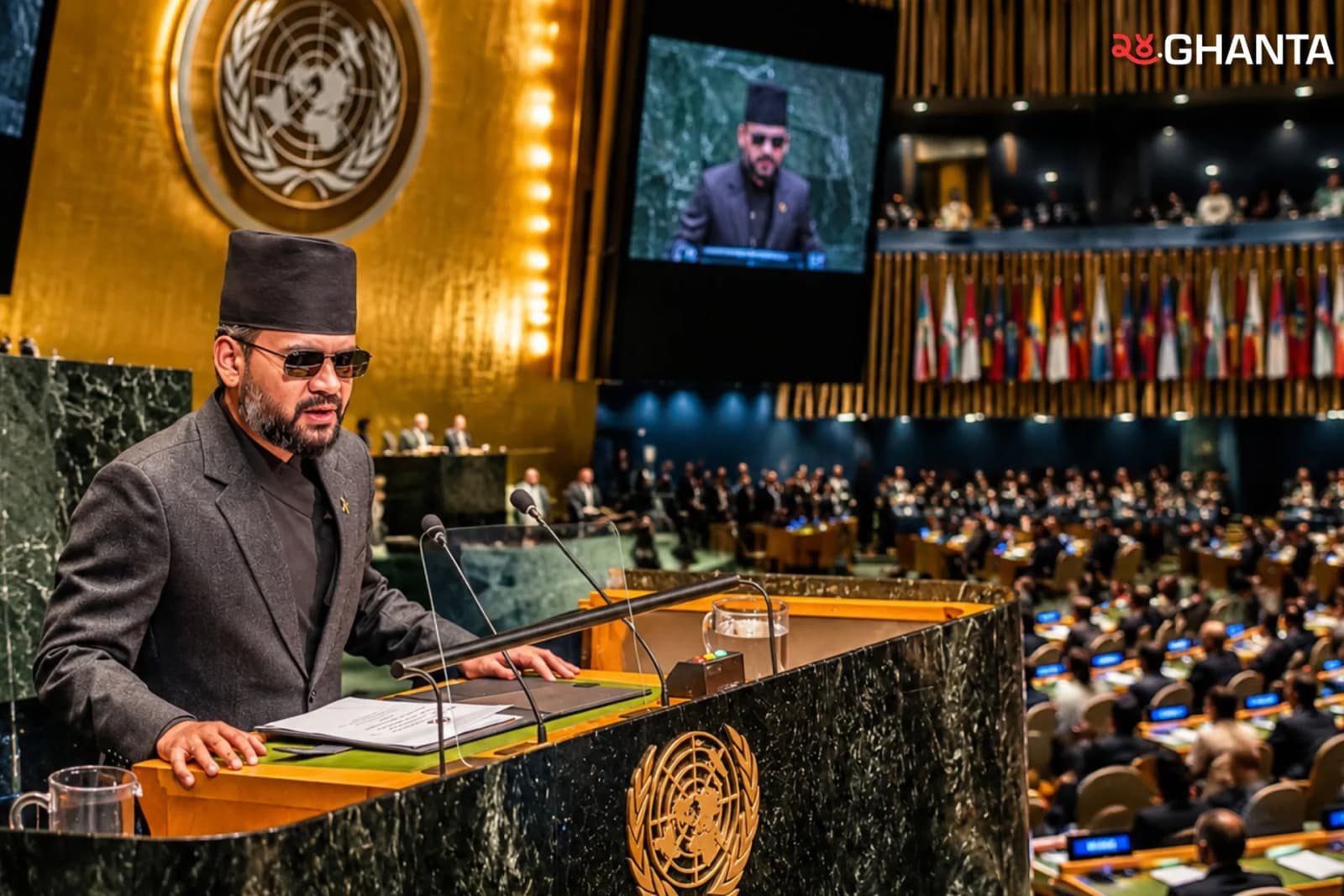
The United Nations General Assembly gives world leaders a platform to discuss global challenges, build cooperation, and bring national concerns to international attention. For Nepal, the UN offers an important space to highlight issues such as climate risks, Himalayan disasters, and the need for regional cooperation. Prime Minister Balendra Shah used the 81st UN General Assembly to bring Nepal’s climate concerns before a global audience.
· 9 min read
Every year in September, one city becomes the center of global diplomacy.
The streets of New York are filled with world leaders, diplomats, journalists and officials from international organizations. Inside the headquarters of the United Nations, presidents and prime ministers sit together to discuss issues that affect billions of people from wars and climate change to poverty, development and human rights.
This gathering has become a familiar global event. Leaders stand at the UN podium, deliver speeches, meet other officials and return home.

But for many people, one question remains:
Why do world leaders gather at the United Nations every year? And after all the speeches and meetings are over, does anything actually change?
In 2026, Nepal’s Prime Minister Balendra Shah (Balen Shah) joined world leaders at the 81st session of the United Nations General Assembly (UNGA) . His address focused on Nepal’s climate challenges, the destruction caused by recent Himalayan floods and the need for stronger international cooperation to protect vulnerable mountain regions.
His appearance at the UN was not just about giving a speech. It represented Nepal’s attempt to bring the concerns of a climate vulnerable country to a global audience.
To understand why this platform matters, we first need to understand why the United Nations was created and what role it plays in today’s world.
The Story Behind The United Nations: Created From The Ruins Of War
The United Nations was born from one of the darkest chapters in human history: World War II.
Between 1939 and 1945, the world experienced a devastating conflict that killed millions of people, destroyed cities and changed the global political order. Before the UN existed, countries had already attempted to create international cooperation through the League of Nations after World War I. However, the League failed to prevent another major war.
After World War II, countries recognized that the world needed a stronger international organization where nations could communicate, negotiate and work together. The idea behind the United Nations was simple:
Countries should have a place to solve disagreements through dialogue before they turn into conflicts.
The UN Charter, the founding document of the organization, was signed in San Francisco in June 1945 by representatives from 50 countries.
The United Nations officially came into existence later in 1945.
Since then, the organization has expanded beyond its original focus on preventing wars. Today, the UN works on:
Peace and security
Human rights
Poverty reduction
Humanitarian assistance
Sustainable development
Climate change
The basic purpose remains the same: creating a place where countries can work together on problems that affect everyone.
What Is The United Nations General Assembly?
The United Nations General Assembly (UNGA) is the main discussion and policymaking body of the United Nations.
Unlike some international organizations where only a few powerful countries make decisions, the General Assembly includes all 193 UN member countries, and every country has an equal vote. This means Nepal, the United States, China or any other member country all have a formal vote in the General Assembly.
The UN General Assembly is like a global meeting room where every country gets a seat and a chance to explain its concerns.
The Assembly discusses almost every major international issue and can adopt resolutions on topics including development, human rights, peace and security.
It also makes important decisions for the UN system, including approving the UN budget, electing non-permanent members of the Security Council and appointing the Secretary General based on the Security Council’s recommendation.
Does The UN General Assembly Happen Every Year?
The United Nations General Assembly is held every year.
The Assembly itself works throughout the year, but the most visible moment comes every September during the High Level Week, when presidents, prime ministers and government leaders gather in New York.
This event is known as the General Debate.
According to the United Nations, the General Debate is the annual September meeting where leaders from the UN’s 193 member countries gather to discuss global issues and present their national priorities.
Each year receives a new session number.
For example:
2025 - 80th session
2026 - 81st session
The September gathering is only the most visible part. The General Assembly continues working through committees, negotiations and discussions throughout the year.
Why Do World Leaders Gather Every Year?
The world changes constantly. New conflicts emerge, climate disasters increase, economies face challenges and countries need cooperation on problems that cross borders.
The UN provides a place where countries can discuss these issues together. There are three major reasons leaders attend.
1. To Discuss Problems No Country Can Solve Alone
Many challenges today are global. A single country cannot solve climate change, pandemics or international conflicts by itself.
For example:
A country may reduce its own emissions, but climate change is influenced by actions taken around the world.
Similarly:
A disease outbreak can spread across borders.
A conflict can affect international security.
Economic problems can impact global markets.
Major issues discussed at UN meetings include:
Climate change
Global health
Food security
Refugees
Peace and security
Sustainable development
2. To Give Smaller Countries A Voice
One of the most important roles of the General Assembly is that every country gets an opportunity to speak. For smaller countries, the UN can provide an international platform that they may not have elsewhere.
Nepal is an example.
Although Nepal contributes a very small share of global emissions, it faces serious climate impacts because of its geography. During his UN address, Prime Minister Balen Shah highlighted the destruction caused by recent Himalayan floods and described them as a warning about the growing climate crisis.
He also said that Nepal contributes less than 0.1% of global greenhouse gas emissions while facing problems including glacier retreat, unstable mountain slopes and unpredictable rivers. For Nepal, the UN is a place where these concerns can reach international leaders and organizations.
3. To Build Cooperation Behind The Scenes
The UN is not only about speeches. A large amount of diplomacy happens away from the main stage. During UN week, leaders and diplomats hold meetings about:
International partnerships
Development assistance
Humanitarian support
Regional challenges
Possible agreements
Many important discussions happen through negotiations between countries.
What Actually Happens During UN General Assembly Week?
The Famous Speeches
The most recognizable part of UNGA is the General Debate. This is when leaders stand at the UN podium and present their country’s concerns, achievements and priorities.
However, despite the word “debate,” it is not like a normal discussion where leaders immediately respond to each other. Instead, countries deliver speeches explaining their positions to the international community.
These speeches are used to:
Highlight national concerns
Call for international support
Announce policies
Present ideas for cooperation
How Long Are UN Speeches?
The UN encourages leaders to keep speeches around 15 minutes, although the limit is voluntary. Some speeches have become famous because of their length. The longest UN General Assembly speech was delivered by former Cuban leader Fidel Castro in 1960 and lasted 269 minutes, nearly four and a half hours.
Does Anything Actually Change After UN Meetings?
This is the biggest question. The honest answer is: sometimes, but not immediately. The UN does not work like a world government.
A speech at the General Assembly cannot instantly:
Stop a war
End poverty
Reverse climate change
Force countries to follow decisions
However, the UN has helped create important agreements and international standards.
Where Has The UN Created Real Impact?
Protecting Human Rights
One of the UN’s most important achievements was the adoption of the Universal Declaration of Human Rights in 1948. The declaration became a major international reference point for human rights protections worldwide.
Creating Sustainable Development Goals
In 2015, UN member states adopted the 17 Sustainable Development Goals (SDGs). These goals created a shared global plan to address:
Poverty
Education
Health
Equality
Environmental protection
How Has The UN Helped Nepal?
The UN’s work is not limited to international meetings. In Nepal, UN agencies have supported programs related to:
Health
Education
Agriculture
Food security
Human rights
Emergency response
Examples include:
Vaccination programs
Health campaigns
Teacher training
Refugee assistance
Development support
Nepal has also contributed to global UN efforts through participation in peacekeeping missions.
Why Did Balen Shah’s UN Visit Matter For Nepal?
Nepal’s participation at the UN is not only about making a speech. It is about bringing national issues to a global platform. During his UN address, Balen Shah proposed a Himalayan Climate Resilience Mechanism involving Nepal, India and China.
The proposal focused on:
Sharing climate data
Monitoring glaciers
Improving early warning systems
Strengthening regional cooperation
He also emphasized that climate change does not follow political borders because floods, glaciers and environmental changes affect the wider Himalayan region.
So, Why Does The UN Still Matter?
The United Nations General Assembly does not change the world in one week.
Its real importance comes from creating a permanent place where countries can:
Discuss global challenges
Share concerns
Build partnerships
Negotiate agreements
Search for common solutions
The biggest impact of the UN often happens after leaders leave New York when governments decide whether they will turn discussions into action. For countries like Nepal, the UN is more than a stage for speeches. It is a platform where smaller nations can bring their challenges to the world, seek cooperation and make their voices heard.
The UN Is Not A Place Where The World Changes Overnight But A Place Where Change Begins
The United Nations General Assembly does not solve every global problem in a single week. A speech from a world leader cannot immediately end a war, stop climate change or force countries to agree on every issue.
But the importance of the UN lies somewhere else.
It provides a rare platform where almost every country in the world, big or small, can sit at the same table, present their concerns and search for common solutions. The discussions, negotiations and partnerships created during UN meetings often continue long after leaders leave New York.
For countries like Nepal, the UN represents more than an international gathering. It is an opportunity to bring issues that may not always receive global attention such as Himalayan climate risks, disaster impacts and the challenges faced by vulnerable communities to the world stage. Prime Minister Balen Shah’s address at the 81st UN General Assembly showed how countries can use this platform to highlight their experiences and call for wider cooperation on global challenges.
The real impact of the UN is not measured only by what happens during speeches, but by what countries do afterward. The meeting itself may last only days, but the decisions, partnerships and commitments that follow can influence the future for years. In a world where problems increasingly cross borders, the UN remains a place where countries can come together not because every problem is solved there, but because many solutions begin with a conversation.
Sources
United Nations General Assembly Official information on structure and functions
United Nations News General Debate explanation
UN General Debate Nepal Prime Minister Balendra Shah’s address summary
United Nations General Assembly milestones and history
Kul Chandra Gautam UN support and Nepal’s relationship with the UN
Published 1 hour ago in Researched Article