
After Nepal’s Deadly Floods: How Nepali and Foreign Victims Are Identified and How Families Can Get Their Loved Ones Back
Nepali and foreign victims who cannot be recognized after the Bhote Koshi flood may still be identified through photographs, fingerprints, dental information, personal records and DNA. Even when unidentified remains are temporarily buried, documented reference numbers, forensic evidence and recorded burial locations can allow authorities to identify and return them to families later. For foreign victims, formal identification is followed by ID verification, embassy coordination and repatriation so their remains can be returned home.
· 16 min read
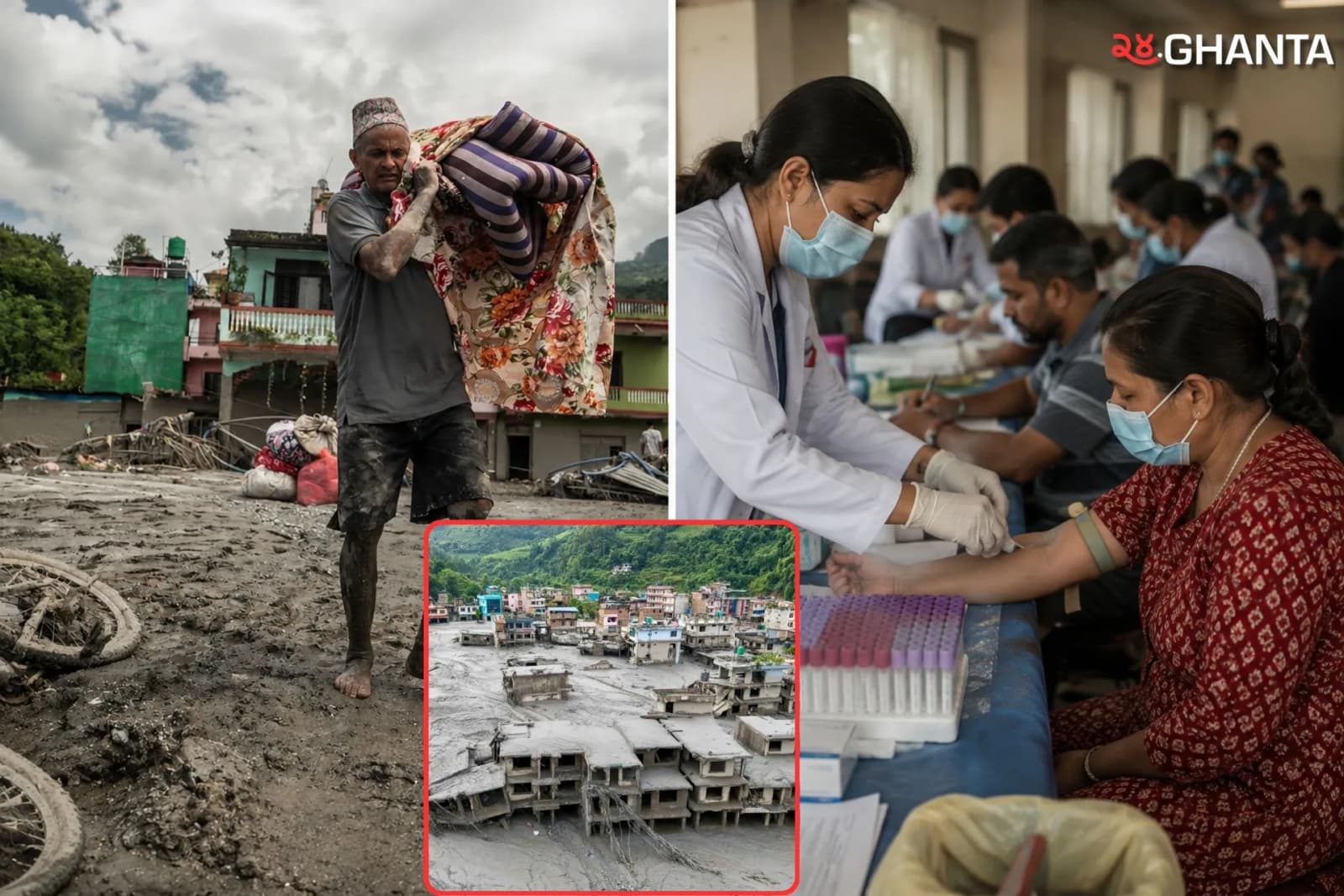
For families still searching after Nepal’s devastating Bhote Koshi flood, one question can matter more than any casualty number or rescue update:
If my loved one has been recovered but cannot be recognized, how can I find them, and if they have already been temporarily buried, can I still bring them home?
The answer is not always simple, but there is a process.

A recovered victim can be identified through photographs, physical features, clothing, jewelry, fingerprints, dental information, and when necessary, DNA. If a body cannot immediately be identified or safely stored, authorities may temporarily bury the remains after documenting them and collecting forensic evidence. If the person is later identified, those records can help authorities locate the correct remains and return them to the family.
For foreign victims, identification is followed by additional steps including passport or ID verification, embassy or consular coordination and formal repatriation.
Nepal’s Ministry of Foreign Affairs says the current system is specifically intended to keep identification possible even after temporary burial. On September 1, the ministry said unidentified remains that could not be safely preserved were being temporarily buried only after necessary forensic procedures, including DNA collection, so families could identify and receive their loved ones later.
Here is how the process works, what families should do, and what happens if the missing person is a foreign national.
How Does Identification Begin After a Body Is Recovered?
Identification does not always begin with DNA.
The first task is to preserve as much information as possible about the recovered person before decomposition, damage, or other changes make identification more difficult.
According to an August 27 Onlinekhabar report, Dr. Gopal Kumar Chaudhary, a senior forensic expert at Tribhuvan University Teaching Hospital, said authorities need to systematically document each body, including where it was found, its condition and identifying features.
Investigators may look at the face if it is still recognizable, as well as scars, tattoos, birthmarks, clothing, watches, jewelry and other personal belongings. Fingerprints, dental information and DNA can become important when visual identification is difficult.
WHO describes disaster victim identification as a comparison between information about the missing person while they were alive and information collected from the recovered body. That means information provided by families can be just as important as information collected from the remains.
A recent photograph, passport, citizenship card, details about a tattoo, dental records or information about what someone was wearing when they disappeared can all help investigators narrow down an identity.
Recognizing Someone Is Important, But It May Not Be Enough
A family may recognize a face, piece of clothing or personal item. That can be an extremely important lead. But recognizing a person in a photograph does not always mean the identity has been formally established.
Floodwater, injuries and decomposition can significantly change a body’s appearance. In a large disaster, there is also a serious risk of mistaken identification if authorities rely on only one clue.
Dr. Gopal Kumar Chaudhary told Onlinekhabar that when a body cannot reliably be recognized, investigators can use dental examination, fingerprints and DNA testing. Senior forensic expert Dr. Harihar Wasti said information collected during examinations should be compared with information about missing people and fingerprints should be preserved where possible.
This caution serves one basic purpose:
The right family must receive the right person.
Dr. Gopal Kumar Chaudhary warned that rushing a handover without sufficient identification could result in one family mistakenly receiving another person’s remains.
Why Every Unidentified Victim Needs a Number
When a victim cannot immediately be identified, documentation becomes especially important.
WHO recommends giving each recovered body a unique code and keeping that code connected to every photograph, record, body bag, and burial location associated with the person.
That means the records should effectively create a chain:
Recovered body → photographs → identifying features → belongings → forensic information → unique reference number
If temporary burial becomes necessary, another link is added:
Reference number → recorded burial location
WHO says this type of coding allows authorities to keep track of the body and retrieve it later if identification is established.
For a grieving family, that number may seem cold or impersonal.
In reality, it can become one of the most important links between an unidentified victim and the family looking for them.
Why Were Some Victims Temporarily Buried?
The scale of the disaster quickly exceeded normal morgue and cold storage capacity in some areas.
Onlinekhabar reported on August 27 that health facilities in Chitwan had combined storage capacity for only about 50 bodies at that point, while hundreds of bodies were being recovered.
Dr. Gopal Kumar Chaudhary said most hospitals in Nepal were not equipped to store hundreds of bodies simultaneously and that alternative temporary arrangements were necessary during a disaster of this scale. He suggested refrigerated containers as one possible option, while also saying scientifically managed temporary burial could be used when adequate storage was unavailable.
Nepal’s Foreign Ministry later confirmed that remains which could not immediately be identified or safely preserved were being temporarily buried after forensic procedures, including DNA collection.
The ministry also said the process was specifically designed so identification could continue later and families could receive the remains once an identity was established.
If Someone Has Already Been Buried, Can the Family Still Get Them Back?
Yes, if the remains were properly documented and remain traceable.
This is one of the most important parts of the process.
According to Dr. Gopal Kumar Chaudhary, each temporarily buried body should receive its own number and tag. Authorities should preserve photographs, the time and place where the body was recovered, clothing, jewelry, distinctive physical features, and a clear record showing where the remains were buried.
He said once relatives come forward and identification is established, the remains can be exhumed, matched with their records and handed over to the family.
Nepal’s Foreign Ministry has made the same point officially. On August 31, it said DNA samples had been taken from victims before temporary burial so families could later match records, and that families would be allowed to exhume identified remains for necessary rituals.
In practical terms, the path can look like this:
Unidentified victim → unique number → DNA and forensic records → temporary burial → family provides DNA or identifying information → identity established → corresponding burial record located → remains exhumed → body returned to family
So temporary burial should not automatically be understood as a final burial.
It is meant to preserve the possibility of identification and later return.
How DNA Is Being Used to Identify Victims
DNA becomes especially useful when a body is badly decomposed, severely damaged, or impossible to recognize.
Nepal Police has issued specific instructions for families of missing Nepali and foreign nationals following the August 26 Bhote Koshi flood.
According to the official notice, DNA testing is being facilitated to identify recovered bodies or body parts when families request comparison.
For relatives inside Nepal, Nepal Police is asking for a fresh blood sample from one first-degree relative, specifically:
father, mother, son or daughter.
The sample is used for Autosomal STR DNA profiling.
The person giving the sample is also asked to bring two passport-size photographs and the required identification information.
Samples can be provided at the:
Pathology Laborator
Nepal Police Hospital
Maharajgunj, Kathmandu
or through the nearest District Police Office.
This is useful for families outside Kathmandu because they do not necessarily have to travel directly to the capital simply to begin the process.
What If the Relative Providing DNA Lives Abroad?
Nepal Police has also set out a procedure for families living outside Nepal.
A father, mother, son or daughter of the missing person can have Autosomal STR DNA profiling carried out by an authorized forensic laboratory in the country where they live.
The resulting DNA profile can then be sent to Nepal Police for comparison.
Nepal’s Ministry of Foreign Affairs independently confirmed this process on September 1, saying immediate family members living abroad can have DNA profiles prepared in their country of residence and send them to the official Nepal Police email.
An important distinction needs to be clear:
The blood itself is not emailed.
The relative gives a biological sample to a laboratory. The laboratory produces a DNA profile, and that profile or the required forensic report is what can then be electronically submitted to Nepal Police.
Families abroad should make sure they use an authorized forensic laboratory and follow Nepal Police instructions before arranging testing.
What Information Should Families Send With a DNA Profile?
The Nepal Police notice asks families to provide information that allows investigators to connect the DNA profile with the correct missing person case.
That includes:
the full name of the missing person,
passport or identification details,
the date and place where the person disappeared, if known,
the DNA profiling report from the authorized forensic laboratory,
and the relationship between the DNA donor and the missing person.
This information matters because a DNA profile by itself does not tell investigators a person’s name.
Authorities need to know that a particular DNA profile belongs, for example, to the mother of a specific missing person so it can be compared with DNA collected from unidentified remains.
Which DNA Test Is Nepal Police Asking For?
Nepal Police specifically refers to Autosomal STR DNA profiling and lists the GlobalFiler STR Kit in its official guidance.
For ordinary families, the technical name matters mainly for one reason:
Do not assume that any commercial DNA test will work.
Consumer ancestry tests and recreational DNA services are not automatically the same as the forensic DNA profiling requested by police.
Families overseas should confirm that the laboratory they use can provide the forensic profile Nepal Police requires.
Nepal Police Contacts for DNA Identification
According to the official Nepal Police notice, families can contact:
Police Inspector Sambhu Bahadur K.C.
+977-9841616095
Sub-Inspector Bishnu Ghimire
+977-9857091013
DNA profile submission:
Families should use official police channels if they are unsure what sample is required, where to provide it, or how to send information from abroad.
How Does the DNA Comparison Actually Help Find a Body?
The process can be understood simply.
Authorities first obtain DNA from unidentified remains and create a DNA profile.
A close relative of a missing person then provides a reference DNA profile.
Forensic specialists compare the two.
If the comparison supports a biological relationship, investigators combine that result with the other available evidence and records to establish identity.
Then the reference number associated with the unidentified body becomes critically important.
If that victim has already been temporarily buried, authorities can use the reference number and burial record to locate the corresponding remains.
The process becomes:
Family DNA → forensic comparison → identity established → victim’s reference number identified → burial location found → remains recovered → formal handover
DNA therefore does more than provide a scientific result.
It can reconnect a family with a person who had previously been known only by a number.
What Should Nepali Families Do Right Now?
Families searching for a missing relative should use official channels and gather as much reliable information as possible.
Useful information may include recent photographs, citizenship or identification documents, scars, tattoos, birthmarks, dental information, jewelry, watches, clothing or anything distinctive about the person.
Nepal Police also maintains an official unidentified body database containing photographs and descriptions of recovered victims.
Families should be warned that these images can be distressing.
If a family believes it recognizes someone, it should contact Nepal Police rather than treating visual recognition alone as final confirmation.
WHO says information about missing people should be compared with photographs, physical features, clothing and belongings recorded from recovered bodies.
How Are Foreign Victims Identified?
Foreign victims go through the same fundamental challenge: authorities must first establish who the person is.
But once identification is established, additional international procedures are required before the remains can be returned home.
On September 1, the Embassy of India in Kathmandu published a procedure it said had been provided by the Government of Nepal for handing over the remains of foreign nationals.
The procedure lists nine steps:
Documentation of the mortal remains
Recorded photographs and details
Post mortem examination
Verification of the cause of death
Formal establishment of identity
Fingerprint, DNA or other forensic sample collection
Verification of the deceased person’s passport or ID
Completion of embassy or consular coordination
Completion of the handover or release memorandum and receipt
The embassy said the first four steps are handled by Nepalese authorities.
The process shows that identifying a foreign victim and returning that person home are connected but separate stages.
First, authorities need to answer:
Who is this person?
Then they must answer:
How can these remains legally and safely be released and returned to the family’s country?
What Should a Foreign Family Do?
Foreign families should work through both Nepalese authorities and their own embassy or consulate.
WHO specifically recommends informing foreign consulates and embassies when foreign visitors are among disaster victims because proper identification has family, legal, social and diplomatic consequences.
For Indian nationals, the Embassy of India says that if relatives recognize a possible victim through photographs and descriptions published on the Nepal Police website, the embassy can coordinate with local authorities on the handover and repatriation process.
For families of other nationalities, the safest approach is to contact their own embassy or consulate because procedures can differ between countries.
A foreign family’s journey may therefore look like this:
Loved one reported missing in Nepal → Nepal Police and embassy contacted → official unidentified body information checked → personal details provided → DNA supplied if required → identity formally established → passport or ID verified → embassy coordination completed → remains released → repatriation to home country
What If a Foreign Victim Has Already Been Temporarily Buried?
Temporary burial does not automatically prevent identification or repatriation.
The Embassy of India’s September 1 notice says Nepalese authorities are collecting DNA from unidentified remains to create DNA profiles.
For remains that cannot otherwise be identified or have already been temporarily interred, the Government of Nepal will facilitate DNA matching with first degree relatives.
If identity is later established, the victim’s records and reference number can be used to identify the corresponding remains and proceed with recovery and formal handover.
For foreign nationals, that is followed by passport or ID verification, embassy coordination and repatriation.
Why Not Cremate Unidentified Bodies Immediately?
This is understandably sensitive in Nepal, where cremation is an important funeral rite for many families.
The concern is that cremation is irreversible.
WHO, ICRC and IFRC say cremation should not occur before a body has been positively identified. They warn that rushed mass cremation can make later identification and family notification difficult or even impossible.
Temporary burial can preserve a possibility that cremation cannot: the remains can potentially be recovered later.
This does not mean religious traditions should be ignored.
WHO and Red Cross guidance says cultural, religious and family concerns should be respected. The aim of identification is ultimately to allow the correct family to receive the correct person and perform the funeral rites important to them.
Do Flood Victims’ Bodies Cause Epidemics?
This issue has created confusion after major disasters around the world.
According to WHO, people killed by natural disasters generally do not cause epidemics.
Victims of drowning, trauma or fire normally do not carry organisms that create epidemic risks simply because they have died. Exceptions include certain highly infectious diseases or disasters in areas where such diseases are endemic.
There are still specific health risks.
Bodies in or near drinking water sources can contaminate water with fecal material and increase the risk of diarrheal illness. People handling remains also need appropriate hygiene and protective measures.
But decomposition or odor alone does not mean disaster victims are causing an epidemic.
That distinction matters because WHO, ICRC and IFRC warn against rushed disposal of disaster victims simply because of unsupported fears of disease.
In Nepal’s case, the documented challenges include a large number of recovered remains, limited morgue and refrigeration capacity, decomposition and the need to preserve evidence for identification.
Why Nepal Needs Specialized Disaster Victim Identification
The flood has shown that managing hundreds of bodies cannot be handled by a single doctor, hospital or police office.
Dr. Harihar Wasti told Onlinekhabar that Nepal needs a specialized Disaster Victim Identification, or DVI, team involving forensic doctors, police, dentists, fingerprint specialists, DNA experts and other professionals.
The entire process of recovering a body, assigning a reference number, taking photographs, collecting fingerprints and forensic evidence, identifying the person and releasing the remains needs to remain connected.
Nepal is also receiving international forensic support. On September 1, the Foreign Ministry said a 19 member Indian forensic team specializing in DNA analysis had been working with Nepalese authorities since August 29, while a four member Chinese forensic team was arriving and coordination was underway to mobilize a DVI team from Singapore.
For Families, This Is About More Than DNA
For investigators, the process involves reference numbers, fingerprints, forensic samples and laboratory comparisons.
For a family, those technical steps answer something much more human:
Is this my mother? My father? My child? My brother or sister? Can I bring them home?
That is why careful identification matters. It prevents one family from receiving someone else’s loved one. It gives relatives certainty about what happened. It protects the possibility of recovering remains even after temporary burial. And it gives families the opportunity to perform final rites with dignity.
For foreign families, it can also provide the evidence needed for official release and repatriation thousands of miles from where the person disappeared.
The Most Important Thing Families Should Know
An unidentified victim is not necessarily an unidentifiable victim.
A person may no longer be recognizable by their face but may still be identified through fingerprints, dental information, personal records, DNA or a combination of evidence.
And a temporary grave does not automatically mean the family has lost that person forever.
If the remains were properly documented, assigned a unique reference number, linked to forensic evidence and buried at a recorded location, authorities can potentially connect a later identification to the correct remains.
For Nepali families, the pathway is:
Identification → record confirmation → recovery or release of remains → handover to family → final rites
For foreign families, it is:
Identification → passport/ID verification → embassy or consular coordination → formal release → repatriation → return to family
The process can take time, and the waiting can be painful.
But every photograph recorded, every reference number preserved, every DNA profile collected and every burial location documented serves the same purpose:
to give an unidentified victim back their name, and whenever possible, help them return to the family that is still waiting for them.
Sources
This article is based primarily on official and specialist sources: the Government of Nepal Ministry of Foreign Affairs, including its August 31 and September 1 Bhote Koshi flood briefings; Nepal Police’s official DNA profiling instructions for relatives in Nepal and overseas; World Health Organization guidance on disaster victim identification and management of dead bodies; the joint WHO, ICRC and IFRC guidance on dignified management of disaster victims; the Embassy of India in Kathmandu’s September 1 official guidance outlining Nepal’s procedure for identification and repatriation of foreign nationals; and Onlinekhabar’s interviews with Dr. Gopal Kumar Chaudhary and Dr. Harihar Wasti on forensic identification and temporary burial.
Published Sep 3 in Researched Article