
Can an Average Salary Still Afford Life in Kathmandu?
Living in Kathmandu is becoming difficult to manage on a Rs 40,000 monthly salary, especially for people paying rent and supporting families. Housing, groceries, transportation, and bills can consume much of a worker's income. While careful budgeting may cover basic needs, saving for the future can remain a challenge.
· 7 min read
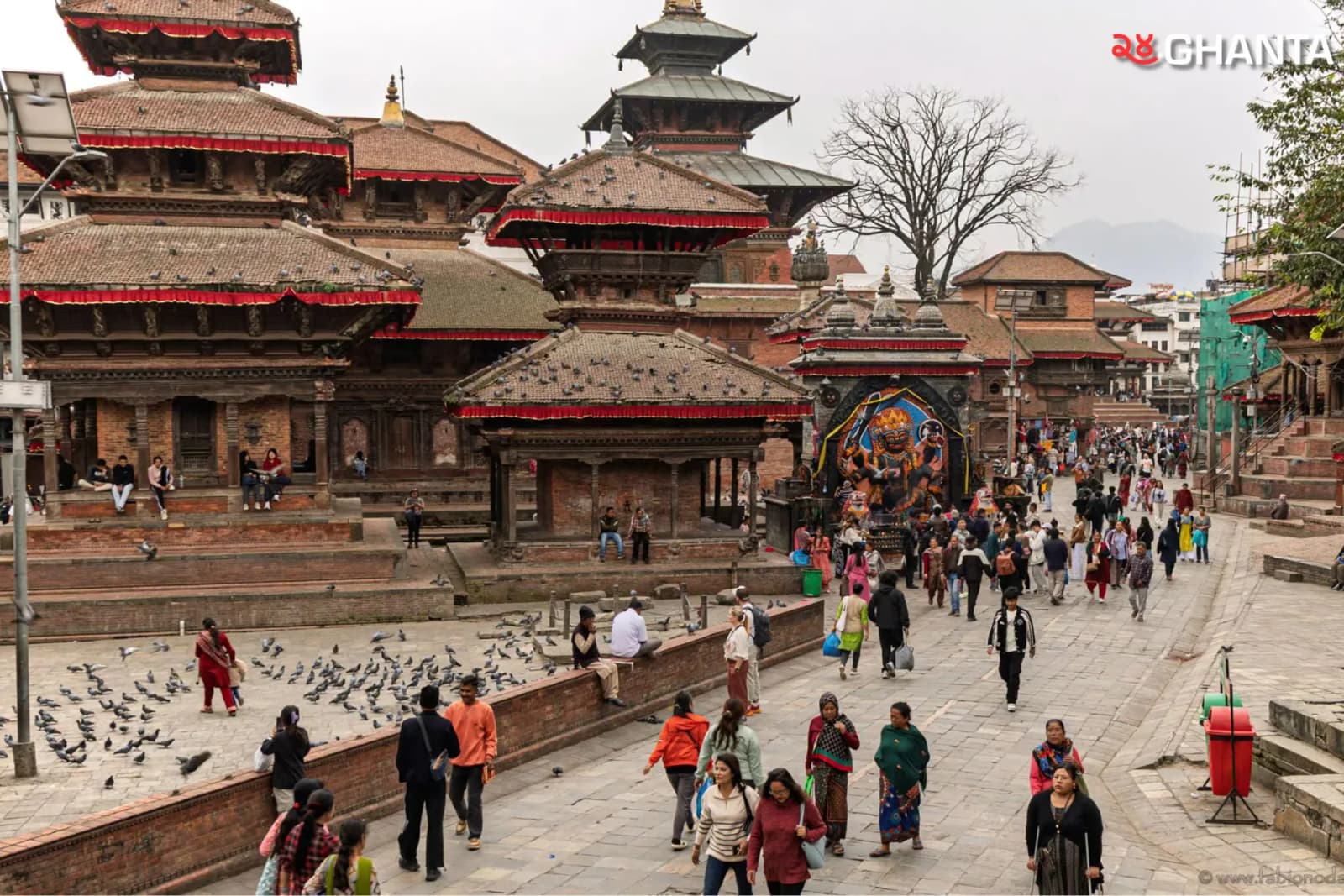
Payday arrives, and for a moment, everything feels fine. Then comes the rent. You buy groceries, pay the electricity and internet bills, and set aside money for transportation. Before you know it, a large part of your salary is gone.
For thousands of Nepalis, Kathmandu is a city of opportunity. People move here to study, find jobs, build careers, and create better lives for themselves and their families.
But living in the capital is not cheap.

With rent, food, transportation, and everyday expenses taking up a growing share of people's budgets, an important question arises: Is earning Rs 40,000 a month enough to live comfortably in Kathmandu, or is it only enough to get by?
How Much Do People Actually Earn in Kathmandu?
Not everyone in Kathmandu earns the same salary. A restaurant worker, teacher, office employee, delivery rider, and software developer can have very different incomes.
The minimum monthly wage for most sectors in Nepal is Rs 19,550, effective July 17, 2025. This includes Rs 12,170 in basic pay and Rs 7,380 in dearness allowance.
According to the National Statistics Office's Nepal Living Standards Survey IV, conducted in 2022/23, average annual earnings from wage employment in Kathmandu Valley's urban area stood at Rs 3,45,337, equivalent to approximately Rs 28,778 a month when divided by 12.
For workers in long term wage employment, annual earnings averaged Rs 4,22,372, or roughly Rs 35,198 a month. These are historical survey figures covering different types of wage work, not a measure of what every worker currently earns each month.
For a more recent comparison, Numbeo's crowdsourced Kathmandu data, updated on October 2, 2026, estimates average monthly take home pay at around Rs 40,273.
Since this is not an official salary survey, let's use Rs 40,000 as an example to see how far that amount might go.
Rent Takes the First Big Share
For people who live with their families in homes they own, Rs 40,000 may be manageable.
But for someone who has moved to Kathmandu for work and needs to rent a place, the situation can be very different.
According to DeraGhar's 2026 rental index, typical one room asking rents vary considerably across the Valley.
In Kirtipur, the listed range is around Rs 6,000–11,000 per month, while in Koteshwor it is approximately Rs 12,000–18,000. More expensive locations such as Jhamsikhel have significantly higher asking rents.
Numbeo estimates that a one bedroom apartment outside Kathmandu's city center costs around Rs 15,633 per month.
For someone earning Rs 40,000, that would take away about 39% of their monthly income.
Someone earning the legal minimum wage of Rs 19,550 would need to spend nearly 80% of their pay on the same apartment.
Of course, many workers manage their housing costs by renting a single room, sharing a flat, or living with relatives. But the comparison shows how strongly housing arrangements can influence someone's financial situation.
Kathmandu Was Already Expensive Years Ago
The government's own household survey shows that the cost of living was a serious concern even before 2026.
According to the Nepal Living Standards Survey IV, average annual household consumption in Kathmandu Valley's urban area was Rs 9,62,958 in 2022/23.
That is approximately Rs 80,247 per household per month.
The survey also found that food accounted for 38.9% of household consumption, rent for 17.8%, education for 8.5%, and other non-food expenses for 34.9%.
These figures cover households averaging around 3.7 people, and consumption includes more than just cash payments. They should not be interpreted as the monthly spending of one individual.
Still, they show how much households needed to support everyday life in the capital.
And these were figures from 2022/23, not current 2026 prices.
Even Going to Work Costs Money
Rent is only the beginning.
For someone who travels to work every day, transportation becomes another regular expense. In April 2026, the minimum public transport fare in Kathmandu Valley increased from Rs 19 to Rs 24 for trips up to five kilometers.
The revised fare is Rs 33 for journeys up to 10 kilometers, Rs 39 for up to 15 kilometers, and Rs 44 for up to 20 kilometers.
Now imagine someone paying Rs 33 each way to work.
For 26 working days, their total bus fare would reach Rs 1,716 per month. For a worker earning minimum wage, that represents almost 9% of monthly pay, just for commuting.
And that does not include additional journeys, taxis, or other travel expenses.
Food and Bills Keep Adding Up
Groceries may seem affordable when bought one item at a time, but their combined monthly cost can be substantial.
Numbeo's October 2026 Kathmandu data lists approximate average prices of Rs 136 for a kilogram of rice, Rs 261 for a dozen eggs, Rs 479 for a kilogram of chicken, and Rs 114 for a liter of milk.
An inexpensive restaurant meal costs around Rs 300 on average. Then there are internet and mobile bills.
Numbeo estimates broadband internet at around Rs 1,385 per month and a mobile plan at approximately Rs 533.
Basic monthly utilities for an 85 square meter apartment are estimated at around Rs 4,841, although this varies considerably depending on the household. Not everyone pays all these expenses alone. Someone sharing accommodation may divide rent and utility bills with others.
But the expenses do not end with food, housing, and transportation.
There are clothes to buy, medicines to purchase, festivals to celebrate, and family members who may need financial support.
A phone breaks. Someone falls sick. An unexpected journey becomes necessary.
These expenses may not arrive every month, but when they do, they can quickly affect a carefully planned budget.
Same Salary, Different Lives
Imagine two young employees in Kathmandu, both earning Rs 40,000 a month.
One lives with their parents in a family owned home. The other has moved to the capital and pays Rs 15,000 in monthly rent. Although they earn the same amount, their financial situations are different.
The person paying rent loses 37.5% of their income before buying food or paying any other bills. Now consider someone who also needs to support parents back home or cover a child's education.
For that person, Rs 40,000 may feel even smaller.
This is why one salary figure cannot explain everyone's experience of living in Kathmandu. A single person sharing a room may manage comfortably enough, while someone renting alone or supporting a family may struggle to save.
What Do Kathmandu Households Earn?
The Nepal Living Standards Survey IV provides another useful comparison.
In 2022/23, the average annual household income in Kathmandu Valley Urban was Rs 8,66,080, or approximately Rs 72,173 per month.
However, the median household income was Rs 6,24,240 annually, equivalent to around Rs 52,020 per month. The median is important because it represents the middle of the household income distribution, while the average can be influenced by higher income households.
The survey also reported annual average household consumption of Rs 9,62,958.
These income and consumption figures use different statistical measures and should not simply be subtracted to conclude that the average household was running a deficit.
Nevertheless, they show that while Kathmandu offers employment and earning opportunities, everyday living expenses can also be substantial.
Survive or Grow?
So, is Rs 40,000 enough to live in Kathmandu?
There is no single answer.
For someone sharing accommodation, cooking at home, using public transportation, and spending carefully, it may be enough to manage everyday life. For someone renting alone or supporting a family, the same salary may leave little room for savings.
And that is where the bigger issue begins.
People do not work only to pay rent and buy groceries. They also want to enjoy life, celebrate festivals, support their parents, travel occasionally, save for emergencies, and plan for the future.
But when most of the salary goes toward meeting basic needs, even ordinary pleasures can start to feel expensive.
Getting through the month and building a financially secure future are not the same thing.
Kathmandu may offer opportunities to earn, but those opportunities do not always translate into money left over. Perhaps the question is not simply whether someone can survive on Rs 40,000 a month.
It is whether that salary leaves them with enough to build the life they came to Kathmandu for in the first place.
Sources
National Statistics Office Nepal Living Standards Survey IV (2022/23).
National Statistics Office NLSS IV Statistical Report.
Ministry of Labour, Employment and Social Security / Nepal Gazette Minimum Remuneration Notice.
DeraGhar Average Rent in Kathmandu 2026.
Numbeo Cost of Living in Kathmandu.
The Kathmandu Post Bagmati Revises Public Transport Fares After Fuel Price Hike
Published 2 hours ago in Researched Article