
Why Are Young Nepalis Waiting Longer to Get Married?
More young Nepalis are delaying marriage to focus on education, careers, and financial independence. Census data link later marriage to education and wealth, but not everyone has the freedom to choose when to marry.
· 9 min read
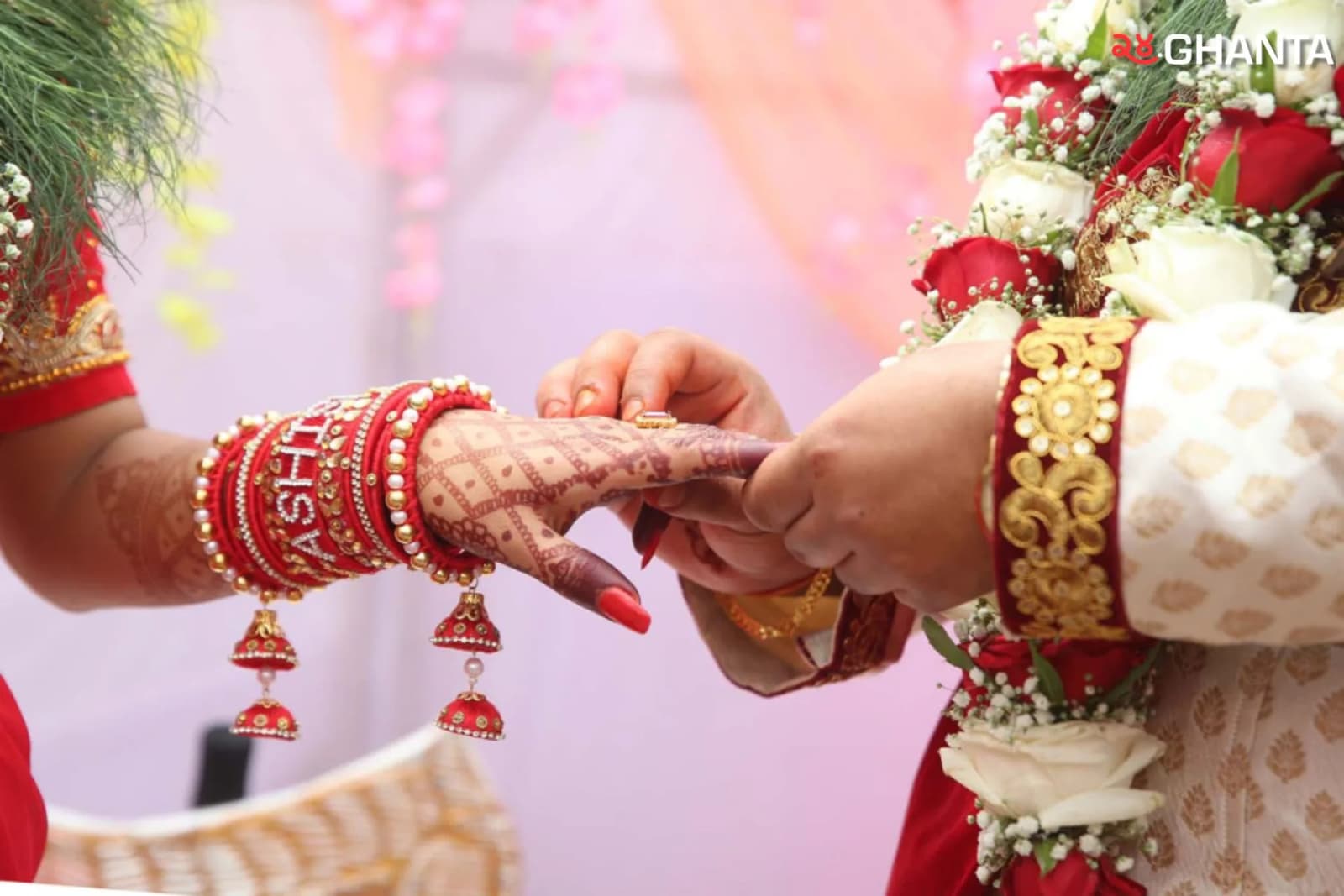
From education and career goals to financial independence and family expectations, Nepal's marriage patterns are changing. But not everyone has the same freedom to choose when to marry.
“So, When Are You Getting Married?”
You're at a family gathering, enjoying your food, when someone asks the question you've probably heard more times than you can count.

“So, when are you getting married?”
Before you can answer, the comparisons begin.
Your cousin is already married. Someone your age has a child. An aunt knows the perfect person for you. Another relative reminds you that you're not getting any younger.
For many unmarried Nepalis, these conversations are familiar. But behind the jokes and family pressure, something bigger is happening. More young Nepalis are taking longer to get married, and the reasons go beyond simply not finding the right person.
Some want to finish their education. Others are focused on their careers, saving money, moving abroad, or finding someone they genuinely want to spend their lives with.
Marriage still matters to many young people. What appears to be changing is what they want to achieve before taking that step.
Nepal's Marriage Age Is Rising
The numbers show that Nepal's marriage patterns have changed over time. According to the National Statistics Office's analysis of the 2021 census, the estimated age at marriage has increased for both men and women.
The singulate mean age at marriage (SMAM), a statistical estimate based on the proportion of people who remain unmarried at different ages, changed as follows:
2011 | 2021 | |
|---|---|---|
Men | 23.8 years | 25.5 years |
Women | 20.6 years | 21.8 years |
This represents an increase of 1.7 years for men and 1.2 years for women over a decade.
However, this estimate should not be confused with the age reported by people who have already married. The 2021 census reported an overall median age at first marriage of 19 years.
Together, these figures show why marriage trends need to be understood through more than one measure.
The bigger question is what might be driving the shift.
Education Is Making a Big Difference
One of the clearest patterns in Nepal's census data is the relationship between education and marriage timing.
According to the National Statistics Office's Nuptiality in Nepal report, the estimated marriage ages in 2021 differed considerably depending on educational attainment.
For women:
Basic education (grades 1–8): 19.8 years
Bachelor's degree or higher: 25.5 years
For men:
Basic education (grades 1–8): 23.4 years
Bachelor's degree or higher: 29.1 years
The gap is nearly six years for both men and women.
This doesn't mean education alone causes people to marry later. But it shows a strong connection between educational attainment and marriage timing.
Think about someone spending their early 20s completing university, preparing for government examinations, learning professional skills, or looking for their first stable job.
Marriage may be important to them, but it might not be their immediate priority. For some young Nepalis, the plan is no longer simply to get married once they reach adulthood. They want to complete their education, establish a career, and become more independent first.
“I Want to Be Capable Before I Get Married”
This thinking also appears in academic research conducted in Nepal.
A study by Pralhad Adhikari, published in the Tribhuvan University Journal, explored attitudes toward marriage among young adults living in the Kathmandu Valley.
The study found that many participants continued to value marriage. However, some unmarried participants wanted to become capable and prepared before taking on its responsibilities.
For them, readiness involved education, financial independence, career development, personal maturity, and finding a compatible partner.
Delaying marriage does not necessarily mean rejecting it.
Some people may simply want to feel prepared for the responsibilities that come with building a family. The research involved a relatively small, nonrandom sample of 51 participants and cannot represent every young Nepali. Still, it offers insight into how some young adults think about marriage.
Family Expectations Haven't Disappeared
Even as personal priorities change, family expectations remain an important part of marriage decisions in Nepal.
For parents and older relatives, marriage may represent stability, responsibility, and an important step into adult life.
For younger people, those same goals may come in a different order. A person may want a stable income before marriage, while their family believes stability will come after marriage.
That difference can lead to pressure, especially when relatives begin comparing unmarried adults with their married friends or cousins. Research also suggests that changing ideas about individual choice are influencing marriage timing.
A study published in the Journal of Family Issues examined data collected in Nepal between 2008 and 2014.
It found that young people who more strongly supported certain ideas about personal choice and changing family life tended to prefer older ages at marriage, expect to marry later, and enter marriage later.
The finding suggests that marriage timing is not only about money or education. It can also reflect changing beliefs about how adulthood should look.
Does Having More Money Mean Getting Married Earlier?
You might assume that people from wealthy families marry earlier because they can afford a wedding and family expenses more easily.
But Nepal's census data show a different pattern.
According to the 2021 census analysis, people in the highest household wealth group had a higher estimated age at marriage than those in the lowest group.
Household wealth group | Men | Women |
|---|---|---|
Lowest | 23.6 years | 20.5 years |
Highest | 28.0 years | 24.1 years |
That is a difference of 4.4 years for men and 3.6 years for women.
There is an important limitation: the census measured household wealth when the survey was conducted, not necessarily when individuals married.
Still, the pattern challenges the idea that financial difficulty is the only reason people marry later. Wealth may be linked to longer education, different career opportunities, urban living, and greater freedom in personal decisions.
Financial security matters, but the decision to marry can also depend on what people hope to achieve before starting a family.
Even Arranged Marriage Is Changing
Marriage in Nepal is often discussed as a choice between arranged marriage and love marriage.
But real life is not always that simple.
Some couples choose their partners independently. Others meet through their families but make the final decision themselves. Many still consider parental approval important.
A 2023 peer reviewed study published in Evolutionary Human Sciences examined spouse selection in a community in Dhading.
Among the oldest generation studied, 78.6% reported that their parents were primarily responsible for choosing their spouse. Among people married within the previous 15 years, that figure was 56.2%.
The findings suggest a shift toward greater personal involvement in choosing marriage partners within that community. The study cannot be used to describe all of Nepal, but it highlights something important: family involvement and personal choice can exist together.
Young people may still want their parents' support while also wanting a stronger say in whom they marry and when.
What About Those Who Want to Go Abroad First?
For many Nepali families, migration has become closely connected to education, work, financial stability, and marriage.
Some young adults want to study or work abroad, save money, and return home before settling down.
Others marry first and then move abroad to support their families.
A study by Emma Labovitz and Ka U. Ng, published online in 2025 and included in the 2026 volume of the Journal of Marriage and Family, examined migration, marriage, and childbirth among men using longitudinal data from the Chitwan Valley Family Study.
Researchers found that migration frequently took place before marriage. Many men also migrated again after marriage and childbirth. The study shows that migration and marriage are closely connected, but it does not mean migration always causes marriage delays.
For some, going abroad is part of preparing for marriage. For others, it is part of supporting a family they have already started.
But Not Everyone Has the Freedom to Wait
It is easy to focus on university graduates, working professionals, and young adults who want more time before marriage. But that is not the complete picture of Nepal.
While some young people are choosing to delay marriage, others still marry before they have had the chance to complete their education or become financially independent.
According to the National Statistics Office's Adolescents and Youth in Nepal report, based on the 2021 census, 21.9% of women aged 20–24 had married before turning 18.
The differences between household wealth groups were significant.
Poorest households: 31.6%
Richest households: 8.1%
There were also major provincial differences.
Madhesh: 32.8%
Karnali: 29.0%
Bagmati: 13.2%
These figures refer to marriage before age 18. Nepal's minimum legal marriage age is 20 for both men and women.
The numbers reveal two different realities.
In one, a university graduate in their late 20s might face constant questions about why they are still unmarried.
In another, a young girl may enter marriage before she has the same opportunity to finish school, develop professional skills, or decide independently what she wants from life.
That contrast matters.
The discussion is not only about why some people are delaying marriage. It is also about whether everyone has the opportunity to make that decision for themselves.
So, Are Young Nepalis Giving Up on Marriage?
Not necessarily.
The evidence points to something more complicated than a generation turning away from marriage.
Marriage timing is changing alongside education, employment opportunities, migration, financial circumstances, family expectations, and personal choices.
For some young adults, marriage remains an important goal. They simply want to reach certain milestones first, whether that means graduating, finding work, supporting their parents, saving money, or choosing the right partner.
At the same time, not every young Nepali has the freedom or resources to follow that path.
Perhaps the biggest change is not that young people no longer want marriage, but that some are beginning to define readiness differently.
For their parents' generation, marriage may often have been seen as the beginning of adult life. For some young Nepalis today, building a life before marriage has become just as important.
And the next time someone at a family gathering asks, “When are you getting married?” the answer might be simpler than expected.
“When I'm ready.”
Sources
National Statistics Office, Nepal Nuptiality in Nepal, National Population and Housing Census 2021, thematic report published in 2025.
National Statistics Office, Nepal National Population and Housing Census 2021, national report.
National Statistics Office, Nepal Adolescents and Youth in Nepal, thematic report.
Pralhad Adhikari Attitudes of Present Generation Towards Marriage: A Survey of Marriageable College Students, Tribhuvan University Journal, 2017.
Keera Allendorf, Arland Thornton, Colter Mitchell and Linda Young-DeMarco The Influence of Developmental Idealism on Marital Attitudes, Expectations, and Timing, Journal of Family Issues, 2019.
Elizabeth Agey, Savannah Crippen, Alyx Wells and Parash Upreti Socioeconomic Benefits and Limited Parent Offspring Disagreement in Arranged Marriages in Nepal, Evolutionary Human Sciences, 2023.
Emma Labovitz and Ka U. Ng Timing and Trajectories: Shifts in Migration and Family Formation Trajectories in Nepal, Journal of Marriage and Family, 2026 volume; first published online in November 2025.
Published 2 hours ago in Researched Article